The mysteries of the universe have been making their way to Earth in recent years.
Astronauts have a challenging job to begin with, but when a team opened samples from a distant asteroid, they were in for the shock of their lives. What they found may lay the foundation for us to better understand how some DNA came to be on our one and only home in the cosmos.
What exactly did the team discover in this cosmic space rock?
How asteroids have reshaped the scientific community over the years
There are trillions of asteroids out there in space, more than we can even imagine. All moving about with reckless abandonment, hitting planets and moons.
As we have found that these asteroids pose a significant threat to life on Earth if they head our way, we have come together to create NASA’s Planetary Defense Coordination Office, among other similar offices around the world.
Scientists have shifted their categorization of these celestial objects from mere space rocks into pristine “leftovers” from billions of years ago.
We know that asteroids can, in the worst cases, lead to worldwide destruction that can reshape the evolutionary process. The discovery of evidence left over by the Chicxulub impact, which ended life for millions of non-avian dinosaurs 66 million years ago, proves this to be true.
The final frontier of space has become reachable in recent years
The idea that space is just unreachable for us as humans is fading as fast as a “dine-and-dasher” skipping out on his bill.
By making a few small and seemingly insignificant changes to our technology, we have come one step closer to reaching out into the cosmos. The mission to get to Mars has been gaining momentum in recent years as new technology emerges.
The biggest and most notable barrier for space exploration has been cost.
We essentially throw away a Boeing 747 after every space flight. But recent innovations in space-focused technology have meant that space exploration is getting cheaper, albeit very slowly.
The innovative and milestone that is the James Webb Space Telescope has enabled us to gaze into the furthest and earliest regions of the cosmos.
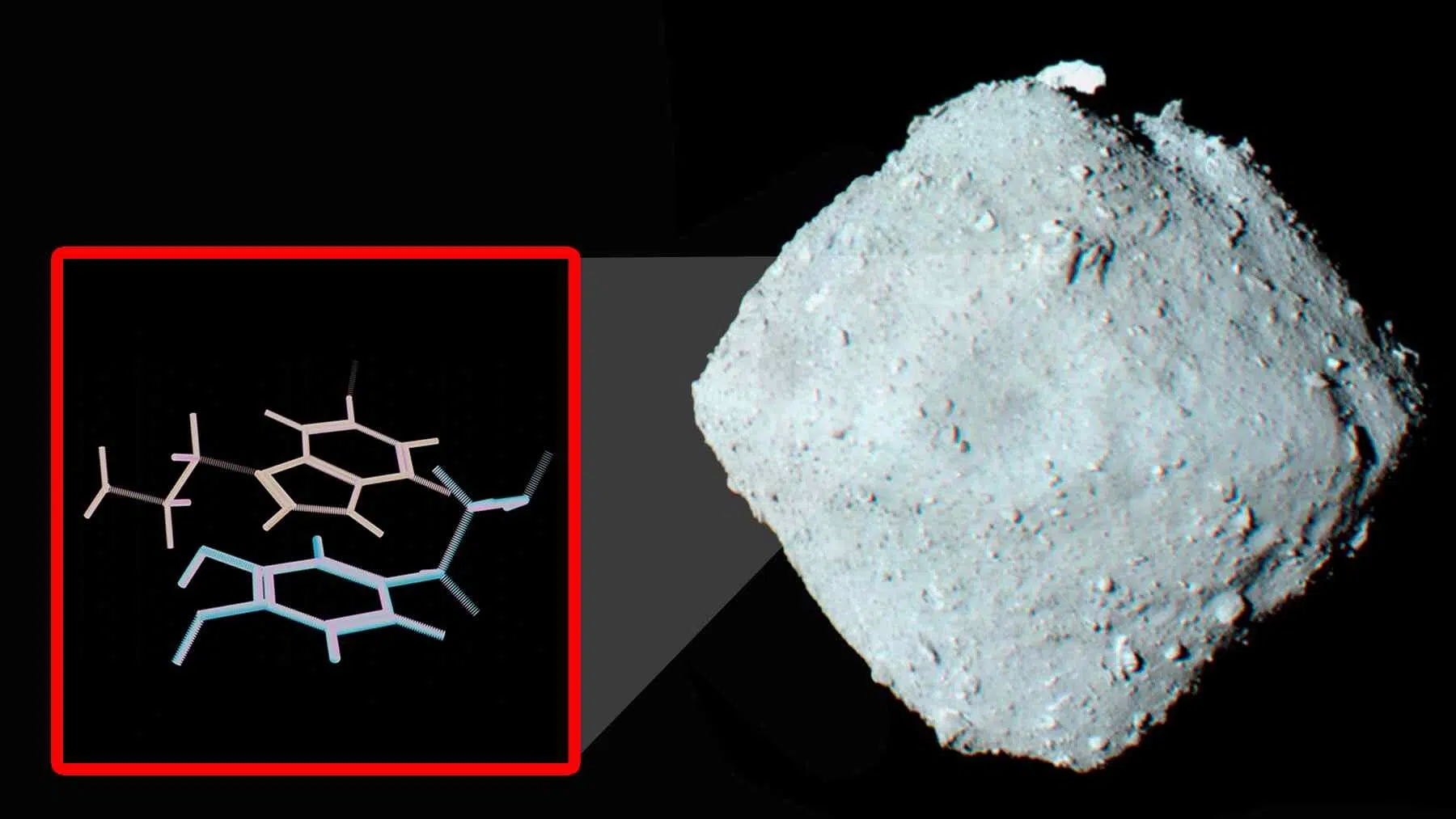
Astronomers recently detected an oddly-shaped planet in space with a dense carbon atmosphere that may be producing diamonds. A new study, “A complete set of canonical nucleobases in the carbonaceous asteroid (162173) Ryugu,” published in Nature, has reshaped the way we look at the universe.
How a team of Japanese astronauts found the odd space rock
We know that this nation is not the only one searching the universe for some answers to our longest-held mysteries.
Europe has the European Space Agency, and Asia has the Japan Aerospace Exploration Agency (JAXA), which led a team to develop the Hayabusa2 spacecraft. The spacecraft was going about its business when it made a remarkable discovery upon opening an asteroid known as Ryugu.
NASA recently admitted that there was a distinct possibility that an asteroid may have hit the moon, or perhaps even us.
But this celestial rock served a far different and positive purpose for the researchers. There is a long-held theory that life did not in fact start and evolve on our planet, and instead the origins of life as we know it came from an asteroid that landed on our planet.
What the team found inside Ryugu was all five canonical nucleobases that make up DNA and RNA.
This confirms that the essential building blocks for life existed long before the Earth did. It also suggests that the ingredients needed for the soup of life to be made can be found spread across the universe.
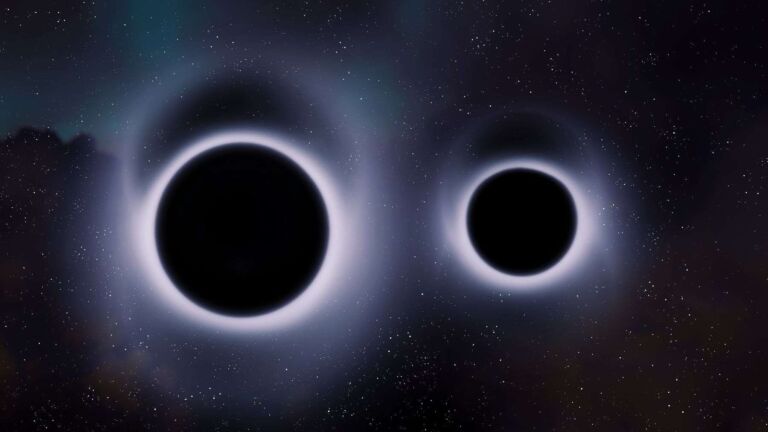
So while NASA works on several theories about black holes, we now know that life is not “held hostage” by Earth and is spread widely across the cosmos.
Read the whole thing?
Get the week's signal, not the noise
Our sharpest reporting on energy, climate and nature — free, once a week.