A saw bit through a white fiberglass shell twice the length of a bowling lane.
Crews cut each blade into three sections small enough to strap to a semitrailer.
The trucks rolled out to a trench on the high plains, already lined with identical cut pieces.
Hundreds more waited their turn to go in the ground.
That was routine for a while at one Wyoming landfill.
So why does this one material keep ending up buried instead of recycled?
The 90 percent figure counts the whole machine, not the blade
The number repeated in almost every wind energy explainer is that a turbine is roughly 90 percent recyclable. That figure holds up, but it is a weighted average across a structure that includes a steel tower, a concrete foundation, copper windings and a gearbox full of recoverable metal, and those parts carry most of a turbine’s weight.
Scrap haulers already know what to do with steel and copper. The blade, roughly a tenth of a turbine’s material, is the outlier dragging the real number down, and it is the part nobody has a clean answer for yet.
City records in Casper put it plainly, noting that “the only material not recyclable is fiberglass; the blades and motor housing are the only fiberglass components.” The celebrated number and the material arriving by truck were never the same thing.
One Wyoming landfill took in more than 1,100 blades
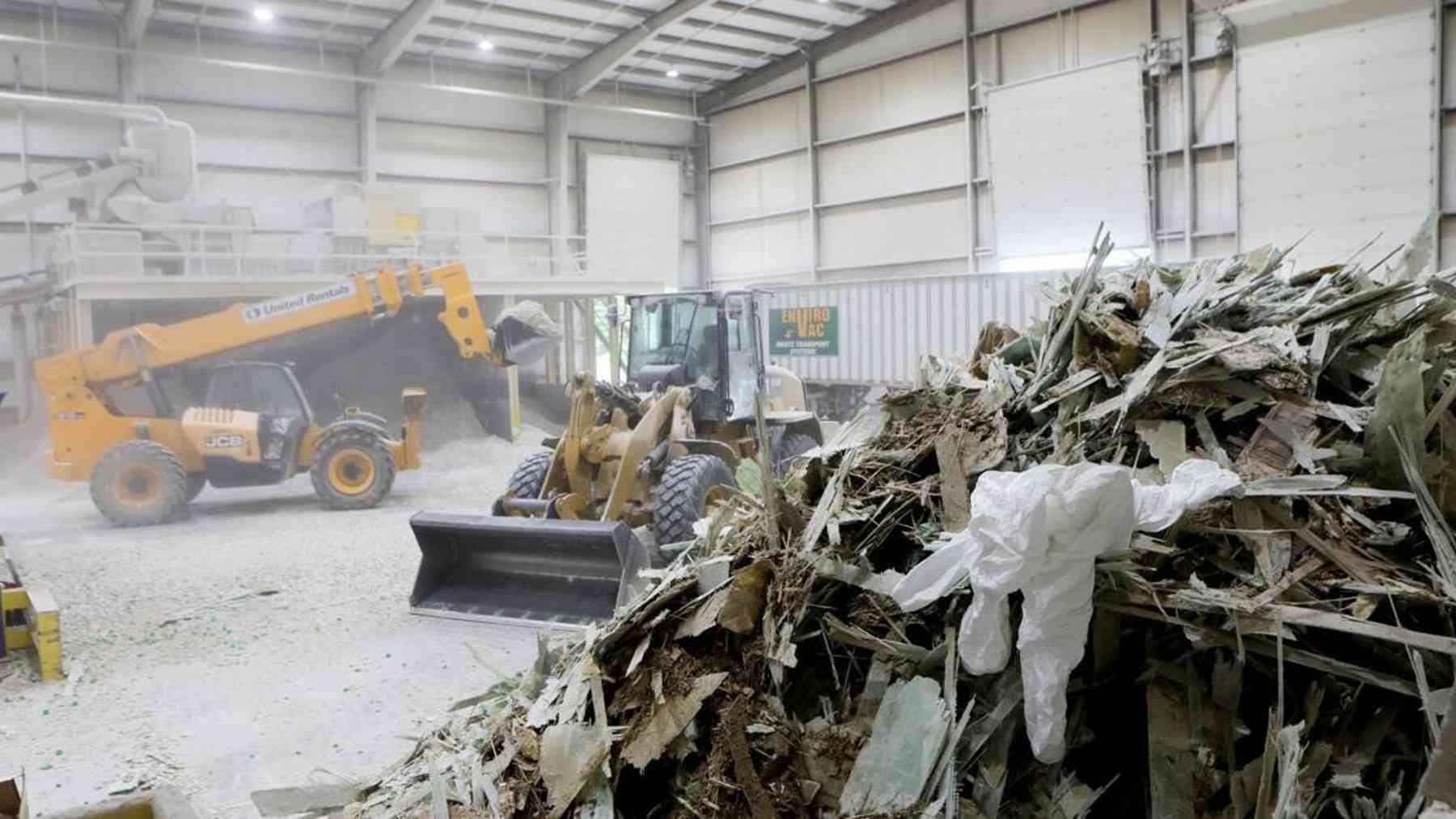
The scale at the Casper Regional Landfill turned a routine disposal contract into a national talking point. The facility took its first decommissioned blades in the spring, and by the following September the running count stood at 1,124 blades, trucked in from wind farms around Glenrock, Arlington, Saratoga and Hanna.
Each 120-foot blade had to be cut into three equal sections before a semitrailer could bring it in. City estimates allowed 30 to 44.8 cubic yards of buried space per blade.
None of it was hidden. The special waste fee ran $59 a ton, and burying about 1,000 blades was projected to bring the city an estimated $675,485. The amount actually collected came to a little over $602,000.
A hardened resin resists shortcuts after two decades of flexing
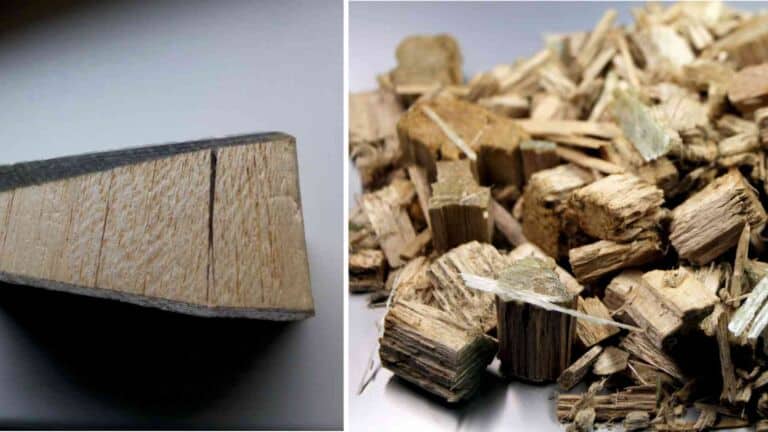
The reason blades resist the recycling systems built for everything else sits inside the material. A blade is a sandwich of glass fiber, balsa wood or foam core, and a cured thermosetting resin that, once hardened, does not melt back down the way thermoplastics do. That chemistry is what lets a blade flex in high winds for two decades without cracking.
But it is also what makes the material hard to separate into clean, reusable streams once the turbine comes down.
Processors that have scaled up composite recovery hit the same ceiling. A peer reviewed assessment in ACS Sustainable Resource Management found that mechanical recycling and high voltage fragmentation recover 95 percent of blade mass, though the main product is a fiber rich mixture equal to only 35 to 40 percent of that mass. Cement co processing, the more common commercial fix, incinerates more than 30 percent of the blade mass inside the kiln, which limits how much circularity it can claim.
A German method targets the balsa core inside the shell
Pieces of the puzzle keep surfacing in research labs. Engineers at Germany’s Fraunhofer Institute for Wood Research developed a way to pull the balsa wood core out of decommissioned blades instead of letting it burn alongside the resin. A water jet lance cuts the blade into segments on site, then an impact mill slams the pieces against a metal surface until the softer wood breaks free of the glass and hardened resin.
So the recovered balsa gets defibered into ultra light insulation mats weighing under 1.3 pounds per cubic foot. Fraunhofer puts several hundred cubic feet of balsa inside a single rotor blade, a plantation grown tropical wood shipped in from overseas, which is real embedded cost before a blade is ever installed.
Even so, the work remains at research and pilot scale rather than commercial scale. Newer composite formulas elsewhere use resins engineered to dissolve in solvent baths, a route demonstrated on a plate soaked for six days in a Danish lab, where the hardened epoxy let go of glass fibers strong enough to reuse.
Burial may shrink as coal pits and dissolvable designs arrive
Wyoming has opened a second route. State rules now let surface coal mines use retired blades and towers as backfill in final pit voids and endwalls, an approach federal regulators approved and that took effect the following spring after a brief pause. It eases pressure on municipal landfills rather than solving the underlying material problem.
Meanwhile, manufacturers are also moving toward recyclable by design resins that can be chemically disassembled at the end of a blade’s life, which would make future teardown cleaner than cutting through solid fiberglass with a saw. Elsewhere in renewable energy, older infrastructure keeps getting retrofitted around the same logic, the way a chemical plant added solar to offset its own footprint instead of waiting for a cleaner replacement.
The trench outside Casper, meanwhile, has gone still. No blades have arrived since mid 2021, and the city’s solid waste manager has said the landfill would still accept them, though no wind farm operator has called in years. The 90 percent figure keeps circulating as shorthand for the whole machine, even though the part that ended up in the ground was never covered by it.
Read the whole thing?
Get the week's signal, not the noise
Our sharpest reporting on energy, climate and nature — free, once a week.