In the spring of 1972, a strange celebration played out over the water off Fort Lauderdale.
High above the waves, a blimp drifted slowly into view.
Then a gold painted tire tumbled out of its belly.
The tire even glinted in the Florida sun as it fell.
The shiny tire was dropped from a blimp to mark the day.
Below it, a fleet of boats waited on the swells.
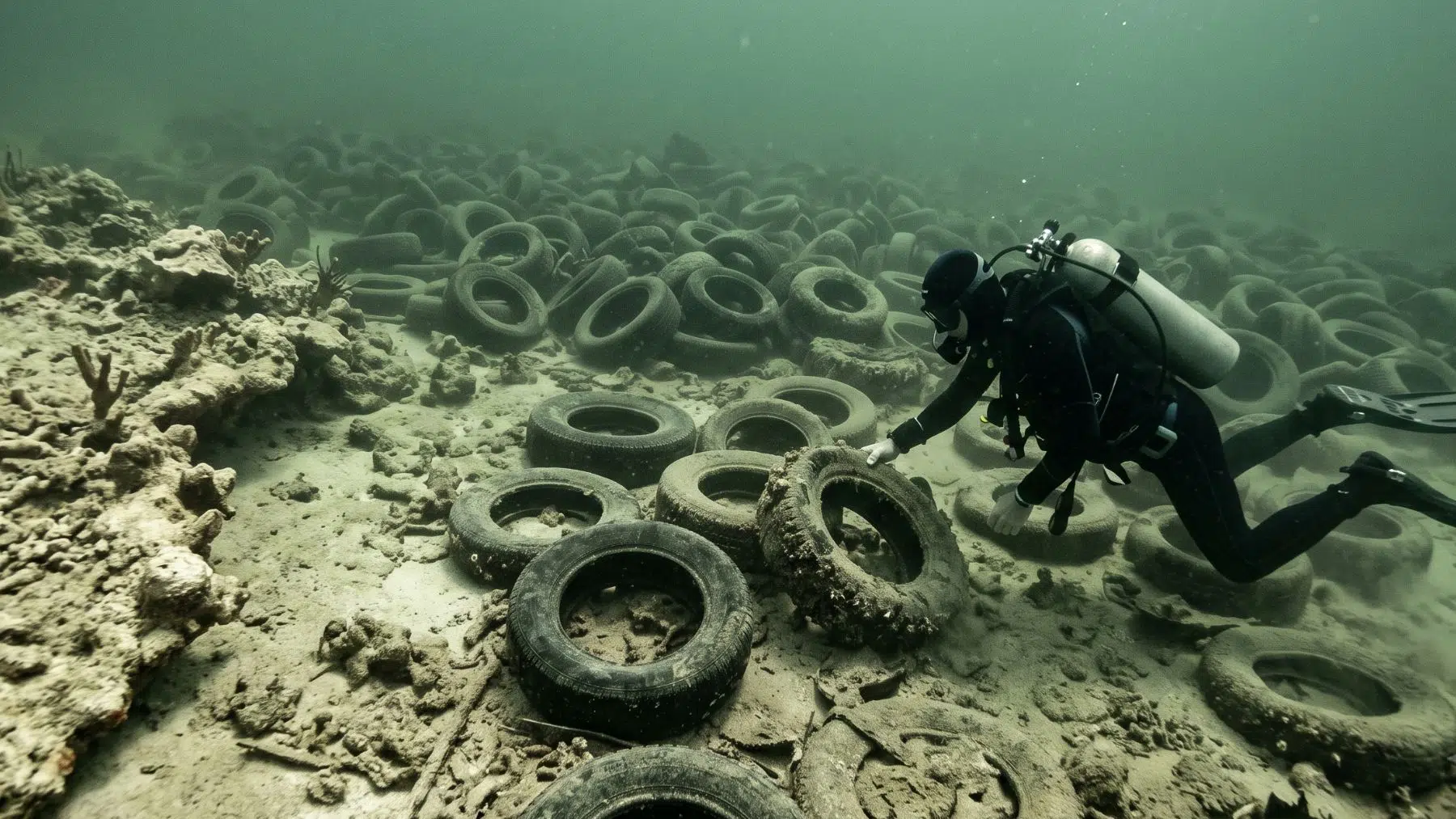
Their crews were about to sink over 2 million tires.
The plan was to build the perfect artificial reef.
It splashed down to bless the ambitious new project.
Everyone cheered a clever fix for two headaches at once.
Nobody there guessed how badly it would all go wrong.
A plan that sounded brilliant
On paper, the idea looked almost too smart to fail.
It promised to solve two problems at once.
Land dumps were overflowing with worn out tires.
Old tires were piling up in ugly heaps on land.
They were cheap and endlessly available as building blocks.
Drop them offshore and fish would gain a brand new home.
The whole scheme was backed by a tire giant.
A local reef group rounded up more than 100 boats.
A Navy vessel joined the volunteer fleet on the water.
Together they laid tires across about 36 acres of seabed.
The site sat roughly 7,000 feet out in 65 feet of water.
The Army Corps of Engineers signed off on the plan.
It looked like a rare win for everyone involved.
Why rubber makes a poor reef
The first sign of trouble was the silence underwater.
Marine life mostly just simply ignored the rubber.
Coral is fussy about where it will settle and grow.
It wants a clean hard surface that stays put.
A reef is really a crowded city of living things.
Fish and coral need firm ground to build on.
Rubber flexes, shifts, and offers nothing to grip.
Bare tires stayed stubbornly empty year after year.
Worse still was how the tires were joined together.
Workers had bundled with steel clips and rope.
Many groups were also held together with nylon.
Those fasteners had to survive decades of salt water.
That was a promise the cheap metal could never keep.
When the clips let go
Out in the ocean, the slow decay quietly began.
Warm salt water ate the steel clips.
Nobody had tested how the clips would age at sea.
The metal was never rated for decades in brine.
The nylon frayed and snapped under constant strain.
One by one, the bundles fell apart.
Suddenly millions of tires were loose and free to roll.
They no longer sat in tidy, anchored rows.
Instead they drifted with the current across the sand.
Then every passing storm shoved them a little farther.
Each tire became a heavy roaming wrecking ball.
Hurricanes turned the whole field into a churning mess.
What was built as a reef had become a loose avalanche.
The tidy plan had quietly turned into a slow flood of rubber.
A machine that keeps killing coral
Here is the cruel twist the planners never saw coming.
The wandering tires did not simply sit there harmlessly.
They rolled straight into the living coral reef nearby.
That natural reef stood only 70 feet away.
Again and again the rubber crushed the fragile coral.
It also scraped away any new growth trying to start.
Corals grow slower than almost anything in the sea.
A reef smashed today may take centuries to return.
One cleanup leader called it a constant coral killing machine.
Storms even sent stray tires washed up on beaches.
State records now track the tire removal effort in detail.
Like the hidden base of an offshore wind farm, the damage worked out of sight.
The cleanup that never ends
By the mid 2000s, officials finally moved to fix the mess.
The military even sent in military divers to help.
Crews treated the dive as hard real world training.
In a few short years they hauled up more than 70,000 tires.
Yet that barely scratched the vast field below.
For every tire lifted out, many more stayed behind.
The tally of tires still down there stays enormous.
Removing a single tire by hand is slow, careful work.
Divers must lift each one from the murky bottom.
The full bill has already climbed into the millions.
Years later, roughly two thirds still remain on the bottom.
The slow work is now expected to run well into the 2030s.
Similar tire reefs failed in many other countries too.
It is the same buried cost as a fox pushed from its den by solar panels, a bright idea with a hidden bill.
The tire graveyard is a lasting lesson in good intentions.
In the end, the ocean is still paying for one very shiny idea.
Read the whole thing?
Get the week's signal, not the noise
Our sharpest reporting on energy, climate and nature — free, once a week.