
In the early stages of suppressing the Paradise Fire, firefighters had one major problem.
Crews encountered an elk floating in a nearby stream while trying to contain the blaze.
Initially, it appeared as if this was a wildlife issue rather than a problem related to their efforts to fight the fire.
As crews continued to operate in the area for several days, things took on a different tone.
It turned out there is little else quite like having an elk carcass near your campsite (a bear magnet) with no way to remove it safely.
Eventually, the fire manager determined that removing the elk by air would be safer than using ground-based methods.
Why a dead elk became a wildfire safety problem
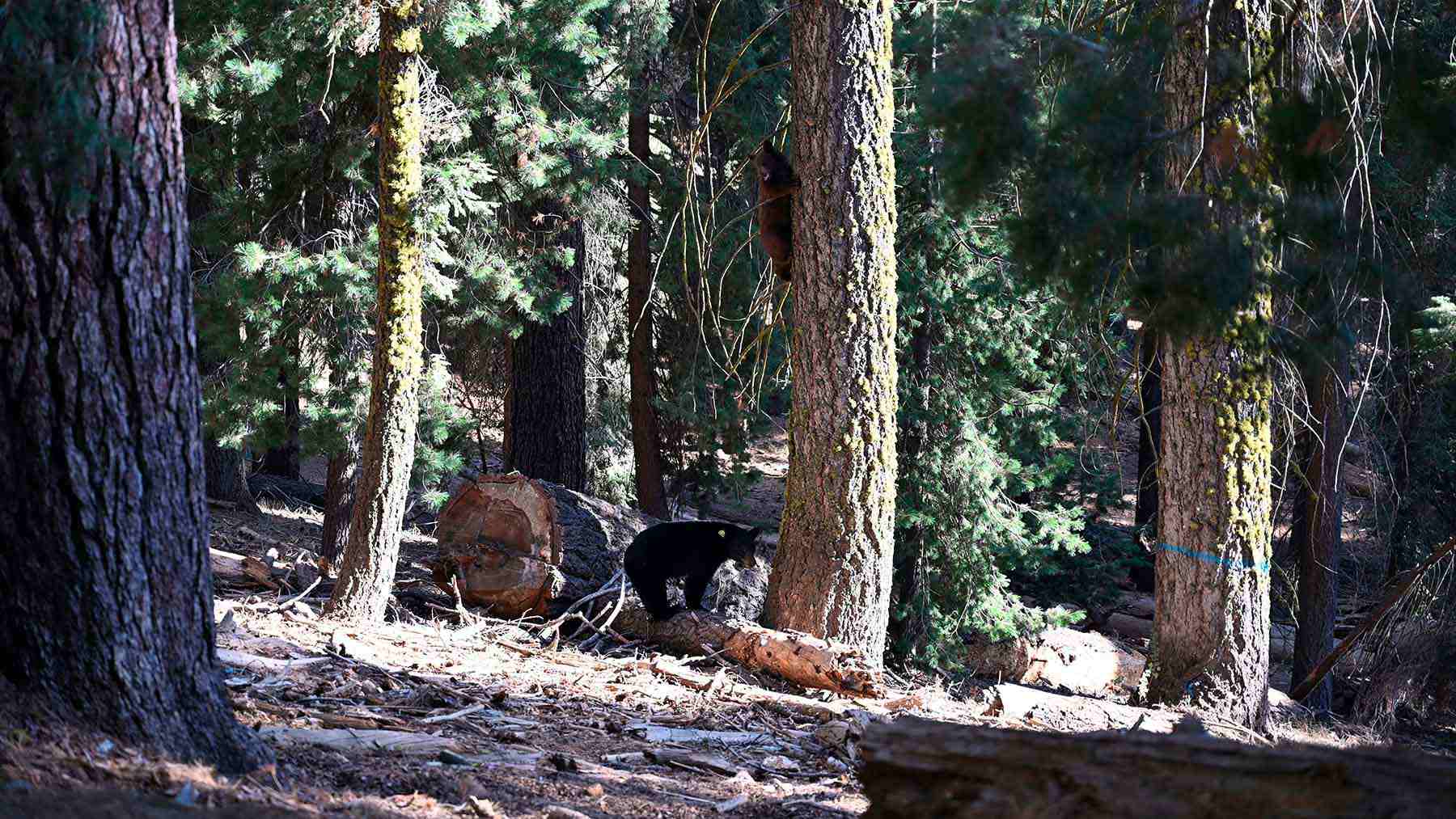
Bears had taken up residence near the elk carcass and were aggressively protecting it.
In this scenario, the wildlife attraction was not the bears themselves but the elk carcass they were defending.
The food source remained available in the area while the carcass stayed in place.
As a result, additional planning and risk evaluation became necessary.
The location of the carcass was in a stream.
Firefighters had to account for operational safety, wildlife hazards, and environmental risks.
Instead of viewing the carcass as simply another normal field item to deal with, fire managers began looking at ways to minimize or mitigate these risks prior to an interaction occurring.

How firefighters developed a plan to reduce the hazard
Fire managers assembled a multi-disciplinary team to address the wildlife issue.
Aviation personnel attended meetings regarding the potential for using helicopters to assist in resolving the problem.
Operations personnel met to discuss how suppression tasks could continue safely despite the wildlife issue.
Risk Management personnel also participated in planning sessions.
City Water Experts were consulted.
Safety Officers also helped assess the safety implications of the proposed mitigation strategy.
Both operational safety of firefighters and environmental impacts needed to be evaluated when considering actions at the stream location.
Because bears were protecting the elk carcass, firefighters faced challenges not normally associated with suppression operations.
The mitigation effort was later documented by the Wildland Fire Lessons Learned Center.
Why removing the elk became necessary
A two-part strategy was developed to help accomplish this goal.
The first aspect involved providing bear spray to firefighters.
This would give crews an additional layer of protection while continuing their suppression efforts in the immediate vicinity.
The second element directly addressed the root cause of the problem, which was the elk carcass itself.
It was determined by fire managers that the elk carcass needed to be removed from the stream.
Due to its remote wilderness setting and the presence of protective bears at the location, helicopter support was deemed necessary for accomplishing the removal of the elk carcass.
Ultimately, this decision reduced the wildlife attraction without requiring firefighters to approach the carcass on foot.
How the situation was ultimately resolved
The elk carcass was extracted from the watershed via helicopter on August 13th.
According to reports filed by the incident investigators, the extraction operation was successful.
While wildfires are often associated with flames, smoke, and challenging terrain, wildlife interactions can also create hazards.
In this example, the elk carcass effectively converted part of a small creek into a food cache for bears that subsequently defended it.
This increased the likelihood of dangerous interactions between humans and wildlife.
To mitigate these dangers and prevent unnecessary exposure for personnel working on the Paradise Fire, managers utilized a combination of general wildfire safety practices and aviation assets.
What began as the discovery of a dead elk gradually evolved into a coordinated effort involving multiple specialties.
Safety personnel, operations staff, aviation resources, and environmental experts all played a role in resolving the problem.
Read the whole thing?
Get the week's signal, not the noise
Our sharpest reporting on energy, climate and nature — free, once a week.


