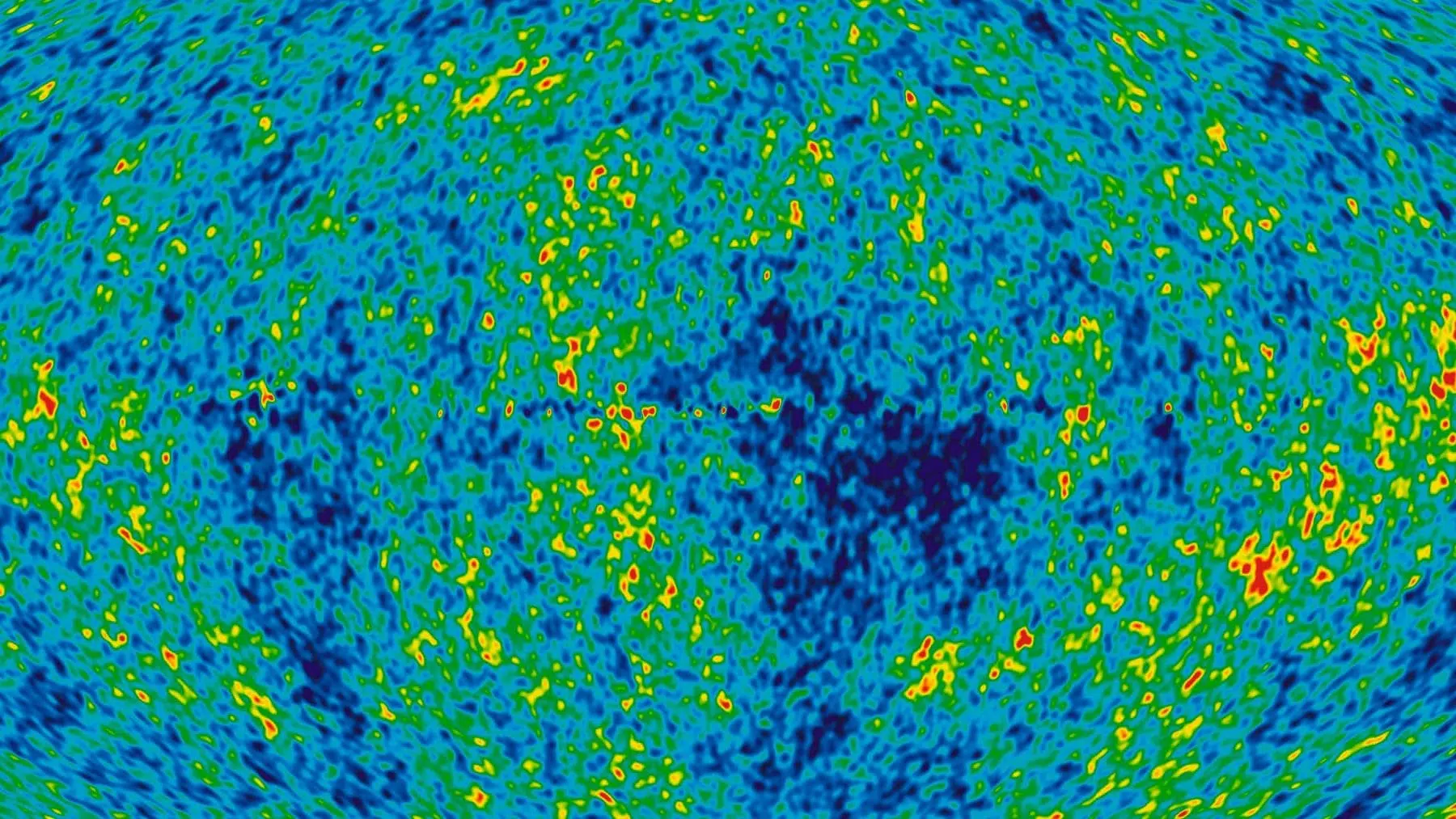
Scientists’ quest to understand the universe has led them from the vastness of galaxies down to the tiniest quarks. Yet, one of the most puzzling questions remains: what is the true nature of reality? For decades, the idea of a multiverse—the possibility that our universe is just one among many parallel realities—has lingered at the intersection of physics and philosophy. Once purely theoretical, new advances in quantum computing are now providing tools to explore this idea in unprecedented ways.
Quantum chip technology co-relation with the multiverse
Recent advances in quantum chip technology have brought the multiverse concept a bit closer to scientific testing. Google’s new quantum processor, known as Willow, is built to control and measure quantum states with a level of precision not seen before. With this kind of hardware, researchers hope to spot patterns that could hint at the existence of parallel universes—something that’s long been more of a thought experiment than a testable theory.
As scientists continue to explore what Willow can do, the possible implications are hard to ignore. Should its results align with specific quantum predictions, it could offer the first concrete evidence of multiple universes—a discovery with far-reaching consequences for physics, philosophy, and humanity’s place in the cosmos.
The multiverse theory
Quantum computing made a major leap with Willow, reigniting interest in the multiverse theory. This idea, long a staple of science fiction, gained new attention after a study in Nature revealed Willow solved a problem in under five minutes that would take even the most advanced classical supercomputers roughly 10 septillion years—far exceeding the universe’s age.
The performance of Willow has added fuel to the idea that quantum computations could be tapping into multiple parallel realities. This theory isn’t new — physicist David Deutsch was one of the first to link quantum computing with the concept of a multiverse. Researchers at Google have pointed out that Willow’s results lend credence to the notion that quantum computation occurs in many parallel universes, in line with the multiverse prediction first made by David Deutsch.
Unlike classical computers, which process information in bits of 0s and 1s, quantum machines use qubits—units that can exist in multiple states at once. This kind of processing power lets quantum computers take on challenges that traditional machines simply can’t handle. Interestingly, Google says it has managed to reduce error rates in Willow by adding more qubits — an approach that usually increases the chance of glitches, not the other way around. Of course, making these systems work reliably still involves meeting some pretty strict technical requirements.
Scientists have to be careful with Willow
Even with Willow’s impressive results, some researchers are careful not to overstate what it all means. Just because quantum computers behave in unexpected ways doesn’t necessarily prove that parallel universes exist. Many physicists point out that quantum mechanics works just fine without involving any multiverse at all.
That said, there’s broad agreement in the scientific world that Willow marks an important step forward. Quantum technology specialists believe it brings us closer to building practical quantum computers capable of groundbreaking applications—such as speeding up drug discovery and strengthening cybersecurity.
Google shares the vision for the future
Google sees quantum computing as a game-changer — especially for industries that depend on heavy data processing and complex problem-solving. This technology could signal the beginning of a new chapter in computing, one that questions long-standing systems and approaches. As quantum computing moves closer to real-world applications, it has the potential to drive major improvements in efficiency, security, and innovation across a variety of industries.
Read the whole thing?
Get the week's signal, not the noise
Our sharpest reporting on energy, climate and nature — free, once a week.