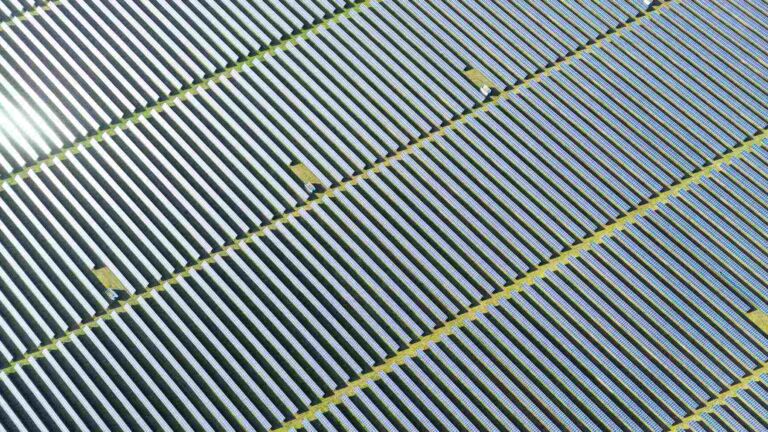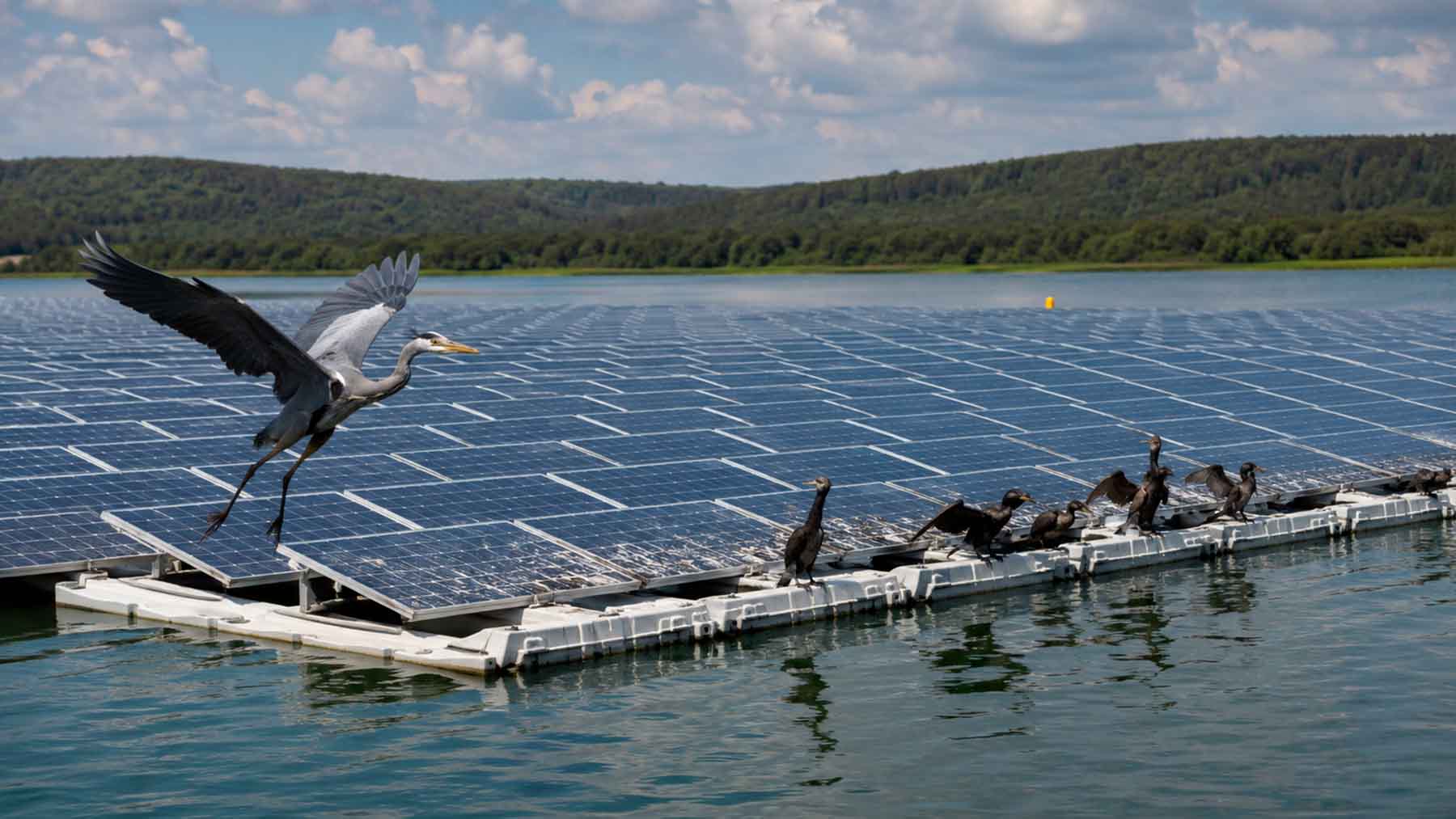
Thousands of lakes beneath the Atlantic flyway bird migration route are being assessed for floating solar array viability.
While energy planners consider 16,000 bodies of water in the northeastern United States, environmentalists are identifying conflicts between wildlife and the panels.
Researchers say that the avian risk goes both ways. What causes one bird species to risk crashing while the other is capable of dirtying panels to the point of shutdown?
How solar potential must be mapped together with bird movement
The land use debate is getting increasingly louder. Floating solar power systems are one of the ways to generate clean power near dense urban areas without taking up valuable tracts.
Cornell University researchers set out to measure the opportunities for floating arrays on freshwater bodies between the south of New England and Virginia. They identified 16,000 viable lakes, dams, and ponds with enough surface area to support solar infrastructure.
The team then overlaid the industrial mapping with bird population data from the eBird Status and Trends platform, which tracks the seasonal movement of 291 species.
The initial results for energy developers were positive. Not many of the sites with the highest potential overlapped with dense populations of migrating birds.
However, zones with smaller inland waters were flagged as directly beneath major coastal flight corridors, showing that smart placement matters from the start.
Hardware affects wildlife, and wildlife affects generation
There are two issues to consider when it comes to floating solar power systems: the effect of the infrastructure on wildlife, and how wildlife affects power output.
Installing solar arrays on open water creates obstacles where birds nest, feed, and navigate. If this is not accounted for in the planning stages, native species will be threatened, and earnings will drop due to structural damage or lost electricity.
The Cornell researchers reported that the high-risk sites are the minority of potential project locations. Of these, around 80 percent are smaller bodies of water near the shorelines of the Atlantic Ocean and the Great Lakes. However, these are vital habitats for waterbirds and popular areas for recreation, boating, and birdwatching.
If floating solar projects are installed without considering the specific traits of different bird species, the likelihood of collisions and panel wastage increases. Long before installation begins, planners need to put protective buffers in place to mitigate the risks on both fronts.
Vision and visiting: Two bird behaviors to account for in planning
The University of Cornell reports that the two separate risks involve the physical traits of one species and the social habits of another.
Waterbirds like the horned grebe have low maneuverability in flight and limited forward vision. When descending toward water, they may mistake reflective solar panels for a clear landing surface, creating a severe crash hazard.
Canada geese pose the opposite threat. They gather in dense gaggles directly on floating platforms. Massive waste from these large flocks coats the arrays, blocking sunlight from hitting the solar cells below. That biofouling cuts electricity production and can force operators to take systems offline for intense cleaning.
Floating solar growth does not require ecological damage
By steering future projects away from high-density resting stops toward lower-risk inland lakes and reservoirs, developers can ensure high power output while protecting vulnerable species across the Atlantic flyway.
Because current risk models rely primarily on regional abundance data and physical traits, targeted field studies are necessary to confirm how birds act around real installations.
These technical factors go beyond freshwater lakes, delivering valuable insights for land-based solar developments where wildlife encounters influence site planning and environmental policies.
The full study is available here: Allison D. Binley, Adam Gallaher, Amanda D. Rodewald, Steven M. Grodsky; Potential Interactions Between Birds And Floating Photovoltaic Solar Energy: Spatially Informed Species Vulnerabilities, Techno-Ecological Risks, And Sustainability Trade-Offs. Environ. Sci. Technol. 13 January 2026; 60 (1): 510–521. https://doi.org/10.1021/acs.est.5c09819
Read the whole thing?
Get the week's signal, not the noise
Our sharpest reporting on energy, climate and nature — free, once a week.