Drive northeast out of Aix en Provence and the road climbs into limestone and scrub.
Oak, rosemary, thyme, white rock, and heat lifting off the ground.
Then a fence, running for miles along the ridge.
Behind it, wild boar move at dusk and eagle owls nest in the outcrops, because nobody has walked that ground in decades.
Also behind it, crews are assembling the largest machine ever built for a single experiment.
The place everyone assumes is dangerous
Ask most Americans what lives near a nuclear facility and the answer is usually a nervous joke.
The mental image is concrete, cooling towers, and chain link stretching to the horizon.
What keeps turning up instead is something else entirely.
Land fenced off around nuclear sites, closed to farming and building and everyday traffic, has a habit of becoming unusually rich habitat.
The pattern shows up from the American Southeast to the forests of eastern Europe, and it has been documented for decades.
When people leave, the gap fills faster than anyone expects.
The question worth asking is why ground guarded for a machine that copies the sun should end up protecting anything.
A river valley the engineers did not want to disturb
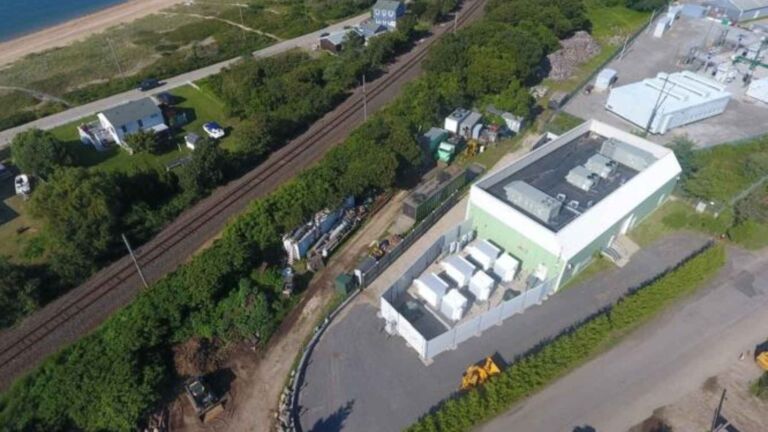
The site sits at Cadarache in southern France, on a plateau above the Durance.
The garrigue around it, that dense fragrant scrubland of oak and rosemary, has been largely undisturbed since the 1960s.
Cadarache became a French nuclear research center long before the current project arrived.
The fence went up for security, and the scrub was simply left alone behind it.
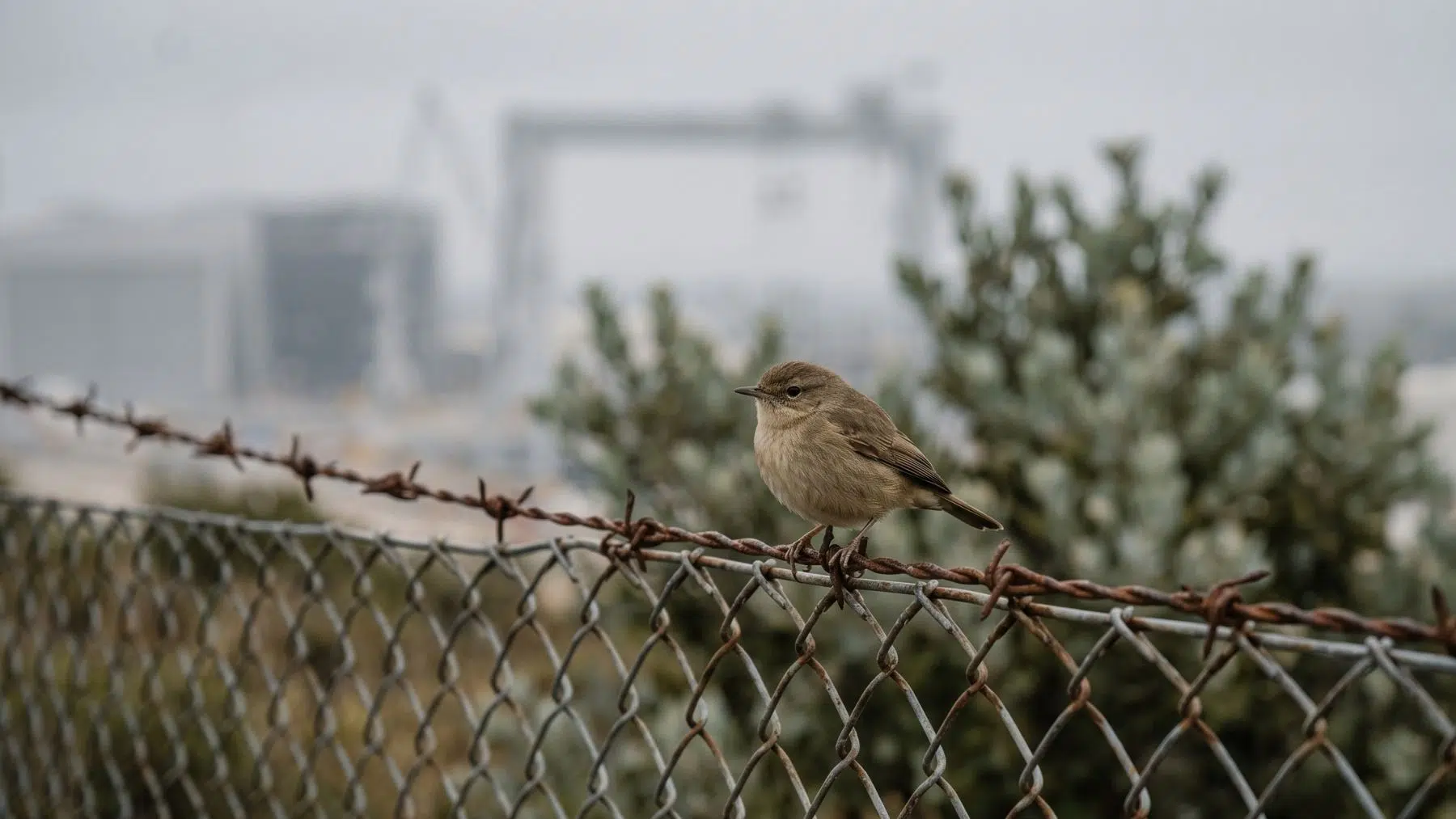
The site’s own environmental surveys record more than 130 bird species inside its boundaries.
They share the ground with European pond turtles and Hermann’s tortoises, both protected in France.
None of it was planned as habitat.
It happened because the ground was closed off, not because anyone managed it.
What the exclusion zones taught the world
The most famous case covers roughly 1,000 square miles of northern Ukraine.
Researchers running long term censuses around the Chernobyl plant found something that unsettled a lot of assumptions.
Wolves, elk, roe deer and wild boar were as abundant there as in uncontaminated reserves nearby.
Lynx and bison moved into forest that had regrown through abandoned villages.
That does not mean radiation is harmless.
Scientists still argue about what it does to individual animals, to lifespans, to birds and insects.
What the census measured was simpler and harder to dispute.
Removing people mattered more than the contamination that drove them out.
Nine steel giants and a sun burning inside the fence
Here is what sits behind the Provencal wire.
The project is ITER, an international fusion experiment on a 445 acre site built around a platform of roughly 104 acres.
Its core is a vacuum vessel assembled from nine steel sectors, each weighing about 485 tons.
Welded together they form one sealed chamber shaped like a doughnut.
Inside it, plasma will reach 150 million degrees Celsius, around 270 million degrees Fahrenheit, ten times the temperature at the core of our sun, according to the project.
The design aims to draw 500 megawatts of fusion power from 50 megawatts of heating power, in pulses lasting 400 to 600 seconds.
That tenfold return is the entire point of the experiment, and no fusion machine has ever reached it.
Fusion also produces no carbon and no long lived high level waste, which is why the same land argument keeps surfacing around an offshore project or any other build that concentrates power in one place.
And the boar outside will never notice any of it.
Why the fence did the work, not the physics
Here is the uncomfortable part.
Nobody set out to build a wildlife refuge in Provence.
Nobody drew a plan for a single acre of habitat.
The refuge exists because a perimeter fence did its job, for reasons that have nothing to do with conservation.
The most effective protection on that ground turned out to be an accident of security.
It is the same finding that came out of the Chernobyl censuses published in a research journal, and it points somewhere useful.
Energy density is a land question.
A plant that makes enormous power on a small footprint leaves more ground alone than one spread across a landscape.
None of that excuses the record, because ITER has run late and over budget for most of its life, and it has not yet made a watt of fusion power.
But the boar, the tortoises and the 130 bird species did not wait for the physics.
They moved in, found the stillness, and made it theirs, much as wildlife settles around a solar site without asking anyone.
The most powerful machine in human history may turn out to be one of the better neighbors.
Read the whole thing?
Get the week's signal, not the noise
Our sharpest reporting on energy, climate and nature — free, once a week.