Much of the land that a solar project covers is rural and agricultural.
The Sonrisa project appears to be one of the largest of its type. It is expected to cover about 2,000 acres of open, undeveloped land in western Fresno County.
This sounds like it should be a story about electricity. But after a short while, it turns into a story about owls.
The project documents show that nearly all of the 1,518 acres of occupied western burrowing owl habitat could be permanently impacted under the current plan.
Development and wildlife frequently occur together and compete for the same area.
In this instance, it seems likely that both will need to share the same terrain.
What appeared empty was already occupied
Many people assume large solar facilities are constructed on vacant land. This is habitat they already occupy.
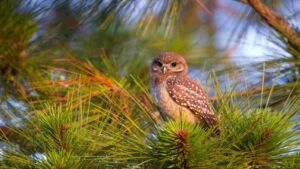
Once we understand that this is already occupied by the owls, our perspective regarding the relationship between the owls and the potential for development changes dramatically.
Habitat that is already occupied weighs differently than habitat that may potentially be used in the future.
Any alteration to that landscape affects something that currently exists.
That distinction gives the habitat greater importance under state regulations pertaining to wildlife.
Legal protections soon entered the picture
Western burrowing owls are listed as a candidate species under the California Endangered Species Act (“ESA”).
As such, impacts to occupied lands are subject to formal approval from the state.
The solar facility and the habitat are not merely neighbors.
Because of that shared territory, both trigger a formal California Environmental Quality Act (“CEQA”) process, as detailed in the Sonrisa Solar wildlife permit.
Both sides depended on the same landscape
The project is intended as a utility-scale solar facility capable of generating 200 MWs of electricity and including up to 184 MWs of battery storage.
Due to the size of infrastructure required to support these types of energy production projects, large amounts of space are needed.
Neither party can relocate a few feet and resolve their issues.
As a result, the resulting conflict is based on thousands of acres rather than inches.
Utility-scale energy facilities are developed in locations where land availability, transmission accessibility, and similar requirements coincide. The owls have similar requirements.
Those coinciding requirements create a significant amount of controversy.
Habitat conflict did not end the proposal
A conflict of this magnitude did not automatically halt the development of the project.
Regulators at the California Department of Fish and Wildlife ultimately granted an Incidental Take Permit authorizing the project to proceed.
The Sonrisa Solar wildlife permit was granted contingent upon certain mitigation requirements and ongoing monitoring obligations.
While those approvals do not negate the fact that habitat will be lost due to the project, they change the focus of discussion towards methods for reducing and monitoring those losses over time.
A much larger challenge was taking shape
Renewable energy facilities require vast tracts of land.
Wild animals rarely plan their habitats in accordance with man-made development projects.
The Sonrisa project provides a visible example of that collision. A 200-MW energy facility located within candidate species habitat leaves virtually no opportunity for separating two distinct narratives.
Projects like Sonrisa increasingly find themselves in a position requiring them to pursue concurrent objectives related to both renewable energy development and conservation development.
The most important answers will come later
Permits provide authorization for parties to take action. However, permits do not guarantee outcomes.
Future studies will help determine how effective the mitigation techniques are during construction, operation, and maintenance.
For the western burrowing owl, the most critical aspect of this story remains untold.
How successful those efforts become will influence how this project is viewed historically.
Read the whole thing?
Get the week's signal, not the noise
Our sharpest reporting on energy, climate and nature — free, once a week.