
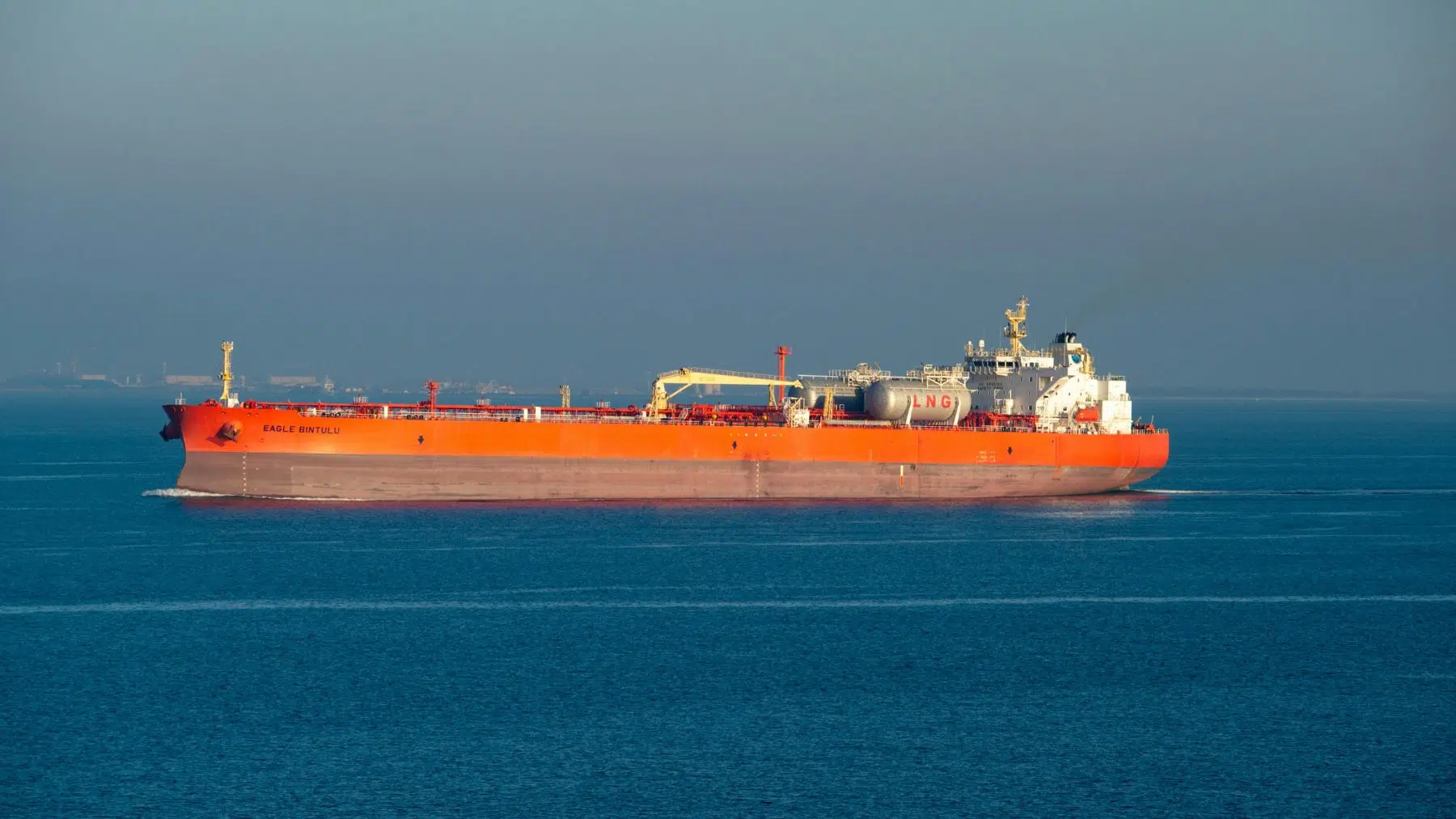
On a December morning in 2025, a vessel the length of three football fields slipped out of a Venezuelan port and began moving north through the Caribbean. On the main maritime tracking feeds, it appeared to be somewhere else entirely, drifting lazily off the coast of Guyana, hundreds of miles away.
Nobody watching those feeds was alarmed, because the ship looked perfectly legal, flying the flag of a respectable nation and pinging a location that matched a legitimate oil field.
The ship that was technically nowhere
Ships in this shadow network cloak their locations by altering their automated identification system, a mandatory safety feature designed to help vessels avoid collisions.
Instead of going dark, the most sophisticated operators spoof their position, broadcasting coordinates that place them somewhere innocent, sometimes oceans away from where they are actually sailing.
According to a New York Times analysis of satellite imagery and data from TankerTrackers.com, the Skipper issued false transponder readings from October to December 2025.
The ocean is vast, and for a vessel hiding in plain sight, that vastness is the whole point.
The tanker was digitally placing itself off the coast of Guyana, adjacent to a massive offshore oil field being developed by Exxon. The disguise was almost elegant in its specificity.
A machine so large it barely fits in the sea
To understand what was moving through those Caribbean waters, you need a sense of the machine itself.
A Very Large Crude Carrier stretches about 330 meters long. From the bottom of the hull to the top of the mast is roughly 65 meters, the height of an 18-story building, and the draught below the waterline exceeds 20 meters when fully loaded.
That draught matters enormously. All major Gulf Coast petroleum ports sit in inland harbors connected to the ocean through shipping channels, and none of those waterways are deep enough for a fully loaded VLCC.
The Louisiana Offshore Oil Port, located out in the Gulf of Mexico, is currently the only US facility that can handle one. The ocean floor itself becomes a constraint.
About 1.8 million barrels and a borrowed flag
The Skipper was not just enormous. It was loaded, carrying approximately 1.8 million barrels of crude oil, with about 1.1 million barrels of it bound for Cubametales, Cuba’s state-run oil importer, according to the US Department of Justice forfeiture complaint.
The ship had been sanctioned by the US Treasury Department on November 3, 2022, when it operated under the name Adisa, for alleged involvement in an oil trafficking network financing the Islamic Revolutionary Guard Corps.
And the flag flying from its mast did not belong to it at all.
Guyana’s maritime agency confirmed the tanker was illegally flying a Guyana flag and was not on the local registration docket.
The honest flag of a small nation had become a disguise worn by a giant, and the Caribbean had become the place where that disguise worked best.
The boarding that revealed the shadow fleet
What happened next is the kind of operation most people associate with action films, not cargo ships.
On December 10, US Coast Guard Maritime Security and Response Team personnel, US Marine Corps special operations personnel, FBI agents, and Homeland Security Investigations agents boarded and seized the Skipper by fast-rope from a US Navy Seahawk helicopter launched from the USS Gerald R. Ford shortly after it left Venezuelan waters.
Fast-rope boardings of tankers at sea are rare, even for teams that train for exactly that scenario, US officials acknowledged.
The interior the boarding team stepped into is hard to picture from the outside. The hull is divided into multiple separate tanks capable of carrying multiple grades of crude simultaneously, a structure that dwarfs most buildings on land.
A co-founder of TankerTrackers.com called the Skipper part of “a global dark fleet” of tankers that falsify location data, operate without insurance, and are registered to shell companies built to conceal ownership.
An ocean full of invisible giants
The Skipper’s seizure pulled back a curtain most people did not know existed.
Hundreds of tankers follow similar routes, using the same spoofing tricks, the same false flags, the same borrowed identities.
Many transfer their cargoes to other ships while at sea, further obscuring their origins. The deep ocean plays an unwitting role: Caribbean trenches reach thousands of meters down, giving these ships water deep enough to hide in plain sight.
A loaded supertanker needs up to 8 kilometers and 15 minutes to stop completely, and has a turning diameter of about 2 kilometers. These are moving structures governed by physics most of us have never had to think about.
Whether the seizure of the Skipper was fully lawful under international law remains contested: legal analysts have noted that while boarding a stateless vessel is well-grounded in established maritime law, the broader exercise of jurisdiction over the cargo raises unsettled questions that states still dispute. Guyana’s maritime authority vowed to step up monitoring after observing “the proliferation and unacceptable trend of the unauthorized use of the Guyana flag.” The largest machines on Earth are also, at this moment, the easiest to make disappear, and the world is only beginning to look for them.
Read the whole thing?
Get the week's signal, not the noise
Our sharpest reporting on energy, climate and nature — free, once a week.


