
The reservoir had been serving Duluth for more than a century without anyone giving its drain much thought.
On a summer morning two years ago, crews opened a valve to sanitize and inspect the old Woodland Reservoir, and the water went out.
The water was safe to drink.
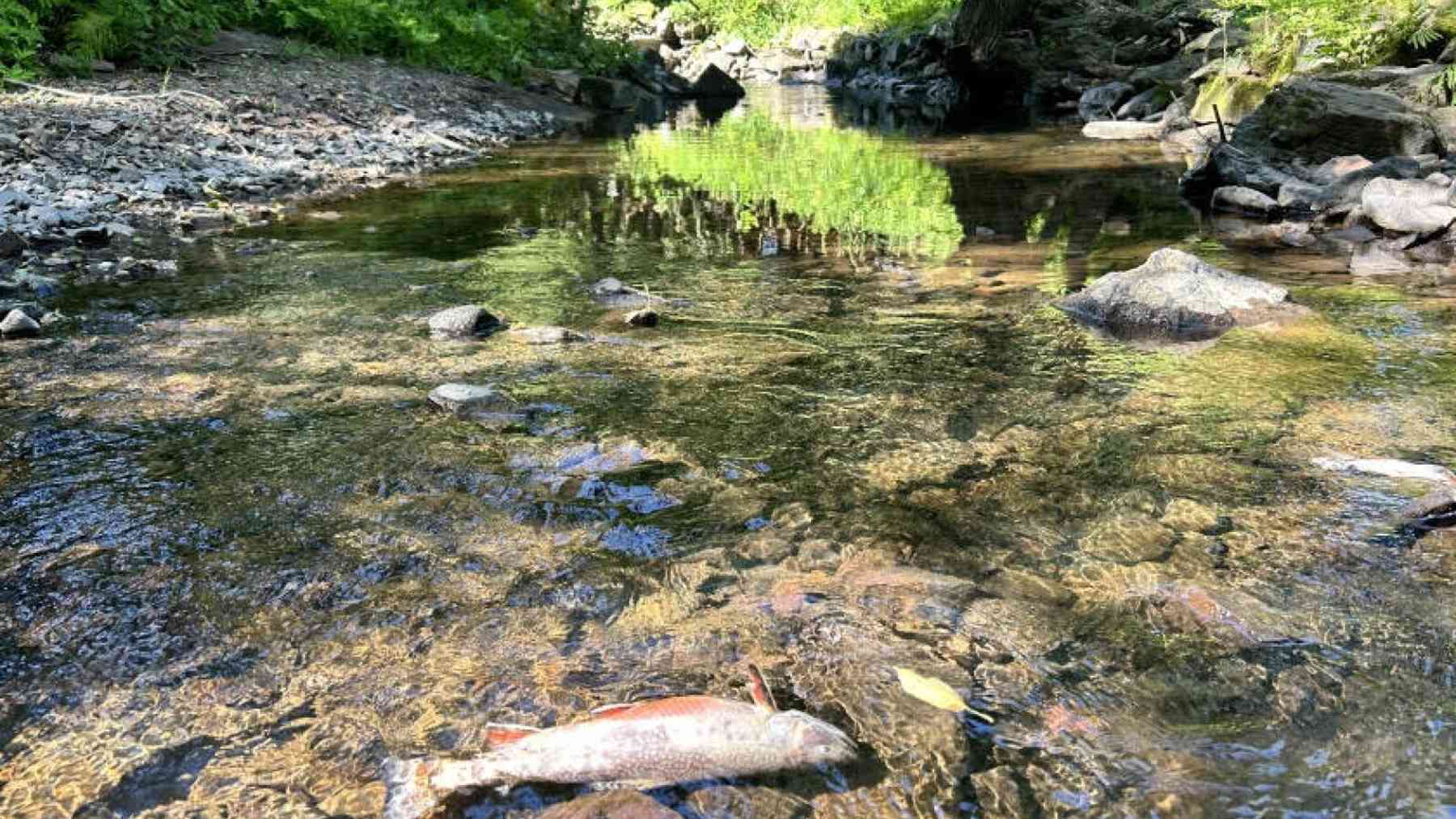
It was also about to move through 2 miles of a designated trout stream.
What the state pollution agency documented afterward now sits at the center of new operating procedures for draining reservoirs across the city.
What chloramine does when it leaves the pipe and meets a fish
Chloramine is made up of chlorine and ammonia and is used to disinfect drinking water. It stays active longer than plain chlorine, which keeps bacteria out of long distribution lines. But fish pull oxygen across their gill membranes straight from the water around them, and that is where the same chemistry turns dangerous.
The numbers are blunt. The level in the water leaving the reservoir was 1.6 parts per million, an ordinary concentration for drinking water. Chlorine becomes toxic to trout below just a fraction of that, which means the creek received water that was lethal by a wide margin.
In Tischer Creek that summer there was almost no buffer. The reservoir drained at 10.7 cubic feet per second while the stream itself was flowing at 0.19 cubic feet per second, according to an account published by a Minnesota trout conservation group. That account also notes it is unclear whether higher stream flows would have diluted the water enough to avoid ecological damage.
A drain that led straight to a trout stream
Utility staff discharged water during inspection of the 110 year old underground reservoir, which was designed with a drain leading directly to Tischer Creek via a storm sewer. An original valve in the bottom of the structure connected to the city’s stormwater sewer, and the path was unobstructed. Releasing potable water into a storm system had generally been treated as harmless.
Ryan Granlund, the city’s utility operations coordinator, has said the storm sewer connection was known while the danger it carried was not. “I don’t think the vulnerability was on our radar,” he said. He has since described the episode as something the city is trying to learn from.
The eastern Duluth creek empties into Lake Superior through the grounds of Glensheen Mansion. Tischer Creek is one of 16 designated trout streams inside the city limits, a number that speaks to how cold these urban waterways stay.
Fifteen hours and 2,300 fish
City crews released about 1.7 million gallons of treated drinking water from the Woodland Reservoir in late July 2024, after a pump problem arose while the reservoir was being sanitized. The release ran about 15 hours. The city’s first report to the state put the volume near 500,000 gallons, an estimate later revised sharply upward.
By the time counting was done, an estimated 2,300 fish were dead. Nearly 1,600 of them were brook trout, with surveyors logging 1,588 along about 2 miles of creek plus roughly 760 fish of other species. The pollution agency also found extensive harm to the broader ecosystem of the stream.
Those were wild fish. Because of the creek’s success at natural reproduction, the state had not stocked brook trout there for many years. City staff told councilors that brook trout populations may take at least eight years to rebound, and fisheries staff said they would rather see native strains repopulate the water than restock it artificially.
A finding that changed how one city drains reservoirs
Before the Tischer Creek fish kill, releasing drinking water into storm sewer systems was generally considered not impactful. That assumption now reads differently, particularly for any city sitting on cold water trout habitat. Duluth’s new procedures are written into its stormwater pollution prevention program, which the state regulates.
The state pollution and natural resources agencies and the city finalized a violation agreement that includes a $12,000 civil penalty and about $190,000 in compensation under a natural resource damage assessment claim, the pollution agency announced. The money is earmarked for habitat and recovery work, including removing barriers to fish migration and a learn to fish program with a local nature center. The agreement states it is not an admission of fault.
A city councilor with a background in water resource management put the chemistry plainly: “If you put too much chlorine in it, your fish aren’t going to survive.” The same logic scales from a backyard pond to a creek fed by a city reservoir.
What Duluth rewired, and what other cities are watching
Drained drinking water will now be routed into the sanitary sewer system, sending it toward a treatment facility before any eventual release. Similar reservoir drain valves elsewhere in the city have been tagged and locked. Together those changes sever the direct link between a reservoir drain and a creek.
“It’s novel because there are no other cities that have this,” Granlund said of the new procedures. The city has also invested in dechlorinating diffusers that attach to fire hydrants during routine flushing, to keep chloraminated water out of nearby streams. Even so, the procedures change the path the water takes, not its chemistry.
The risk has not disappeared. In the fall of 2025, a water main break sent treated drinking water into Coffee Creek, another Duluth trout stream, where the state documented around 45 dead brook trout alongside about 45 living ones. Researchers tracking what common chemicals do to aquatic life found a similarly counterintuitive gap in work on glyphosate’s effects on soil reproduction. With 16 designated trout streams and aged in ground water systems, moving chloraminated water through town still carries consequences.
Brook trout that recover slowly from population setbacks are the measure of how long a single open valve can echo in a stream. The creek is still cold, still running toward Lake Superior through the Glensheen grounds, and still waiting for its trout to come back.
Read the whole thing?
Get the week's signal, not the noise
Our sharpest reporting on energy, climate and nature — free, once a week.


