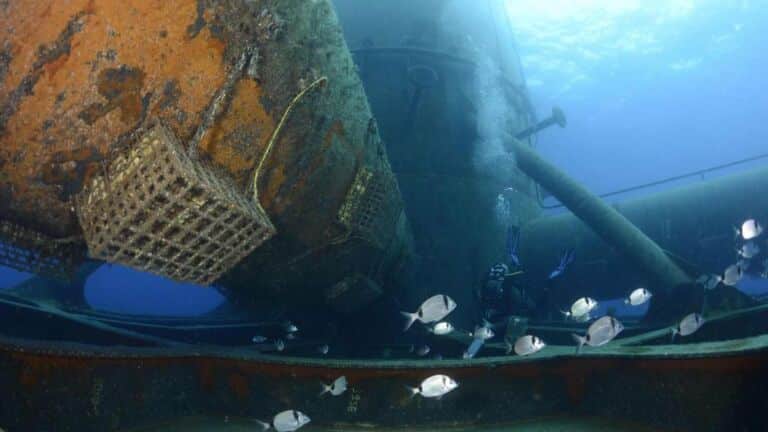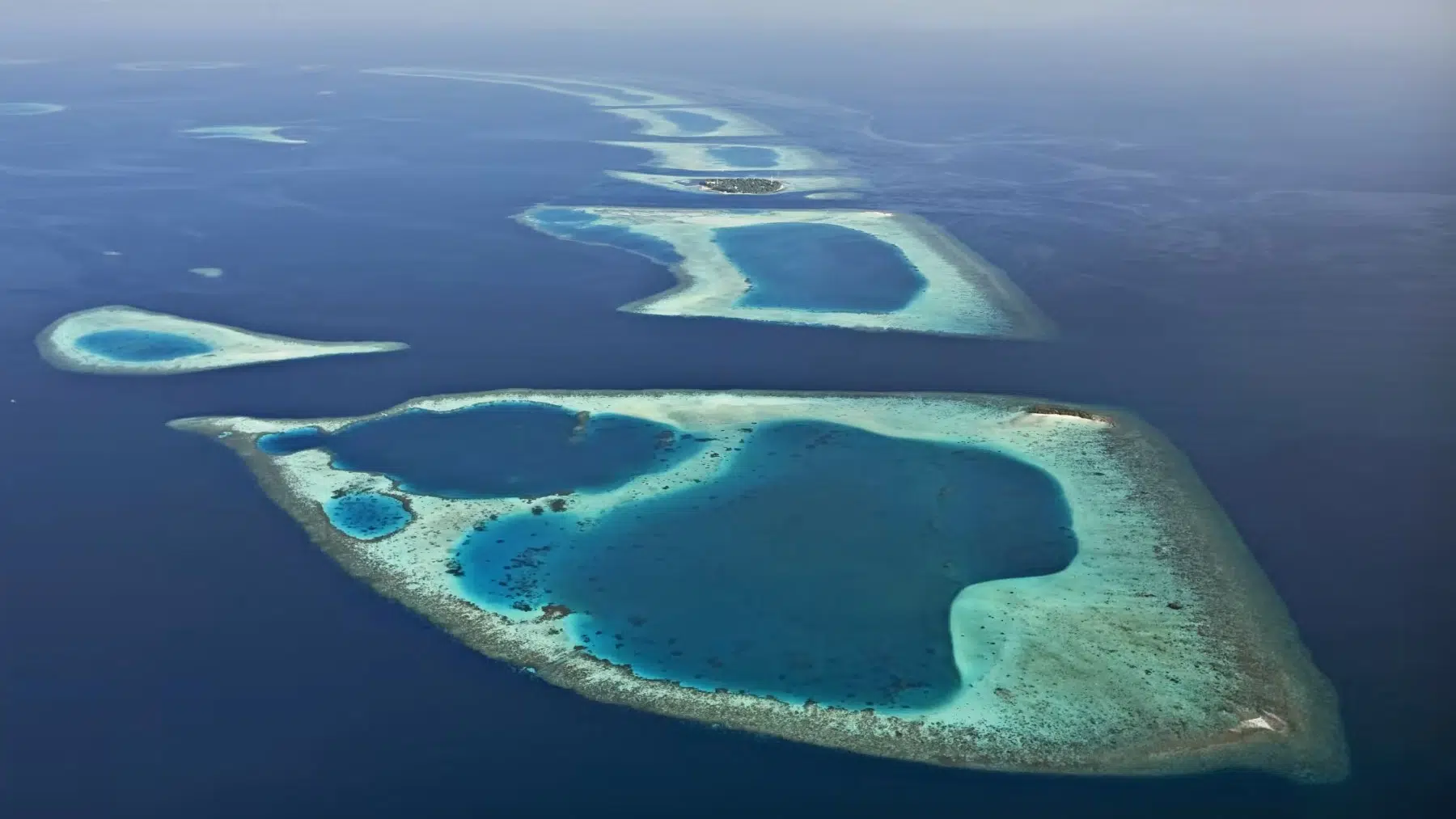
The ocean, or rather the world ocean, can be divided into five distinct regions: the Pacific, Atlantic, Indian, Southern (Antarctic), and Arctic Oceans. It consists of many treasures, some natural, some man-made, and the majority historical. Vast deposits of valuable minerals have long been known to exist at the bottom of the ocean, and now President Donald Trump wants to collect them. Today, we will be telling you what exactly is on this Ocean’s seabed and why Trump is after it.
This is why Trump wants to mine this ocean
An executive order is being drafted by the Trump administration to allow the collection of metals found on the Pacific Ocean seabed. The order would form part of an effort to counter China’s supremacy of battery minerals and rare earth supply chains. Rare earth minerals comprise 17 elements on the periodic table. According to the U.S. Geological Survey, China provides almost 70% of the world’s rare earth minerals. In response to Trump’s “Liberation Day” tariffs, Chinese manufacturers will need permission for rare earth material exports.
The biggest treasure found on the ocean’s seabed, namely, the small nodules, form at high pressure over millions of years and consist of nickel, cobalt, copper, and manganese used in batteries, electrical wiring, or munitions, as well as traces of rare earth minerals. After China’s retaliation, the US is desperately seeking self-sufficiency in critical minerals. The Trump administration has approached Ukraine with a minerals deal, threatened to seize Greenland and take over Canada, and announced measures to increase domestic manufacturing.
“NOBODY is getting ‘off the hook.’ We will not be held hostage by other Countries, especially hostile trading Nations like China.” – Donald Trump to Truth Social.
The minerals on the seabed will help America beat China
Per Alexander Gray, former chief of staff to the US national security adviser in the first Trump administration, it makes sense for the White House to focus on deep-sea mining as China sees the deep seabed as “a front line in economic and military competition with the US.”
“As the Trump administration has done with shipbuilding and critical minerals more broadly, catalysing US government focus on the areas of greatest vulnerability to PRC ambitions is essential.” – Gray.
The nodules would aid the US in gaining on China in the global race to explore the mineral-rich seabed of the Pacific. Marco Rubio, the secretary of state, and Mike Waltz, the national security adviser, strongly advocated the cause during their service in Congress. Even the annual defense budget bill from last year requested a feasibility study on how the nodules could be processed for defense applications.
“”It’s moved beyond a commercial question. This is a Chinese strategic capability built up for decades such that it could be weaponised. – Statement by a House aide.
The effects of deep-sea mining could be catastrophic
Reports indicate that the International Seabed Authority in Jamaica has adopted exploration regulations for international waters, but has not finalized exploitation rules, and many countries still want to ban the practice. Critics argue that deepsea mining may destroy the rare life forms thousands of meters below the surface, such as the coral beds and white octopuses. Others remain divided on whether the industry could ever compete with China’s vast rare mineral supply chain or compete with Indonesia’s low nickel price.
“Exploration and exploitation of mineral resources in the international seabed area must be conducted in accordance with the United Nations Convention on the Law of the Sea and within the framework of the International Seabed Authority.” – China’s Foreign Ministry.
Some argue that Trump has no jurisdiction and should not have the right to deep-sea mining, as the potential for significant and irreversible damage to fragile deep-sea ecosystems is just too high.
Read the whole thing?
Get the week's signal, not the noise
Our sharpest reporting on energy, climate and nature — free, once a week.