
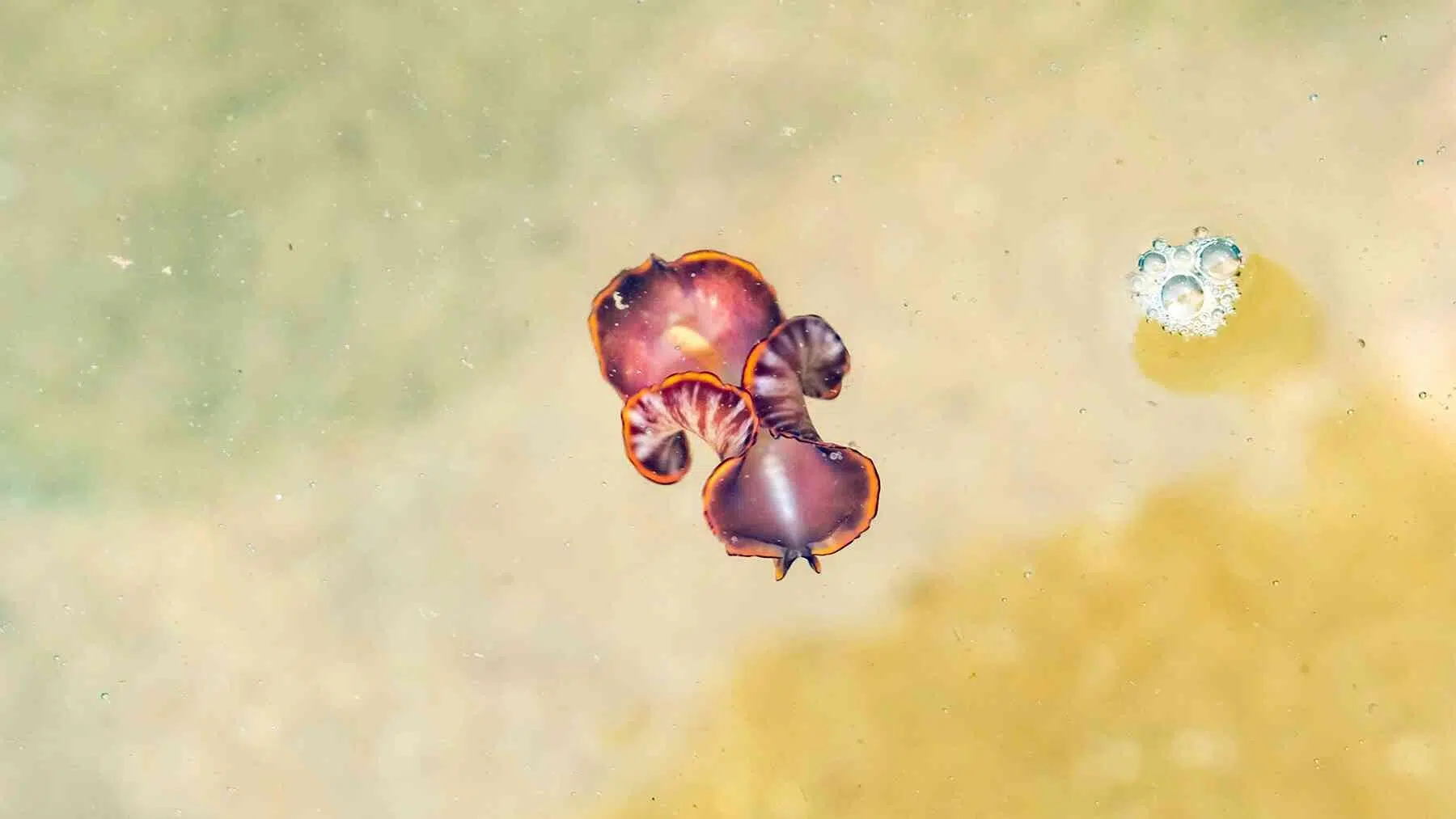
When you see something in nature that defies explanation, especially when it’s living, your curiosity goes into high gear.
An underwater photographer encountered such a case while diving near the coast of Australia. Something moved through the water that didn’t look anything like a fish.
As it glided along, waves appeared to ripple across its body.
How could something create motion like this, and what kind of alien-like creature was it?
What divers caught moving off Australia’s coast
The sight was so unusual that it created a sense of awe, almost as if an actual performance was taking place. As the creature glided through the water and sent continuous waves across its body, it became harder to think of it as simply another aquatic animal.
At times, it really did seem like it was performing a choreographed dance.
This incredible encounter generated a great deal of interest from people trying to figure out what they were looking at.
There were several reasons why the video footage caused such confusion. One reason was that no matter how hard people tried, they couldn’t determine what type of creature it was.
Another reason was its unique ability to move through the water.
The video revealed that this animal was located off the east coast of Australia. Further review showed that it did not appear to swim like other aquatic animals.
Other aquatic animals use fins or tail flukes to propel themselves through the water.
Instead, the creature creates waves along each side of its body to move forward.
The motion looks similar to a flowing sheet of fabric. This action draws attention to the movement before the animal is identified.
The hidden creature behind the underwater dance
Observing ocean life may seem exciting, but much of it lives in environments that are difficult to study.
Many marine organisms reside among coral reefs, on rocks, or at depths beyond where scuba divers typically dive. Because of this, their behavior can be difficult to observe.
On occasion, however, we get lucky enough to catch a glimpse of an animal displaying a particular behavior.
This usually occurs in an area that is easier to observe.
When this does occur, researchers gain valuable insights into how a particular species adapts to survive. It can also reveal how it interacts with its environment.
This sighting also illustrates the misperception many people have regarding the variety of sea slugs.
Most people perceive sea slugs as small, slow-moving creatures crawling across the seafloor.
While some sea slugs fit this description, others have developed adaptations and behaviors that make them far more impressive, a fact frequently highlighted by the MarineBio Conservation Society.
What moves beneath the surface like nothing else alive
Fortunately, this sighting provided answers regarding the identity and behavior of the mysterious sea slug. The strange creature was identified as a Spanish Dancer (Hexabranchus sanguineus).
It is one of the larger nudibranchs found in the tropical Indo-Pacific, including Australia.
The flamenco skirt hiding beneath the waves
The name “Spanish Dancer” comes from the way it moves.
If provoked or threatened, this large sea slug uses the undulation of its edges to produce a series of flowing wave motions.
These movements resemble a flamenco dancer’s skirt as she dances.
Due to its size, this nudibranch is one of the largest known species found in Australian waters. In fact, some specimens are noticeably larger than typical sea slugs.
Initially thought to be an unusual “dancing creature”, it was ultimately confirmed as a marine species.
This provided a rare view of the animal performing behavior that has fascinated divers for decades.
The sighting shows how some remarkable marine animals remain unknown until they are observed for the first time.
Read the whole thing?
Get the week's signal, not the noise
Our sharpest reporting on energy, climate and nature — free, once a week.




