Far out in northern Lake Michigan sits an island many Americans have never heard of.
Yet sailors remembered it for generations.
Dense forests cover most of the region.
Cold freshwater surrounds it in every direction.
At night, the skies above the island become startlingly dark.
That darkness is now drawing astronomers back.
Modern stargazers travel there searching for something increasingly rare in North America.
A sky almost untouched by artificial light.
But long before astronomy tourists arrived, Irish fishermen noticed something unusual about the island after sunset.
What is it that Irish fishermen have known about for centuries that we do not?
Why Beaver Island became known as America’s “Emerald Isle”
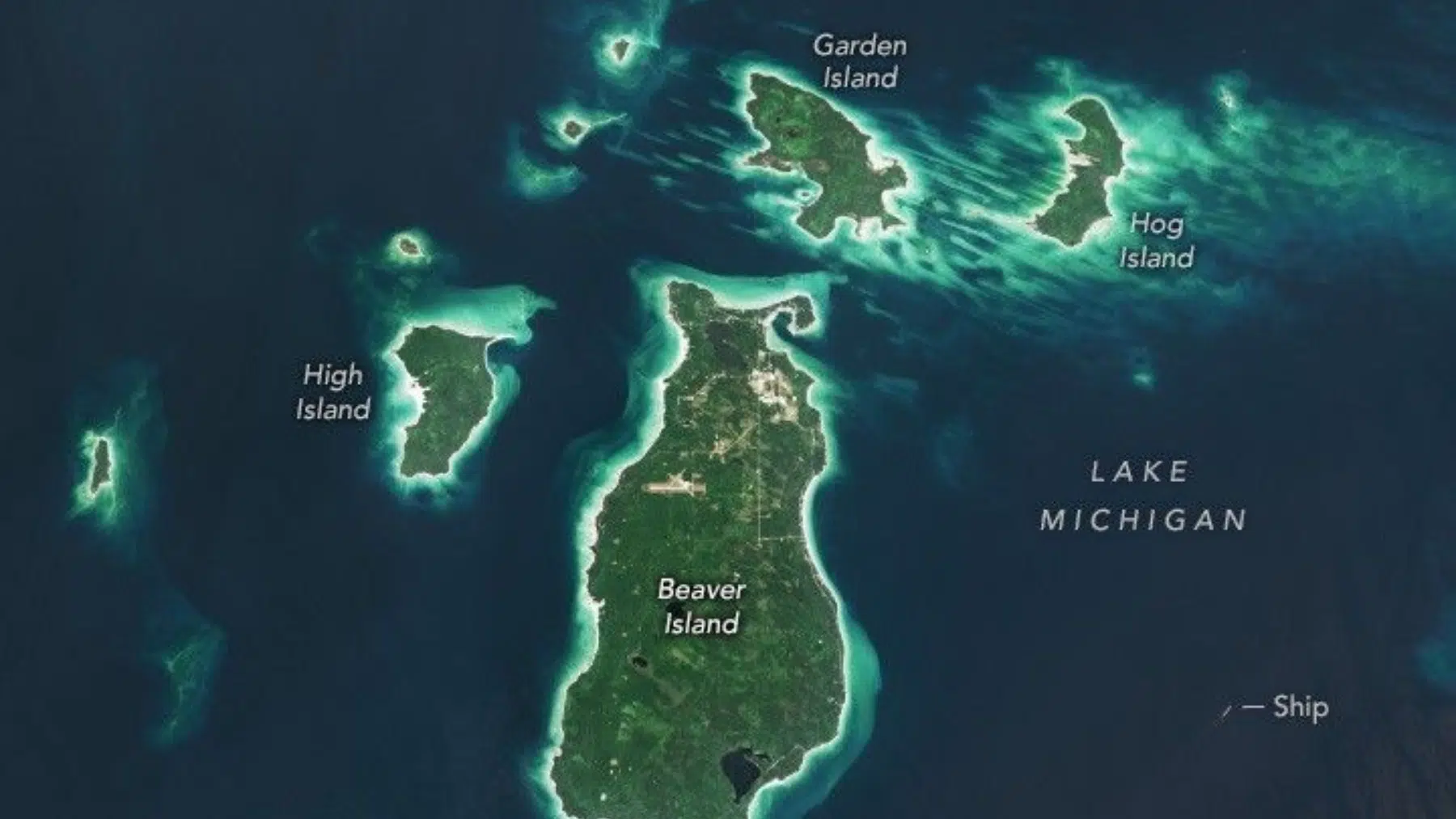
The island lies roughly 32 miles from the Michigan mainland.
It remains surprisingly isolated even today.
Rolling green forests helped earn it the nickname “America’s Emerald Isle.”
Irish immigrants settled there heavily during the nineteenth century.
Fishing communities soon expanded along the shoreline.
Life on the island revolved around the lake.
Storms shaped travel schedules and controlled trade routes.
Winter isolation became part of island life.
For decades, residents depended on fishing boats crossing dark stretches of water at night.
That darkness mattered more than outsiders realized.
Unlike growing mainland cities, Beaver Island avoided heavy industrial development and large urban lighting.
As electricity spread elsewhere, the skies above the island stayed remarkably clear.
That accidental preservation would later become one of its defining features.
Why modern astronomers became fascinated with the island
Researchers and amateur skywatchers began paying closer attention to Beaver Island in recent years.
The skies there remain unusually untouched.
Artificial light pollution has erased clear night skies across huge parts of North America.
On Beaver Island, however, conditions stayed different.
The surrounding lake blocks much of the distant glow from cities.
Open water also creates wide horizons with minimal obstruction.
That combination produces exceptionally dark viewing conditions.
Some nights reveal thousands of visible stars.
Astronomers say the Milky Way often appears sharply defined overhead during clear weather.
Meteor showers become easier to observe there, too.
The island now attracts tourists searching for dark-sky locations around the Great Lakes.
Experts also note that darkness affects more than tourism.
However, artificial light can disrupt bird migration, insect activity, and sleep cycles.
Beaver Island avoided much of that pressure simply because of its geography, as noted by NASA Science.
This iconic part of the nation has become the center of attention, thanks to Discover Beaver Island.
What Irish fishermen discovered there centuries ago
The thing Irish fishermen stumbled upon was the island’s extraordinary darkness and unusually bright night sky.
The stars became impossible to ignore there.
Long before modern astronomy groups arrived, fishermen crossing Lake Michigan noticed how vividly the sky appeared.
Without city lights, constellations reflected across the water with astonishing clarity.
For sailors, those skies became both practical tools and unforgettable landmarks.
The island effectively acted like a natural observatory centuries before anyone used that term.
Lake Michigan amplified the experience dramatically, too.
Open water absorbs far less artificial light than cities or highways.
Which allows the human eye to detect far fainter stars.
Researchers estimate that more than 80% of Americans now live under skies heavily affected by light pollution.
In some parts of the world, only a few dozen stars remain visible at night.
On Beaver Island, light can be a sign of something else
The island’s isolation also protects nighttime silence.
That combination creates a viewing experience many mainland residents rarely encounter anymore.
Even satellites become easy to spot there.
NASA’s Earth Observatory has highlighted the region because of how dark the surrounding Great Lakes remain from space.
Satellite imagery shows Beaver Island sitting inside one of the least light-polluted areas in the eastern United States.
For the Irish fishing families who settled there generations ago, the skies were simply part of daily life.
Read the whole thing?
Get the week's signal, not the noise
Our sharpest reporting on energy, climate and nature — free, once a week.