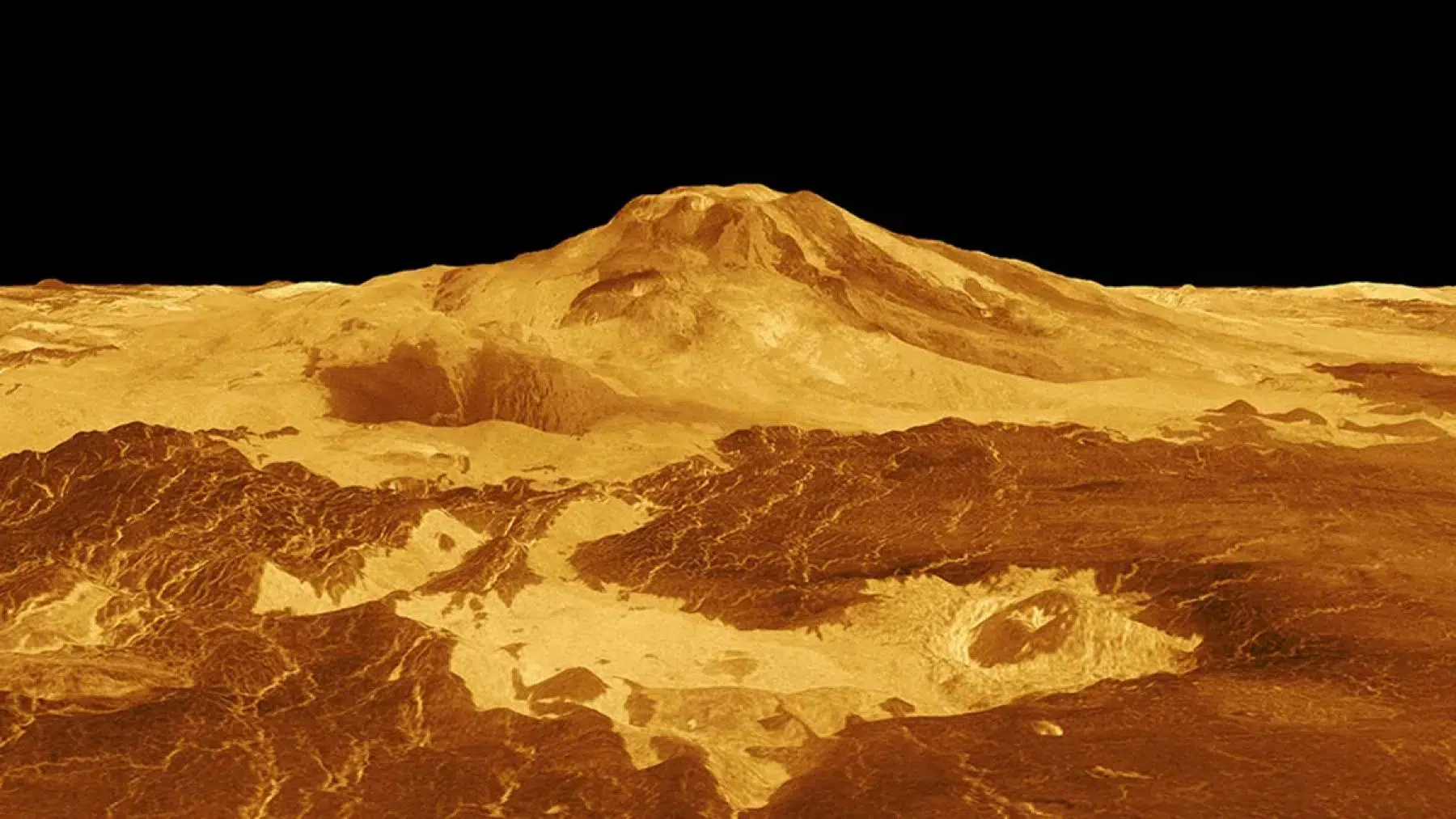
Venus has not been extensively studied by NASA or any other space agency due to its atmosphere. In contrast, rovers were able to land and start studying the soil, craters, and sandstorms on Mars — but this has not been replicable when it comes to the second planet from the sun. Venus’ atmosphere is so dense and hot that everything humans sent there went offline around 10 minutes after impact – and some didn’t even make it to the ground in one piece. The average temperature is 867°F (464°C).
NASA didn’t get to Venus first
The Soviet probes were the only ones to briefly capture the surface, and their systems failed almost instantly under the crushing pressure and extreme heat. Since then, most missions have avoided direct contact altogether, prioritizing flybys instead or distant observation. For decades, Venus remained largely untouched – a planet too hostile to explore, too dangerous to land on, and too costly to risk. However, that long pause may be coming to an end.
In recent years, however, Venus has returned to the spotlight. Advances in radar mapping, atmospheric modeling, and deep-space imaging have given scientists new tools to study the planet from afar. And now, new findings are starting to challenge some of the oldest assumptions ever made about our planetary neighbor.
Venus behaves differently from the previous thought
A NASA-funded research has shown unexpected details about how Venus’ outer shell behaves. For years, researchers believed that, since Venus lacks the same internal forces as Earth, its crust would just keep thickening over time. However, new modeling suggests something else may be happening: the crust is transforming from within, due to the way rocks melt and shift based on their density and temperature.
On Earth, the rocky crust is split into massive plates that are constantly moving. When two plates meet, one can slide beneath the other, a process called subduction. The plate that gets pushed downward is exposed to increasing heat and pressure, which causes the rock to change — a process called metamorphism. This not only reshapes the crust but can also trigger volcanic eruptions.
According to Justin Filiberto, a NASA planetary scientist who contributed to the research, Venus does not show signs of tectonic activity like Earth. Its crust appears to be one solid, continuous layer — with no subduction zones. Still, the study’s models estimate that this crust is about 25 miles (40 kilometers) thick on average and can reach up to 40 miles (65 kilometers) in certain regions. This means changes may still be happening beneath the surface — just differently than what we see here at home.
Venus was not always believed to have a rocky surface
Because of its thick atmosphere, many once assumed it might be similar to gas giants like Jupiter or Saturn. That changed in the 1960s, when Soviet Venera probes managed to land and confirmed a solid crust. Then in 1978, NASA’s Pioneer Venus mission delivered a full map of the planet’s surface — data that had gone largely unquestioned until now. This new research, however, may help explain more than just the crust. By examining how the planet’s outer layer behaves, the science folks are looking to better understand Venus’ atmosphere.
Venus has helped NASA to study the Sun’s poles
NASA’s scientists were able to directly study the Sun’s poles, uncovering surprising new findings into its magnetic and structural behavior. This breakthrough became possible thanks to the Solar Orbiter mission, which adjusted its path using a gravity assist maneuver during a close approach to Venus in February. That maneuver shifted the spacecraft’s orbit by 17 degrees away from the Sun’s equator. By March, the Orbiter had climbed to about 15 degrees above the ecliptic plane, granting scientists an unprecedented view of the Sun’s southern pole.
Read the whole thing?
Get the week's signal, not the noise
Our sharpest reporting on energy, climate and nature — free, once a week.