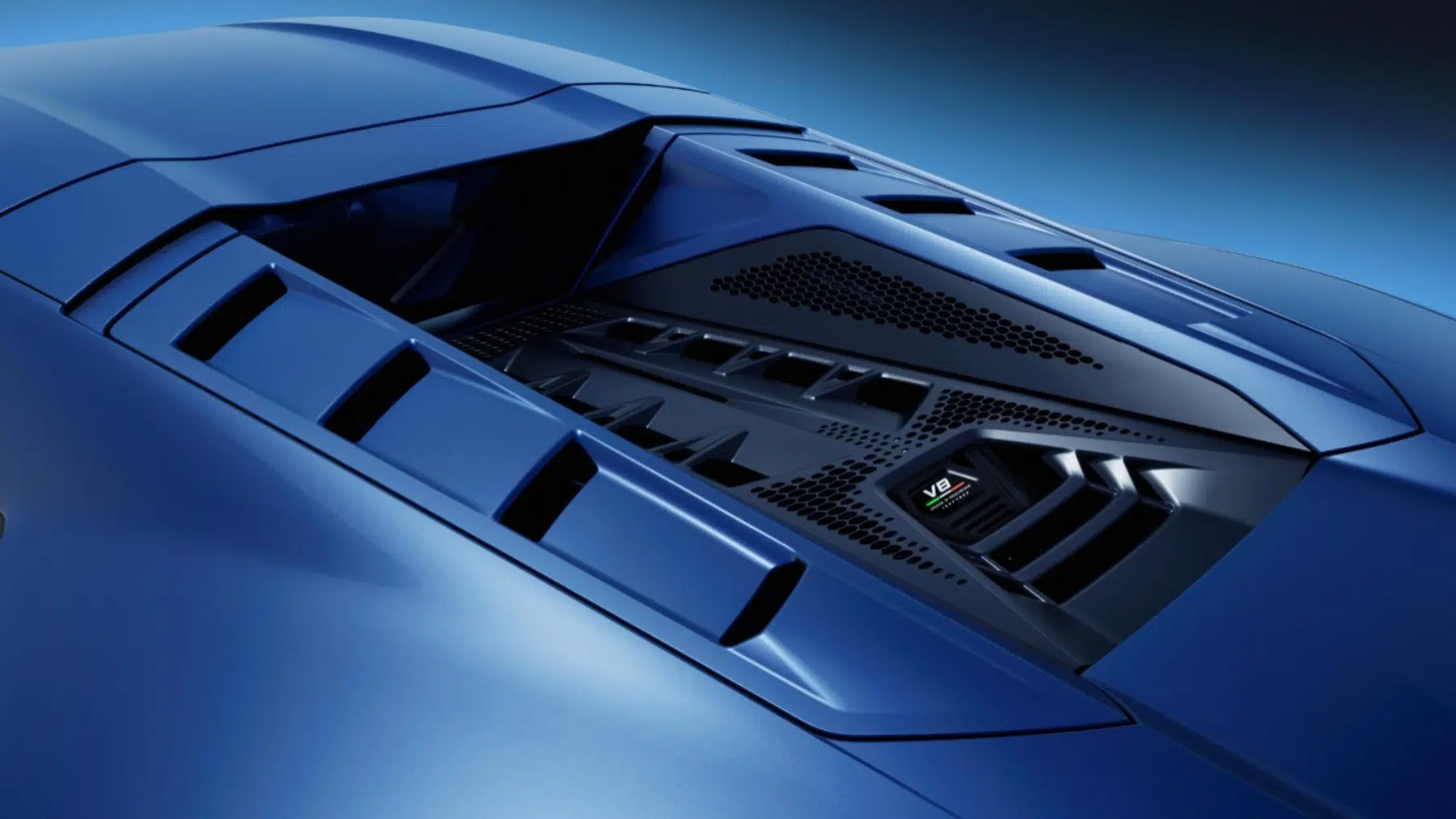
In the history of luxury and supercars, Ferrari and Lamborghini have always been rivals. This time around, however, it is about to get worse and this is why. Ferrari has been looking into hydrogen engine technology, while Lamborghini is introducing something even better and that is a monstrous new V8 hybrid engine that could change everything we know about the car brand.
In 2024, Stephan Winkelmann, the CEO of Lamborghini, hinted at the total output of the new V8 plug-in hybrid powertrain. The Huracan replacement will be propelled by this engine. Winkelmann claims that the twin-turbo V8 hybrid will produce approximately 900 CV, or about 888 horsepower, in total. It will undoubtedly be less expensive than the V12 Revuelto, but by how much?
A brand-new Twin-Turbo V8 Hybrid with unrivalled performance
With a maximum output of over 900 CV, the Lamborghini 634, the code name for the Huracán’s replacement that will join the High-Performance Electrified Vehicle (HPEV) lineup, will have a twin-turbo V8 engine paired with a hybrid system that includes three electric motors and the eight-speed dual-clutch gearbox that was recently unveiled on the Lamborghini Revuelto.
The twin-turbo V8 has a remarkable specific power of 200 CV/litre and a displacement of 4.0 litres. The new V8 will be unusual among road-going super sports vehicles since it will provide a maximum power of 800 CV between 9,000 and 9,750 rpm, achieving a maximum engine speed of 10,000 rpm—a figure often reserved for racing engines, according to Lamborghini.
Lamborghini has been strategic about this production to go hybrid rather than fully electric or hydrogen-powered. This is because the car brand has a certain fingerprint it wants to put on its production to make it unique. Also, for years Lamborghini has always wanted to ensure that driver experience is good by investing in an efficient sound, emotional, and driving experience, and it still wants to maintain that with this new engine.
Why there may be issues with Ferrari’s hydrogen plans
One thing we need to understand is that hydrogen is good, especially for the environment to cut carbon emissions; however, there are problems associated with hydrogen that Lamborghini itself is running away from. That is, the inadequate supply of proper hydrogen infrastructure and it is expensive and hard to scale. Therefore, Lamborghini sticking to the hybrid engine is also an economical move.
This is why now we see that this whole invention could be a threat to Ferrari’s hydrogen. Ferrari is focusing on something that might take years to manifest and be in proper functionality, while Lamborghini is offering instant, real-world performance gains with its hybrid approach. If this 900-horsepower monster excels, the Ferrari will be pushed and forced to reconsider their hydrogen engine.
Supercars of the future: Hydrogen, hybrid, or something else?
At this point, we do not know what could be the right or final answer because it looks like the supercars are at a crossroads. Engines with full electrification are inevitable; at the same time, hydrogen does have some significance in the market. However, Lamborghini’s 900 hp shows that it has an upper hand and is more convenient at this moment.
The fight for Italian supercars’ future is far from over
Every car brand and model strives to enhance its vehicles to keep up within the market, remain appealing to its customers and win new ones too. In this world where technology keeps advancing with things like AI, these supercars are on a battlefield to keep themselves relevant at all times. Therefore, it is important to pay attention to what other brands are doing if they are making it in the automotive industry and still providing sustainability.
Read the whole thing?
Get the week's signal, not the noise
Our sharpest reporting on energy, climate and nature — free, once a week.