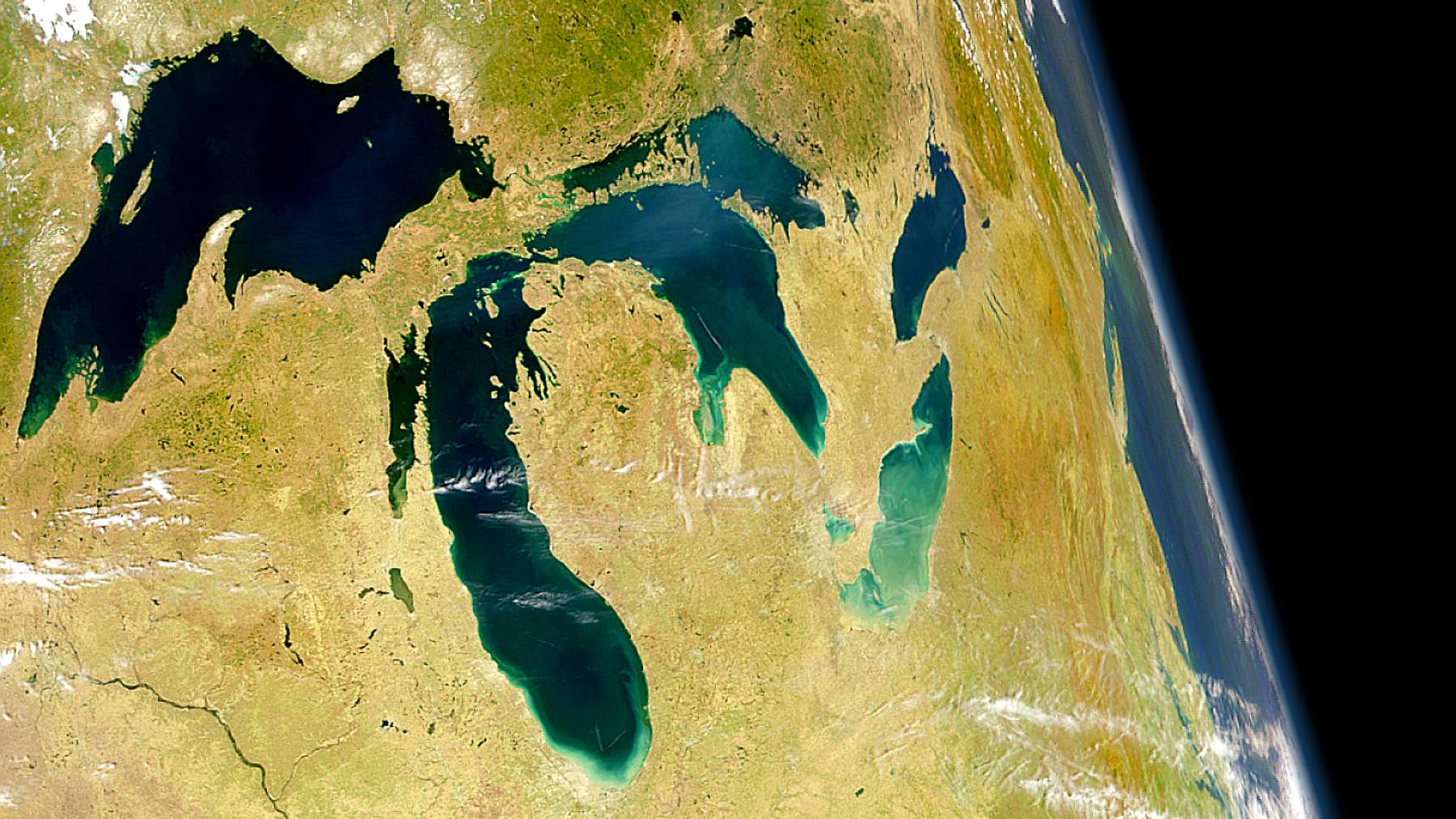
Where there’s smoke, there’s fire, and where there are great bodies of water, there could be great power. On the border between the US and Canada, there is an entire system of integrated freshwater lakes. This entire system is known as the Great Lakes and contains 21% of the globe’s surface freshwater. Besides being a vital life source and a significant economic driver, engineers believe there are 575 GW of wave energy potential beneath the Great Lakes.
The momentum in the search for renewable energy
Trends come and go, but when it comes to the environment, the eco-friendly trend is here to stay. At present, the world is gradually transitioning to renewable energies to meet one goal: Zero carbon emissions by 2050. Why? Because the burning of fossil fuels has gone on for too long, and the effects of climate change must be alleviated, if we want to continue living on planet Earth.
Typical renewable sources include solar, wind, and geothermal energy. However, these sources all face challenges of their own, with examples including requiring a large use of land, weather dependency, and noise and visual pollution. Thankfully, a team of engineers from the University of Minnesota-Duluth has discovered a new, untapped source of energy with extreme potential.
This energy source just goes with the flow
The engineers have been focusing on tapping into wave energy as a feasible alternative to other renewable energies. The massive body of water of interest for testing is the Great Lakes, as it offers a more ideal environment and has an existing marine infrastructure. The Minnesota shoreline of Lake Superior is of particular interest due to the presence of average wavelengths of 2 to 3 meters, indicating a considerable amount of potential energy.
Dr. Craig Hill and his research team collected wave data through a network of buoys and computer modeling to assess the potential of the Great Lakes. After careful research, the engineers discovered that the Great Lakes have a potential wave energy of 575 GW. With this figure in mind, the Great Lakes could generate about half of the amount of electricity required by the United States. We smell a potential renewable energy revolution in the air.
This untapped potential energy could power the US by supplying almost half of its energy demands. Tapping into wave energy could result in an uncharted territory that many will certainly rush to benefit from. Wave energy as a potential renewable source also has many advantages beyond its power.
A source that delivers so much more than just power
Traditionally, testing of wave energy has been mostly done in salt water, but it faced challenges due to the highly corrosive properties of salt. Thanks to the Great Lakes and their freshwater environment, corrosion concerns are a thing of the past, and Wave Energy Converters (WECs) prototypes can be utilized to test this untapped source’s potential.
The team has also suggested pumped storage hydropower to enable short-term wave bursts to be turned into a constant energy supply. Wave energy has numerous advantages to consider compared to other, more common renewable sources. These advantages include:
- Higher energy density
- Waves have a higher energy concentration, resulting in more power from a smaller carbon footprint
- Environmental benefits
- It produces zero greenhouse gases and pollutants
- Has a smaller carbon footprint, as it doesn’t require extreme land use and it’s not visually polluting
- Predictability and consistency
- Waves are relatively predictable and consistent due to the moon’s gravitational pull and wind patterns
Wave energy as a potential renewable energy source may still be in the testing phase, but imagine the positive impact it will have on both the planet and mankind, as it is a clean, continuous source of power. Going with the flow has never looked this good.
Read the whole thing?
Get the week's signal, not the noise
Our sharpest reporting on energy, climate and nature — free, once a week.