NASA found something, not looking for new discoveries, but rather data from 1978. Space exploration has a long history of collecting more data than scientists can study at once. Missions return with instruments full of readings, measurements, and chemical traces that can take years—or even decades—to fully understand. Sometimes, the most interesting clues hide in plain sight, buried in archives until technology or curiosity brings them back to light to help solve new problems in recent discoveries.
NASA is no longer searching: it’s time to look at files from the past
That process is playing out again now. A growing number of NASA researchers are digging into old mission files, looking for details that might have been overlooked the first time around. Their search is driven by new questions and better tools, making it possible to spot things past generations could not. The excitement is building because the answers might touch on one of science’s oldest and most debated questions.
One set of findings from the late 1970s has recently drawn fresh attention. Recorded high above a hostile, cloud-covered world, the data shows unusual chemical signs that no one at the time could fully explain. Today, those same signs are being looked at in a very different way—and that shift is leading scientists back to a moment in history when the biggest clue of all may have been missed.
Over 40 years later, NASA found signs of life in Venus
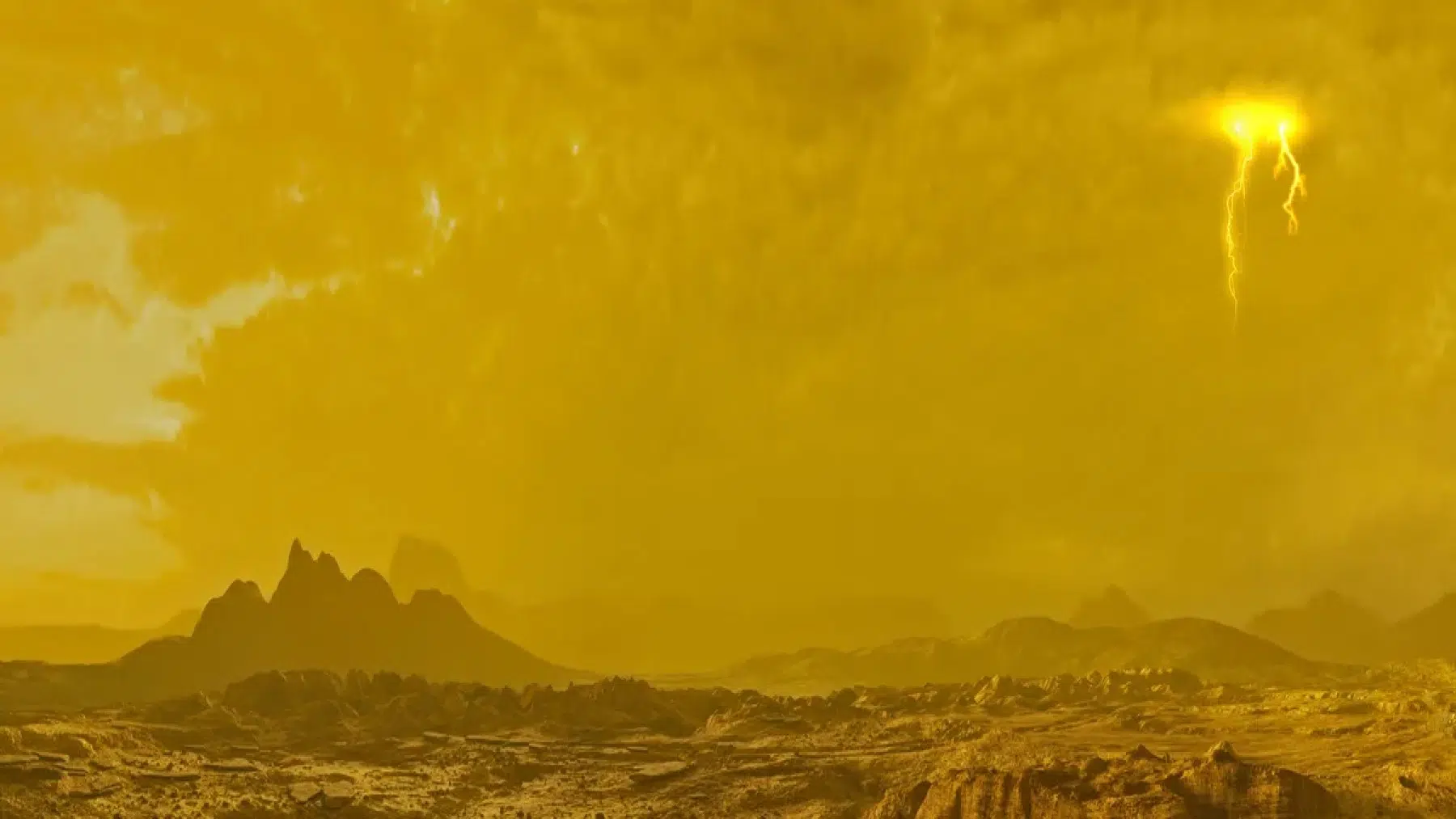
Back in 1978, one of NASA’s probes may have spotted the first clue of life on Venus—but the finding stayed buried in the data for more than four decades. Venus has long been written off as a dead world. Its thick clouds trap heat, the air is laced with sulfuric acid, and the surface is hot enough to melt lead.
A paper that came out on September 14, 2020, published in the journal Nature Astronomy, suggested that something unexpected might be happening high in its atmosphere. Using ground-based telescopes, researchers reported finding phosphine—a toxic gas that, on Earth, is made almost entirely by microbes or in labs.
New data with old study: pieces are coming together
That discovery sent Rakesh Mogul, a biochemist at Cal Poly Pomona, back to NASA’s archives. He and his team pulled up data from the Pioneer 13 mission, which sent several probes into Venus’ atmosphere in December 1978. One of them, the Large Probe Neutral Mass Spectrometer, parachuted through the clouds and analyzed the air on the way down. When scientists first described the results in the 1970s, they didn’t discuss phosphorus-based compounds like phosphine, focusing instead on other chemicals, leaving any signs of phosphine unnoticed.
When Mogul’s team reprocessed the old measurements, they saw signals that matched phosphine and also found phosphorus atoms in the mix—most likely from a gas like phosphine. The work was posted to the arXiv database on September 22, 2020, and had not yet been peer-reviewed, but it adds weight to the idea that something unusual is happening in the planet’s atmosphere.
Something is wrong in Venus: scientists can’t study because the planet doesn’t let us study
NASA-backed research points to a new way Venus’ outer shell might be changing. Scientists once thought that, without the same internal forces as Earth, the planet’s crust would simply thicken as the years went by. New models show a different picture—one where the crust reshapes itself from the inside, as rocks melt and move according to their density and temperature.
Because of its dense atmosphere, some scientists once thought Venus might be more like a gas giant than a rocky world. That view shifted in the 1960s, when the Soviet Venera probes touched down and sent back proof of a solid surface. In 1978, NASA’s Pioneer Venus mission mapped the planet in detail—information that, until recently, no one had much reason to revisit.
Read the whole thing?
Get the week's signal, not the noise
Our sharpest reporting on energy, climate and nature — free, once a week.