While the surface temperature is ideal for life as we know it to thrive, one small change originating from the depths of the Earth could potentially destroy it all. New England and New York are currently experiencing a difficult time as a result of the heat emanating from the inner layers of Earth, which is warming a river. Normally, what lies beneath the surface is larger than what humans can see, and beneath thick layers of rocks, there’s something wide enough to be a cause for concern for scientists about the future.
Geological formations’ similarities: A reason that was never obscure
Over millions of years, the continents went through many formations and were even connected at the same time in what is known as Pangaea – a supercontinent that eventually split apart millions of years ago. This is just one of the reasons why most countries and continents fit together like a puzzle, if they were put together. On the other side, some lands emerged from the sea, making it sometimes difficult to observe these connections.
This means America was once connected to Europe, Africa, and especially the northern part of the old continent. Pangaea was one of the reasons why scientists previously believed the world had one large piece of land, and many formations that were exclusive to a particular place might have been found in other regions as well. However, this is not the case with the heat river flowing towards New York, as researchers are certain that it has no relation to North America separating from Western Africa approximately 180 million years ago.
Appalachian sending heat towards New York: It began millions of years ago
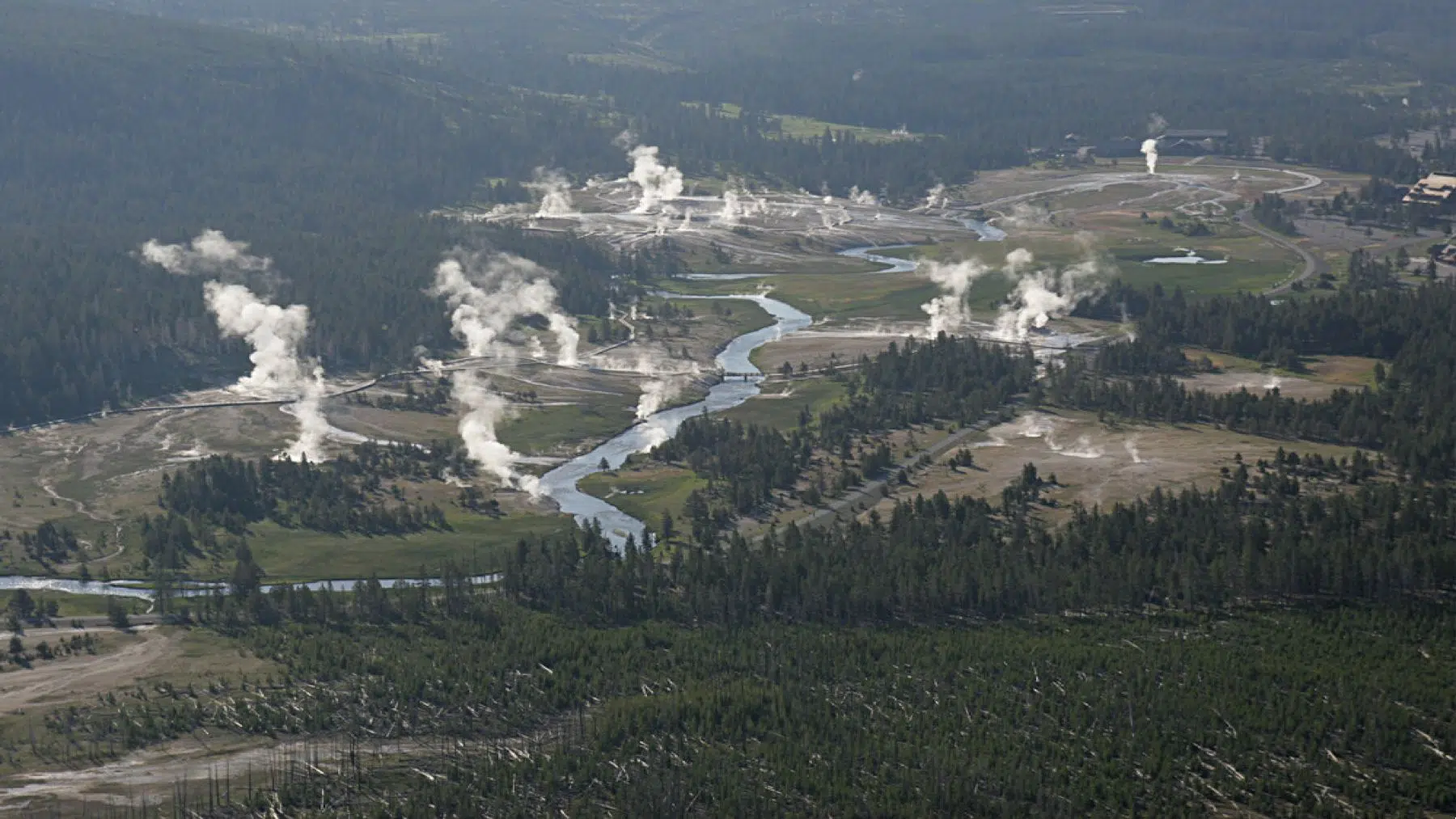
The area scientists are worried about has a name: the Northern Appalachian Anomaly. It’s a giant pocket of hot rock, approximately 350 to 400 kilometers in width, located 200 kilometers beneath the Appalachian Mountains in New England. What makes it peculiar is its origin. According to research published in Geology, this heat zone first appeared thousands of kilometers away, near the Labrador Sea between Canada and Greenland, back when Earth’s crust was fragmenting.
The study was conducted by Thomas Gernon and colleagues at the University of Southampton in the UK, GFZ in Germany, and the University of Florence in Italy. The Appalachians have been geologically quiet for almost 300 million years, making it illogical to think the heat was just leftover from when the continents split apart.
This is only a small fraction of what is happening beneath the surface
Gernon’s team thinks it’s part of a much larger process occurring underground, one that may explain why these old mountains haven’t completely flattened out. Simply put, heat rising from below can wear down the heavy roots holding a continent down. When those roots thin out, the land above becomes lighter and rises – much like a hot air balloon, after it sheds some weight. To understand all this, the scientists turned to a new theory they call the “mantle wave.”
Mantle wave theory might explain the phenomenon: It dates back millions of years
These waves crawl along the underside of tectonic plates for tens of millions of years, sometimes triggering volcanic eruptions that can even bring diamonds up from deep inside the planet. By running computer models and mapping Earth’s interior with seismic data – essentially an ultrasound of the planet – the team traced the anomaly back to the Labrador Sea breakup about 80 million years ago, when Greenland separated from North America. As the studies about heat sections in the ocean progress, more of these can be unveiled (like in this study that shows the power of the seas).
Read the whole thing?
Get the week's signal, not the noise
Our sharpest reporting on energy, climate and nature — free, once a week.