
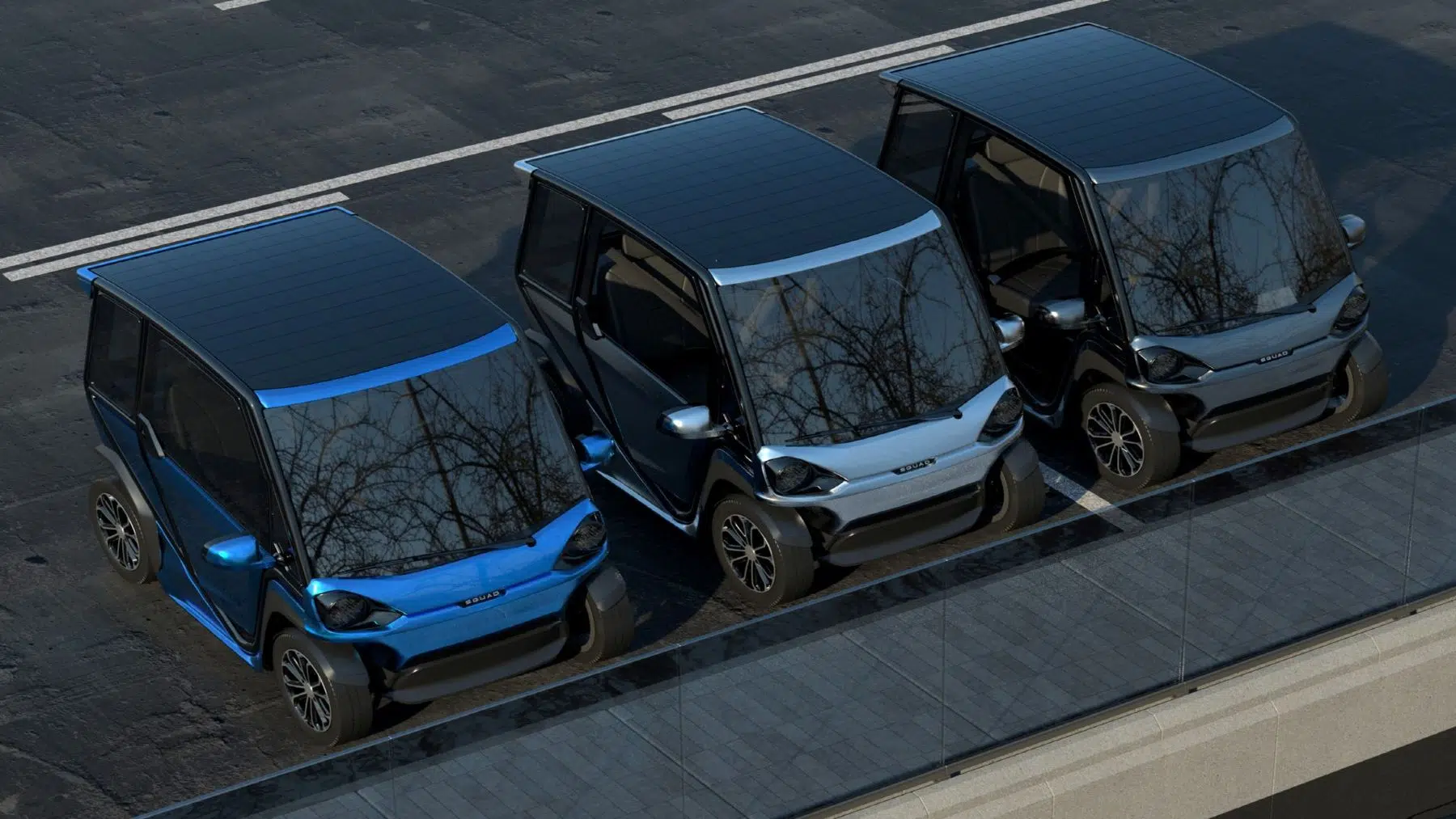
The Dutch company Squad Mobility has unveiled a new project for a small car that runs on sunlight – and the best thing is that you can use and leave it wherever you want. As streets are crowded with cars, motorcycles, buses, and trucks, some people opt to either commute using the underground metro stations or by bicycles. But, what if you could do the same thing with cars? Well, that’s exactly what Squad thought about when creating the car that you can either buy for personal use, or do like the Europeans and leave on the street for people to use (under signature).
Solar energy in the automotive industry: How reliable is it really?
Solar energy is one of the most reliable sources of power on Earth. The sun strikes the atmosphere constantly, and it’s only a matter of positioning your solar panel to ensure all the energy you need to power your house is coming through. What once was the reason why many people stopped living in desert-like areas is now the same reason why some are choosing to stay and rethink their way of paying electricity bills.
On the other hand, as technology improves to smaller, portable panels, some companies have started to test the variations and possibilities, resulting in the car that Squad launched in 2022, which will arrive in America in 2025. The car is designed for shared use, which means other people can also use the vehicle with an easy handling experience and performance.
The new frontier for electric vehicles: Cars that fit anywhere
The US hasn’t really caught on to tiny electric cars yet. In Europe and Asia, though, they’re everywhere. Squad Mobility wants to change that and has already opened pre-orders for its solar-powered mini-car, aiming to roll it out on American streets soon.
They’re calling it the Squad solar microcar “Solar Buggy.” It charges through a solar panel on the roof, so you don’t always need to plug it in. In the US, it falls under the Low-Speed Vehicle (LSV) category, which limits it to 25 mph (40 km/h) if you want it to be street legal.
It’s coming to the U.S. in 2025: This is how you can get the car
Across the Atlantic, things are different. Squad sells versions that hit 28 mph (45 km/h) or even 43 mph (70 km/h), and they’re working on both a four-seater and a cargo edition. CEO Robert Hoevers says they’re already seeing interest across different corners of the US. The plan is to launch in 2025, with prices starting at $6,250 before taxes. The solar roof adds some free miles each day – around 13 (22 km) in the Netherlands, and up to 19 (31 km) in sunny places like Las Vegas. While Europeans tend to use these micro-cars in packed cities, Americans might spot them more in gated communities, resorts, campuses, or even theme parks.
Features to help with the size: It has multiple practical solutions
You can take the doors off the Squad mini car if it’s too hot, and buy them later if you change your mind. The sliding windows keep things practical. Even the wheels stick out slightly to double as bumpers, which helps when parking in tight spots. And since the whole car is only 2 meters long, you can fit it sideways into a regular parking space, as long as local laws allow it.
The idea of having another car on the street might be controversial, but it would also be an improvement for those looking for a fast, practical solution. But the parking spot would also have to be well picked, as the car’s size and positioning could affect surrounding vehicles (and bikes are not out of this equation either).
Disclaimer: Our coverage of events affecting companies is purely informative and descriptive. Under no circumstances does it seek to promote an opinion or create a trend, nor can it be taken as investment advice or a recommendation of any kind.
Read the whole thing?
Get the week's signal, not the noise
Our sharpest reporting on energy, climate and nature — free, once a week.


