
Researchers recently did something that sounds deceptively simple: they timed spiders running. Hundreds of them — 258 species pulled from labs and field studies across the globe, each nudged into motion and clocked. The results weren’t close at the top. One spider, a hand-sized, hairy Australian huntsman, outpaced every other competitor in the study. Its sustained cruising speed rivals that of the average human jogger.
A global race with 258 competitors
The study, posted to the preprint server bioRxiv on June 15, 2025, is one of the broadest locomotion analyses ever conducted on arachnids. Researchers compiled speed data across 258 spider species, combining fresh lab experiments with previously published findings. It hasn’t been peer-reviewed yet.
For roughly two-thirds of the species, scientists filmed live spiders inside a grid-lined box using high-speed cameras to track every stride. The setup sounds straightforward. Getting the spiders to cooperate was an entirely different problem.
Most needed only a gentle nudge — a paintbrush or the blunt end of a pencil was enough to send them scurrying. Tarantulas were less obliging. “This project would have been over in a month if spiders could understand English,” said study co-author Shreyas Kuchibhotla, a spider behavior researcher who conducted the work at Imperial College London. Tarantulas, he explained, would rather stand their ground than run, so researchers had to resort to puffs of compressed air.
Meet the champion: Australia’s brown huntsman
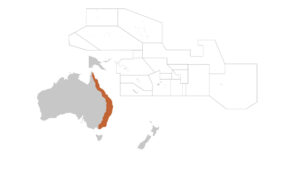
When the data was tallied, one spider stood alone at the top. The brown huntsman — either Heteropoda jugulans or H. cervina, two species so similar they’re difficult to tell apart — from eastern Australia recorded a peak speed of roughly 8 mph. It can only hold that pace for a fraction of a second, but its average sustained speed of about 4.5 mph is still remarkable. The average human jogging pace, for comparison, falls between 4 and 6 mph.
The spider weighs about 3 grams and is roughly hand-sized. Its body plan may be part of the secret: a relatively lightweight abdomen paired with long legs appears well-suited to generating speed without the drag of excess mass.
The huntsman’s speed measurements weren’t new — they came from a 2021 study by evolutionary biomechanist Christofer Clemente of the University of the Sunshine Coast. At the time, his team had no other species to compare it against. “We didn’t know it was the fastest spider,” Clemente told the Australian Broadcasting Corporation. “We said, ‘Wow, that’s really fast.’ But we had nothing to compare it to.” This new study finally gave those numbers their full context.
Dethroning the previous record-holder
Before the huntsman, the title of world’s fastest spider belonged to the Moroccan flic-flac spider (Cebrennus rechenbergi), which earned the designation in 2009 with speeds reaching 3.8 mph. That record came with an important asterisk: the flic-flac achieves its speed by tumbling downhill, not by running in any conventional sense.
That distinction matters. The huntsman’s speed comes from actual running — legs driving against a flat surface, no gravity assist — which makes its performance athletically more significant, not just faster in raw numbers.
The record may not be permanent. Study co-author Jonas Wolff, an evolutionary biologist at the University of Greifswald in Germany, noted that untested huntsman species could yet surpass the current champion. “I would not rule out there are faster huntsman species than this one out there, which have not been tested yet,” he told the Guardian.
Size isn’t everything: the real drivers of spider speed
One of the study’s clearest findings is that bigger doesn’t mean faster — at least not beyond a certain point. Running speed generally increases with body size, likely because larger spiders have longer legs, but that relationship breaks down at higher body masses, where mechanical constraints in muscle physiology and body plan appear to slow spiders down.
The contrast between the huntsman and the salmon pink bird-eating tarantula (Lasiodora parahybana) illustrates this sharply. The tarantula, the heaviest species in the study at 52 grams, ran at less than 1 mph. The 3-gram huntsman left it far behind.
Small spiders can defy expectations in the other direction, too. The orange goblin spider (Oonops pulcher) weighs just 0.1 milligrams — roughly a third the weight of a poppy seed — yet sprinted at around 0.45 mph. Kuchibhotla described watching it move as looking like it “practically teleported across the arena.”
The study also challenged a common assumption about web-spinning spiders. Spiders that catch prey in webs aren’t necessarily slower than those that actively chase their meals, which suggests foraging strategy alone doesn’t determine locomotion capacity.
What this means for our understanding of animal locomotion
The headline finding is a speed record. The deeper finding is more significant. “Spider speed is shaped by leg architecture and evolutionary history, not simply by size or whether a spider spins a web,” said conservation ecologist Leanda Mason of Edith Cowan University, who was not involved in the research, speaking to New Scientist. That insight shifts how scientists think about the drivers of movement across the animal kingdom.
The dataset could also inform work in comparative biology and robotics, where eight-legged movement models have long attracted engineering interest. Understanding what makes certain leg configurations faster or more efficient has practical applications well beyond arachnology.
One more thing, if the huntsman’s speed credentials make you uneasy: the spider is shy, rarely bites humans, and its venom isn’t lethal — causing at most minor swelling. It’s fast, but it’s not chasing you.
As researchers continue expanding large-scale locomotion datasets, the next step may be extending comparisons beyond spiders to other arthropods. The huntsman holds the title today. Whether it holds it tomorrow depends entirely on which species hasn’t been timed yet.
Read the whole thing?
Get the week's signal, not the noise
Our sharpest reporting on energy, climate and nature — free, once a week.