The sharp drop in rainfall across South Carolina means river flows are reduced, and it is causing a crush below the St. Stephen Dam. Diadromous fish moving upstream from the ocean are encountering a bottleneck.
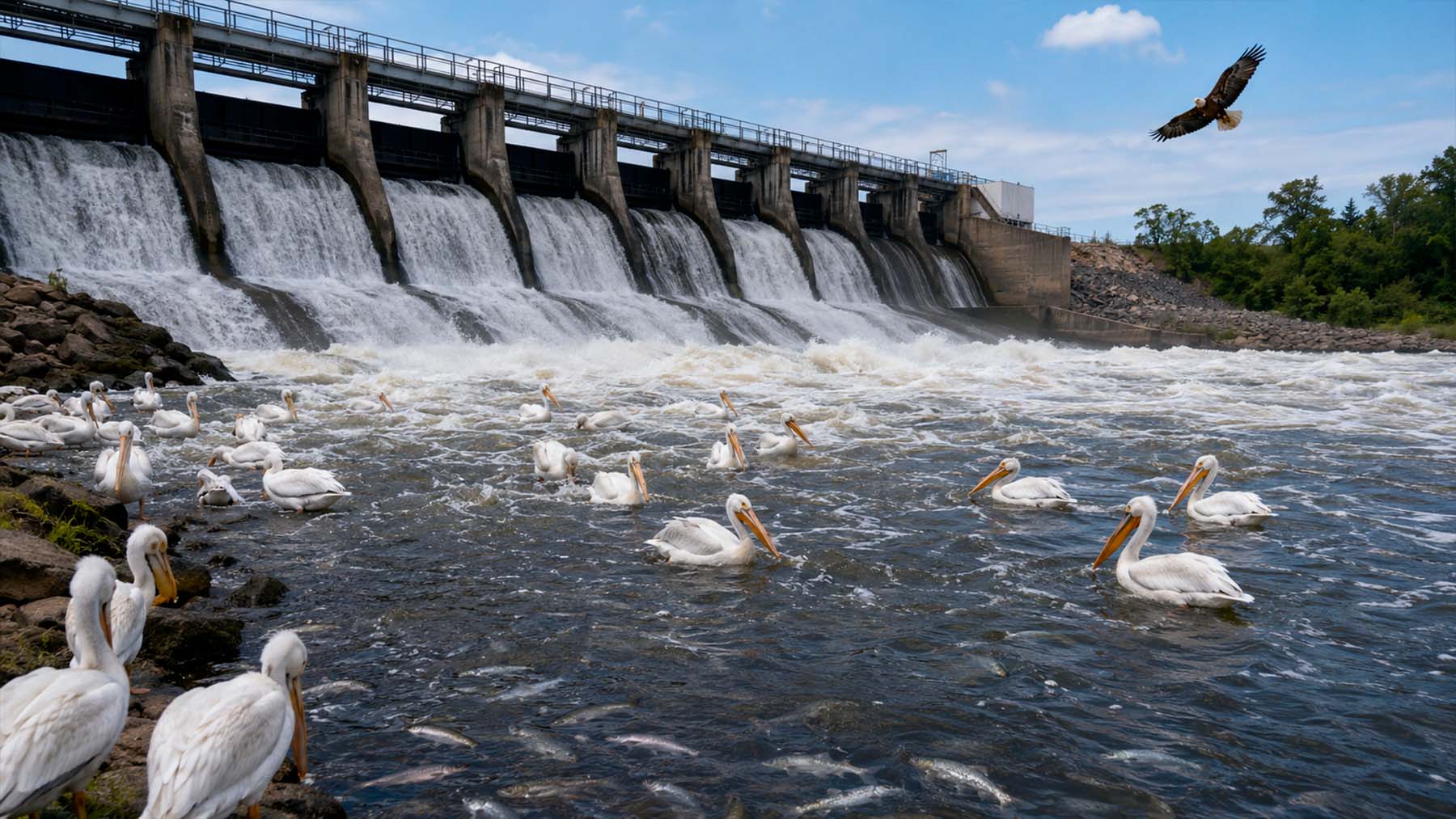
Thousands of American shad and blueback herring are concentrating in the narrow canal, and it is a rare surge in wildlife. Large numbers of cormorants and pelicans have swooped down on the spillway to take advantage of the buffet.
And now, an apex predator has arrived to shake up the dynamics. What happened when a golden eagle caught wind of the feast?
How a bottleneck developed at the rediversion canal
Diadromous fish are those that move between salt and fresh water depending on the stage in their life cycle. Their survival depends on being able to move from the ocean to freshwater far upstream to spawn in spring. In South Carolina, American shad and blueback herring make the energy-depleting trip from the Atlantic Ocean up the Santee River.
The two species are vital to the region’s ecosystem, serving as a main food source for wildlife on land and in the water as they move upstream. But man-made obstacles are getting in the way. In this case, it is the expansive Wilson Dam that bars the way.
It is not a catastrophe, though, because the Cooper River Redirection Project sits nearby. It redirects the migrating populations to the St. Stephen Dam, where they are transported over the wall.
Normally, water released from the powerful facility creates a flow that guides the fish to a specialized lift. But now, the drought conditions mean that water releases from the reservoir have been restricted. The low level of flow is making it hard for fish to get upstream, so thousands of shad and herring have stalled in the shallow water below the dam.
A feeding free-for-all as other wildlife capitalizes
The normally quiet tailrace section under the dam is now a concentrated feeding zone of trapped fish. It did not take long for aquatic predators to notice, and now, striped bass and sizeable catfish have gathered near the spillway base. It is a frenzy of consumption as the fish struggle to find the entrance to the passage to safety.
Aerial predators were the next to arrive on the scene. Dense flocks of cormorants and white pelicans are causing a commotion on the banks and concrete edge of the rediversion canal. The birds are gorging themselves on the trapped schools of prey, causing a dent in the numbers of fish trying to pass the dam.
The volume of activity eventually caught the attention of bigger birds of prey such as osprey and bald eagles, which patrol the river basin all year round.
The concentrated feast has developed into a rare ecological intersection of marine, freshwater, and land ecology.
The natural apex predator advantage means no competition
A golden eagle was the most notable visitor to the site of the fish feast, and a photograph was released by the US Army Corps of Engineers, Charleston District. It did not join the pelican flock on the shoreline—it didn’t need to lower itself.
Instead, it used the height of the St. Stephen wall to survey the goings-on in the canal from above.
Eagle eyesight tipped the scales
While the pelicans and cormorants forced the herring and shad upward, the low water flow prevented them from diving for safety. The eagle took advantage of this trap situation to strike, diving down to snatch a fish in one smooth execution. It didn’t have to compete with the other birds in the slightest.
The bottleneck became a multi-tiered hunting ground when the eagle arrived, according to a press release from the US Army Corps of Engineers, Charleston District. It’s an example of how apex aerial predators use the skills honed over millennia to exploit man-made infrastructure during extreme conditions.
Despite the heavy predation, the St. Stephen facility still manages to transfer more than 500,000 migrating fish via the lift system each spring. The project is a prime example of balancing energy demands with environmental stewardship.
Read the whole thing?
Get the week's signal, not the noise
Our sharpest reporting on energy, climate and nature — free, once a week.