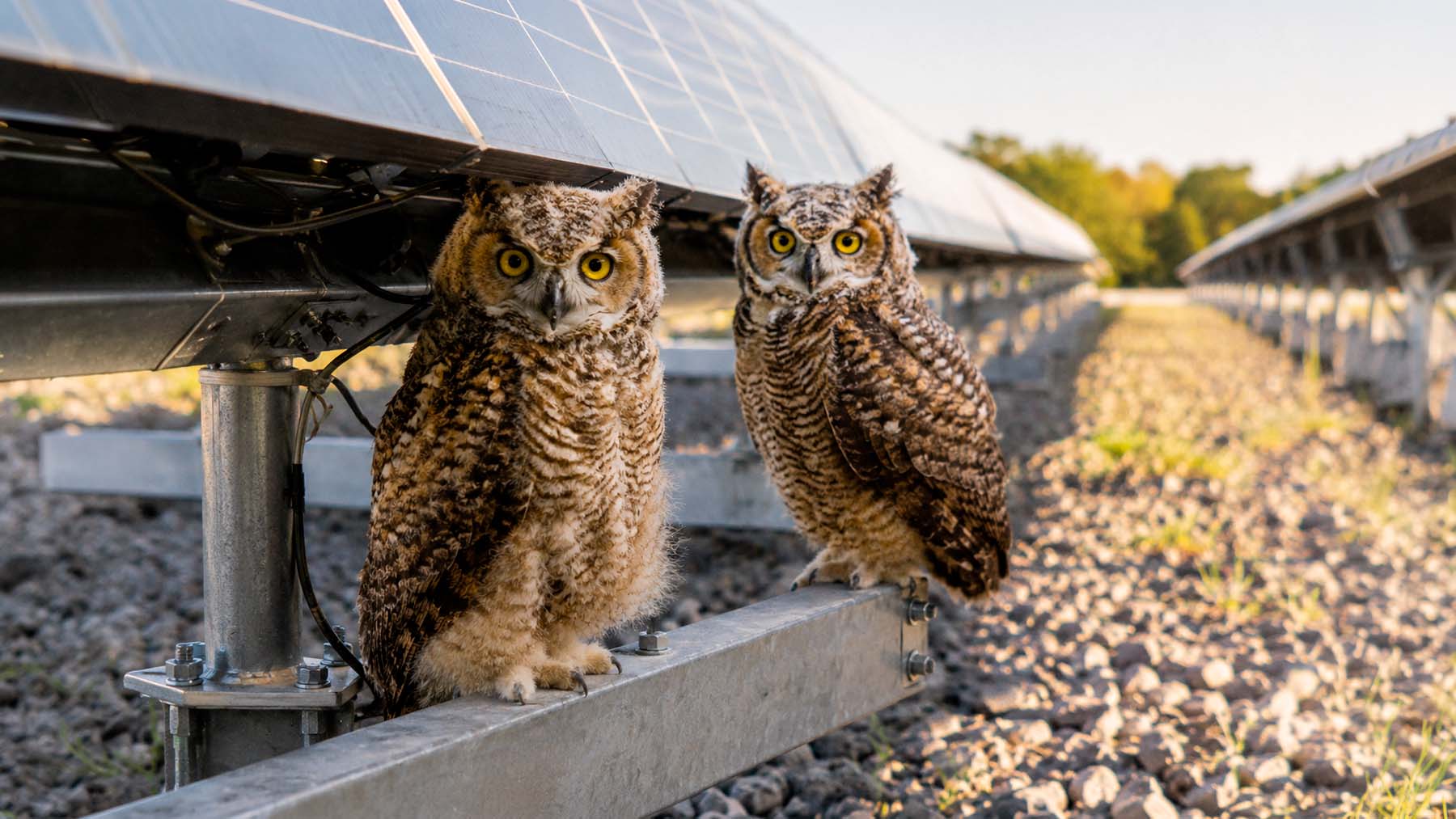
Two rescued raptors have been released into a utility-scale energy project in Milam County, Texas, after completing a 97-day rehabilitation program.
Developers are constantly battling interference from wildlife, and it is costly to fix damaged infrastructure. Traditional methods of limiting the sabotage rely on ongoing maintenance and synthetic interventions, but this new plan changes the approach to site management.
What has been happening at the solar facility since these orphaned birds took control of the territory?
How securing energy infrastructure becomes a challenge
It takes vast areas of open land to generate electricity on a utility scale, and these environments are bound to attract wildlife. At EDP Renewables North America’s Cattlemen Solar Park, engineers have thousands of panels spread across open terrain to maintain.
It is common for small mammals to aim for shelter under the solar arrays. But they create an enduring and frustrating logistical problem.
Burrowing and chewing are daily behaviors for these animals, and the result in the facility is destabilized hardware and damaged electrical wiring.
For maintenance crews, the usual methods of dealing with the invasive problem involve localized deterrents or the hiring of pest management services. Servicing hundreds of acres, however, is expensive, labor-intensive, and logistically demanding. These costs add up to reduce the project’s overall efficiency.
There was a clear conflict between the demand for essential clean power and the natural habitat.
The operators at the Cattlemen ranch focused on finding a pest management strategy that could match the facility’s scale but reduce the amount of human intervention.
The extensive consequences of wildlife interference
Damage done by mammal populations goes beyond minor repairs to wiring. Just one compromised connection could mean an entire array ends up offline. This is a threat to operators’ revenue and interrupts power delivery.
There is a secondary risk to the land when operators go with traditional mitigation plans. The introduction of synthetic solutions across a utility of this scale creates chemical runoff that ends up penetrating the soil and contaminating the watershed.
The project’s expanding footprint comes with an increase in invasive activity. The facility’s managers end up in a reactional cycle of addressing new damage as the animals move to different parts of the park.
Considering the scale of the Cattlemen facility, manual surveillance is simply not viable and bordering on impossible.
Operators eventually realized that the issue required an autonomous, constant solution that could be applied to the entire terrain. The system needed to be self-sustaining and capable of adapting to the migrating wildlife, and it had to operate without introducing toxic substances to the environment.
Natural predators: A non-toxic resolution
The facility’s managers turned to a natural solution, according to the Advanced Power Alliance. Two barn owls that had undergone 97 days of care and rehab at the Blackland Prairie Raptor Center were introduced to the site. These specific predatory birds represent an autonomous biological control mechanism. Just one barn owl can eat up to a thousand rodents a year, creating an immediate and efficient cycle of predation in a completely natural format.
Since they moved into the installation, the two owls have been patrolling the range on a daily basis. The rodent populations are suppressed before they get to chewing on wiring or messing with the solar panel mountings.
No cost, no chemicals, zero emissions
The natural hunting solution means no synthetic chemicals are needed, so the soil and native wildlife are protected.
The solar park provides an ideal nesting habitat, and the owls deliver constant site security with no emissions.
It is a successful partnership proving that clean energy generation and wildlife conservation can work hand-in-hand.
With the integration of native predators into operations, the Cattlemen facility managed to cut maintenance costs but also actively restore the ecosystem. Similar biological management approaches, such as using cows to manage vegetation, are now changing the way managers protect agricultural solar developments from ecological complications.
Read the whole thing?
Get the week's signal, not the noise
Our sharpest reporting on energy, climate and nature — free, once a week.