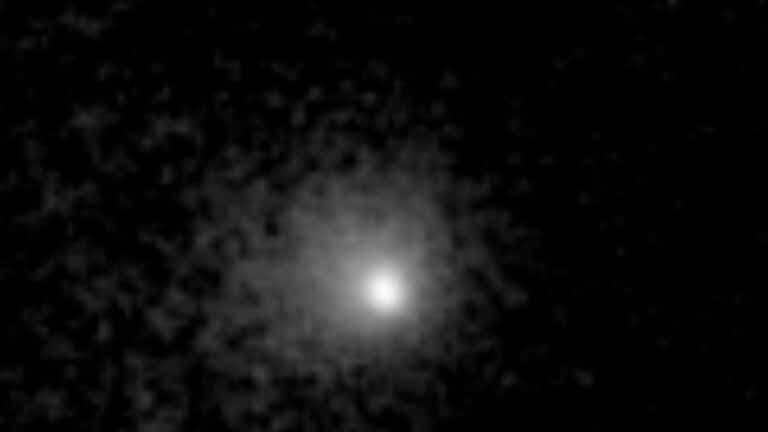
A stellar explosion went off in the Milky Way in 2000 — and then, for over two decades, it went quiet behind a wall of dust. Astronomers knew it was there. They just couldn’t see inside.
When that debris finally cleared, Hubble and a suite of other telescopes got their first unobstructed look at V445 Puppis — the only known helium nova in our galaxy. What they found inside was stranger than the long wait suggested.
A nova hidden in plain sight for 25 years
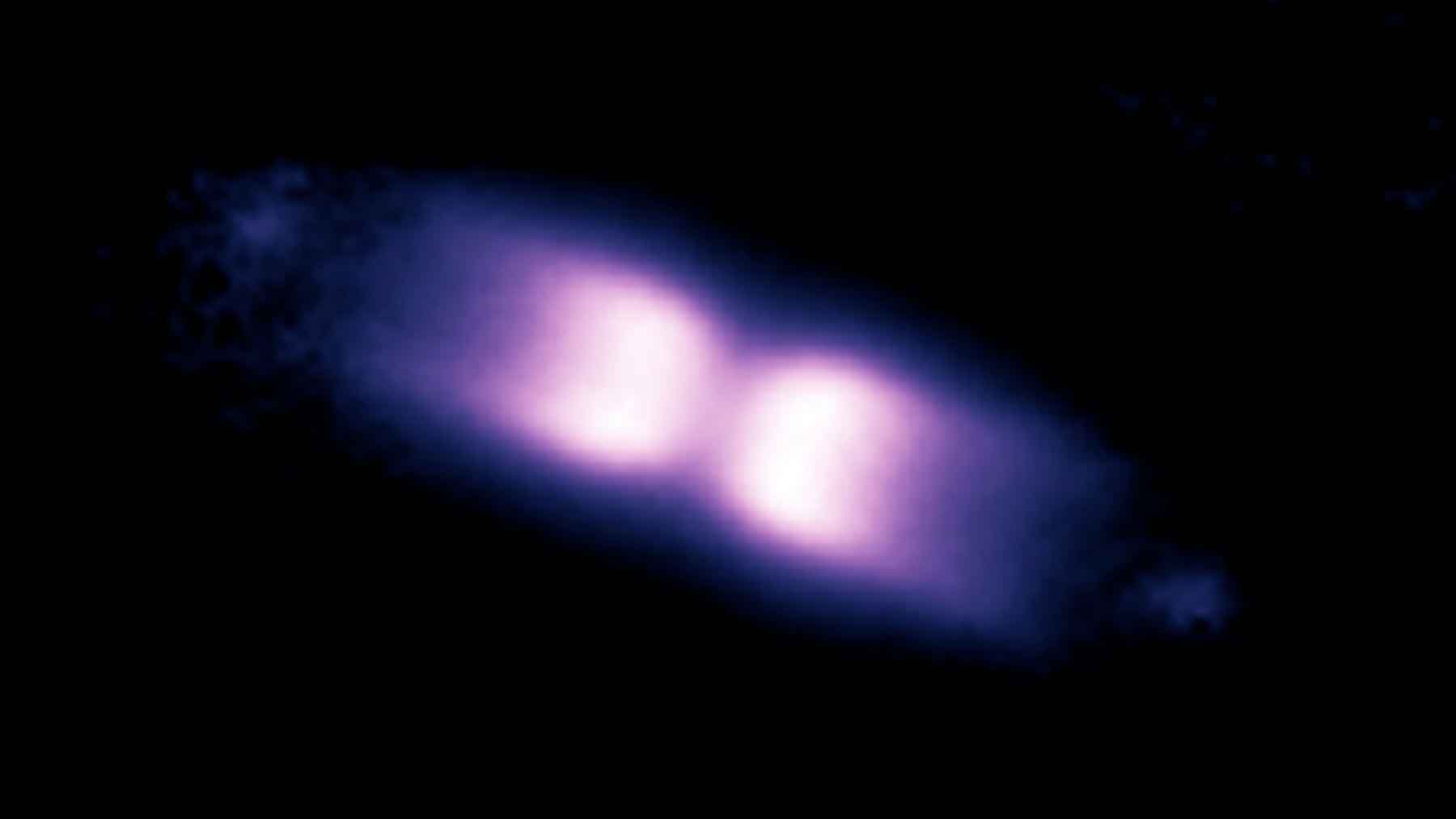
V445 Puppis erupted in late 2000, briefly brightening before disappearing behind its own wreckage. The explosion launched vast twin plumes of debris — stretching more than a trillion miles — that astronomers initially spotted in infrared. But it also produced something that would frustrate researchers for decades: a thick disc of dust that completely swallowed the binary system at its center.
That obscuring cloud persisted for over 25 years. Scientists could track the expanding debris the whole time, but determining what kinds of stars had actually caused the blast was impossible. The culprits stayed hidden, turning V445 Puppis into one of the galaxy’s most stubborn cold cases.
Once the dust cleared, a research team combined data from Hubble, NASA’s planet-hunting TESS spacecraft, and the ground-based Very Large Telescope for their first unobstructed look inside. What they confirmed resolved a mystery that had lingered for a quarter century — and opened several new ones.
What makes a helium nova different from an ordinary one
Most novas follow a familiar script. A white dwarf — the dense remnant left behind when a sun-like star dies — steals hydrogen-rich material from a nearby companion. That stolen matter piles up on the white dwarf’s surface until runaway pressure and temperature ignite a thermonuclear explosion.
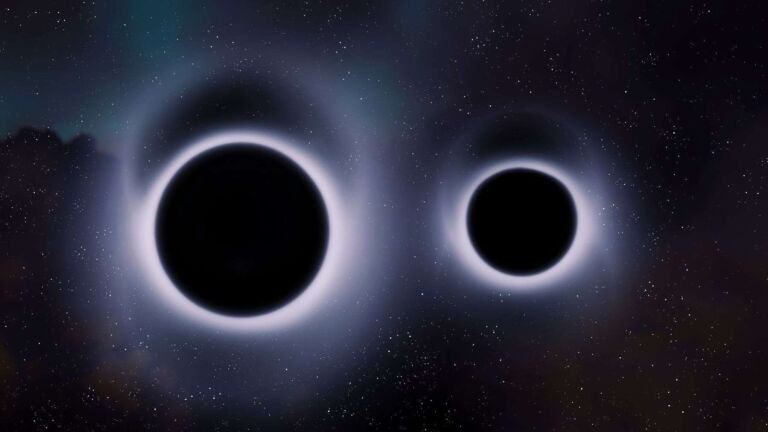
V445 Puppis is different. Its white dwarf feeds not on hydrogen but on helium-rich, hydrogen-poor material stripped from a companion that has already shed its outer hydrogen layer. That companion is what astronomers call a helium star — a stripped stellar body exposing its inner helium layers. Helium stars are extraordinarily rare, with only a few thousand thought to exist among the billions of stars in the Milky Way.
Finding one in a tight binary system with a feeding white dwarf is rarer still. That’s part of why V445 Puppis drew so much attention even before anyone could see inside it. “The culprits behind this galactic eruption have been an enduring mystery over the past 25 years, which is why it is very exciting to confirm that this helium nova was the result of a helium star accreting onto a white dwarf,” said team member John Mills, a researcher at the University of Warwick.
Cosmic bullets unlike anything seen around other novas
The twin debris plumes were already striking. Hubble’s clear view revealed something even harder to explain: fast-moving clumps of potentially oxygen-rich gas tearing through the Milky Way at 20 million miles per hour.
The team calls them “bullets.” No one has ever seen anything like them around another nova.
Their origin is genuinely unknown. The researchers suspect the projectiles formed after the initial outburst rather than during it, but the exact mechanism that created or launched them remains unclear. That combination — never observed elsewhere, no confirmed explanation — makes them one of the more intriguing loose ends in recent stellar astronomy. The twin plumes themselves, stretching more than a trillion miles, resemble butterfly wings in infrared. The bullets appear to be a wholly separate phenomenon, racing well beyond that structure. “The origin of these ‘bullets’ is a mystery,” Mills said. “Bullets of this kind have not been observed in any other nova.”
Signs that V445 Puppis is loading up for another eruption
Here’s where the story shifts from historical mystery to live-action watch. Observations show the white dwarf in V445 Puppis has resumed feeding on its helium star companion — the exact same process that triggered the 2000 eruption. Another helium nova may be coming.
Scientists have long suspected that repeated helium nova eruptions don’t simply cycle indefinitely. Each eruption could leave the white dwarf slightly more massive than before, and over time that accumulated mass might push it past a critical threshold — triggering a far more violent event: a Type Ia supernova, in which the white dwarf isn’t just disrupted but completely destroyed.
Type Ia supernovas matter well beyond the explosion itself. Because they release energy so consistently, astronomers use them as “standard candles” to measure cosmic distances and probe how fast the universe is expanding — making them central to the ongoing effort to understand dark energy. A system caught building toward one, with a documented eruption history and a now-visible binary architecture, is scientifically valuable in ways that extend far beyond V445 Puppis. “I look forward to seeing how this result may help us uncover what powers other similar hydrogen-poor astronomical explosions, such as the famous Type Ia supernovas,” Mills said.
The research was presented at the Royal Astronomical Society’s National Astronomy Meeting in Birmingham, UK. For now, astronomers have their eyes on a system that spent 25 years hiding — and may soon have something dramatic to say.
Read the whole thing?
Get the week's signal, not the noise
Our sharpest reporting on energy, climate and nature — free, once a week.