When a massive star dies, its first announcement to the universe is almost impossible to catch. The core collapses, energy waves tear outward through layers of stellar material, and for a brief window — sometimes just seconds, sometimes hours — an X-ray burst called a “shock breakout” flares into existence before the full explosion swallows it whole.
In 20 years of watching the sky, astronomers had confirmed this signal only once.
On March 21, a telescope in orbit caught it again — from a star 500 million light-years away. Within hours, research teams across the globe had dropped everything to look.
The briefest light in the universe
A shock breakout is exactly what it sounds like: a burst of X-ray energy that breaks through a star’s outer layers the moment its core gives out. It’s the very first light a dying star produces — a fleeting signal that arrives before the supernova itself has fully ignited.
The event can be over in seconds. A few hours at most, before the full explosion overtakes it and washes out any trace of that initial flash.
That extreme brevity explains why confirmed detections are so rare. In two decades of sky surveys and space telescopes, astronomers had pinned down just one definitive shock breakout — and each one that slips by undetected takes irreplaceable information with it. Data about the precise conditions at the moment a star begins to die, information no later stage of the explosion can recover.
A global scramble to watch a star die
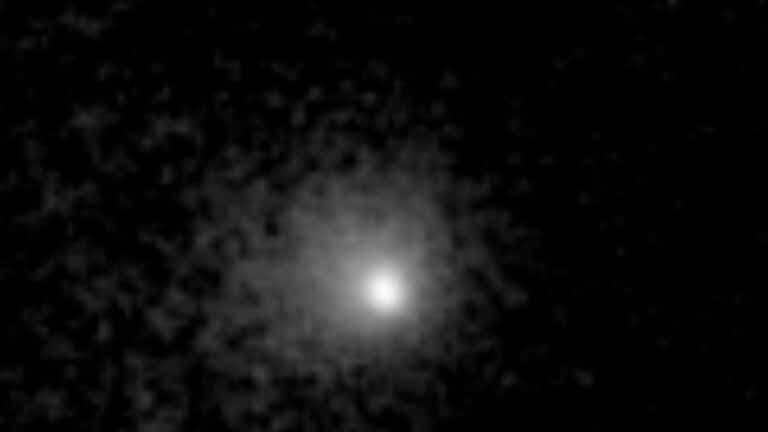
The March 21 signal came from the Einstein Probe, an X-ray space telescope operated jointly by the European Space Agency, the Chinese Academy of Sciences, and Germany’s Max Planck Institute for Extraterrestrial Physics. The telescope flagged an X-ray transient that looked like a shock breakout. Word spread fast, and within hours, observatories around the world had pivoted to the same patch of sky.
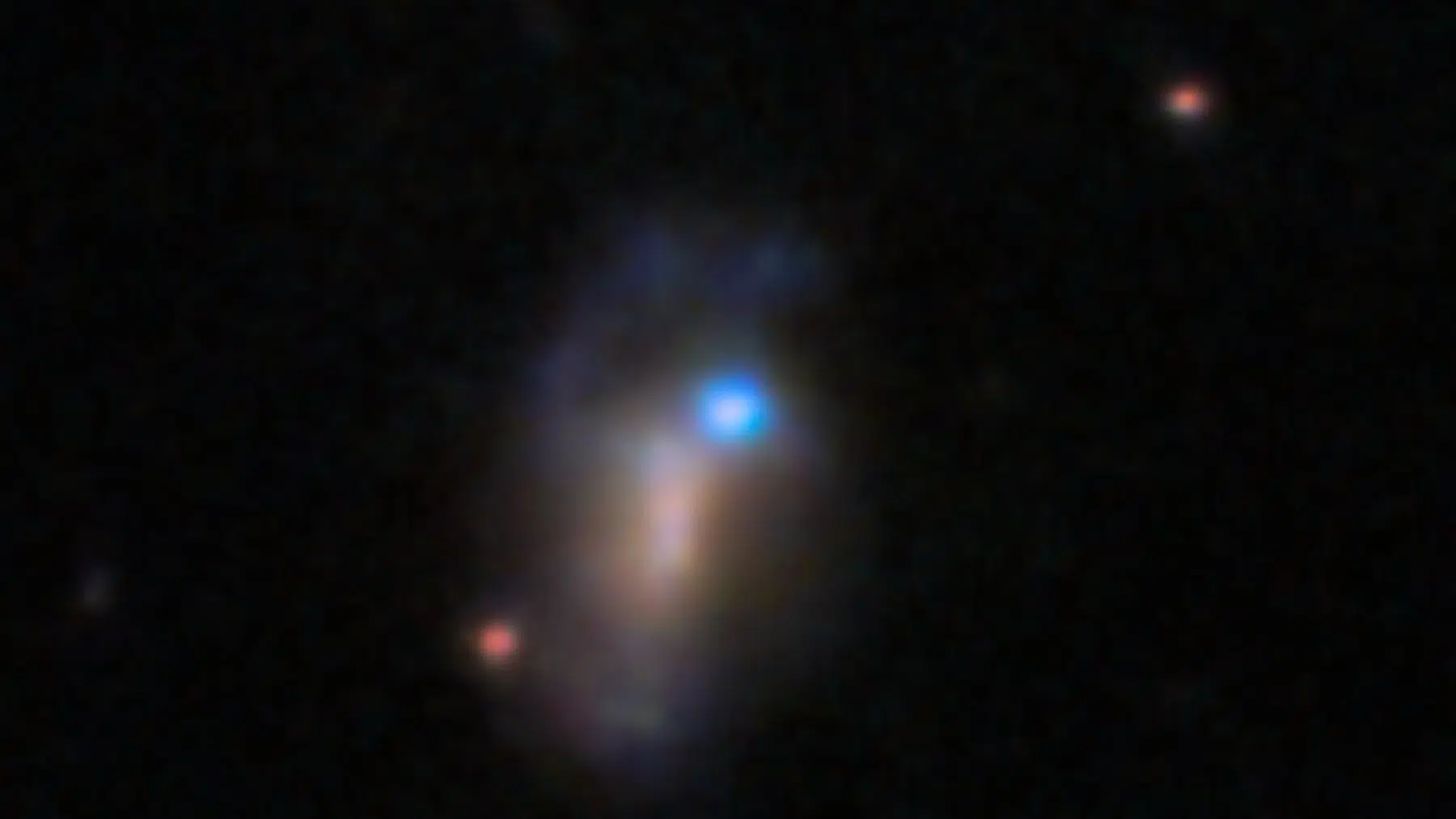
Teams confirmed the burst originated from a broad-lined Type Ic supernova — designated SN 2026gzf — located roughly 500 million light-years away. That classification matters. Type Ic-BL supernovae are known for launching powerful jets of material at nearly the speed of light and are frequently linked to gamma-ray bursts, which rank among the most energetic events the universe produces. Going in, the expectation was drama on a cosmic scale.
Something was wrong — and that made it more interesting
What researchers found instead was quieter, and stranger. The X-ray shock breakout was the faintest ever recorded. More strikingly, no relativistic jet appeared in follow-up observations — the defining feature of this class of supernova was simply absent.
That absence pointed toward one possible explanation: the jet had been smothered before it could escape.
“One possibility is that the jet was ‘choked,’ either by the surface of the star or by circumstellar material surrounding the star,” said Brendon O’Connor, a Carnegie Mellon University astronomer and co-author of the study, published in The Astrophysical Journal Letters.
To build a fuller picture, researchers drew on data from NASA’s Chandra X-ray Observatory, the National Radio Astronomy Observatory, Caltech’s Palomar Observatory, and the Hobby-Eberly Telescope. The result was a weeks-long forensic reconstruction of a stellar death, pieced together from multiple instruments across multiple institutions.
Mapping the violent life of a Wolf-Rayet star
All that data converged on a single origin: a Wolf-Rayet star roughly 20 times the mass of the sun. These aren’t quiet stars. Wolf-Rayet stars burn through their hydrogen while still young, then shed helium and hydrogen in irregular, violent bursts over time, leaving behind a stripped-down core — mostly carbon and oxygen — surrounded by layered shells of previously ejected material.
Those shells became central to the story of SN 2026gzf. The shock breakout interacted directly with the innermost layer of that debris, producing the faint X-ray signal Einstein Probe caught. Each shell represents a different episode in the star’s turbulent history before collapse.
University of Maryland astronomer Jillian Rastinejad, a NASA Einstein Fellow, explained that the coordinated observations let the team examine three distinct phases: the initial shock breakout, the supernova itself, and the explosion’s interaction with surrounding debris. “With this information we were able to map out the structure of the material surrounding the star and understand the star’s violent lifestyle before it collapsed,” she said.
A new window into how giant stars end
The mapping itself is a first. According to the researchers, this is the first time scientists have traced the pre-explosion environment of a star stripped of both hydrogen and helium before it died — a distinction that opens a new line of inquiry into how this entire class of massive stars behaves in its final chapter.
The broader implication is unsettling in the best scientific sense. A missing jet, a faint breakout, layered shells of expelled material — none of it fits the standard picture neatly. Massive stars may die in far more varied ways than models have assumed.
“Going forward, I’m excited to observe more shock breakout events in similar detail to test if all stripped stars have a similar ‘lifestyle’ prior to collapse and what, if any, differences we see,” said University of Maryland co-author Gokul Srinivasaragavan.
The Einstein Probe is still operational, and the global coordination that made this detection possible has already proven it can move fast. If the infrastructure holds and the next signal arrives, astronomers may not have to wait another 20 years.
Read the whole thing?
Get the week's signal, not the noise
Our sharpest reporting on energy, climate and nature — free, once a week.