The shutters on a spacecraft window stay closed most of the time.
You open them when there is a reason, and then you have a few seconds.
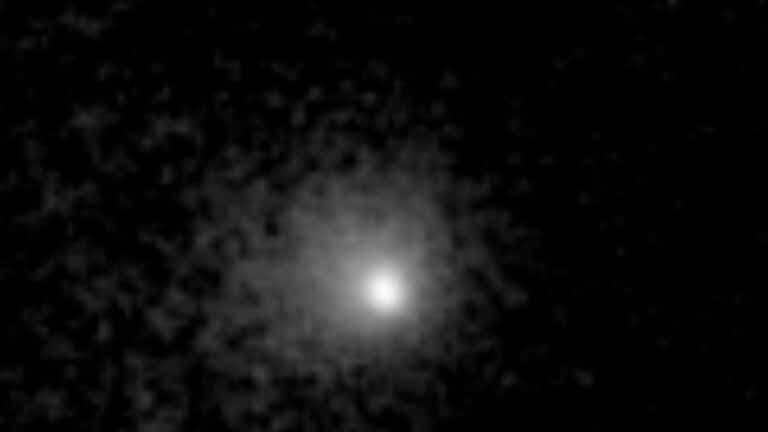
Sicily came first.
And Etna was sitting there with a plume coming off it, and the camera was already up before the thought had finished.
Then the coast turned.
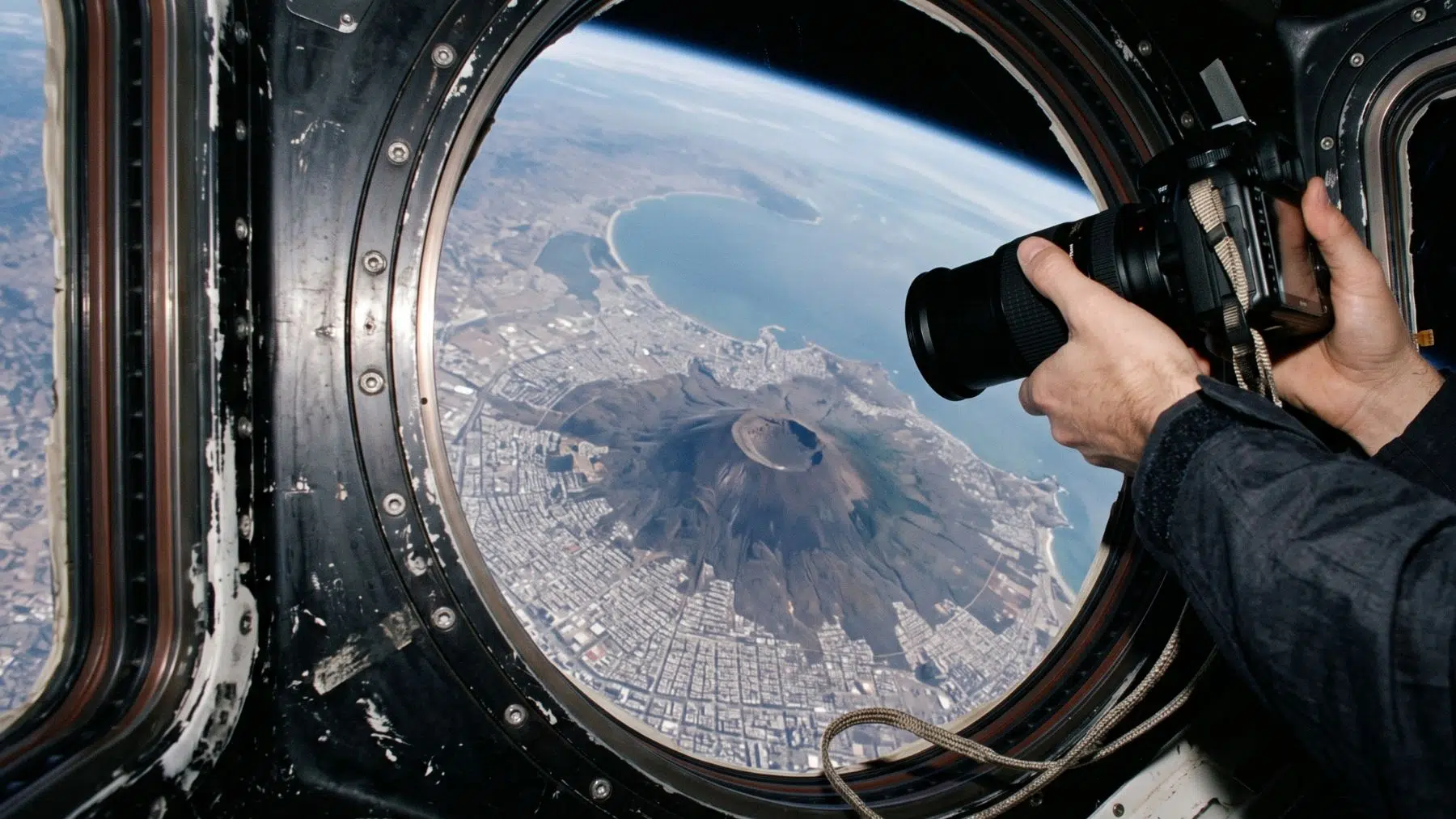
Less than a minute later there was a second volcano in the frame, and this one had a city around it.
What was in the window, and what it was shot with
Her name is Sophie Adenot, flying for the European agency on the mission she calls epsilon, aboard the station with two American crewmates and a Russian one. The frame was made on day 103 of that flight, on the 1,598th orbit. Both numbers are logged, which is why this picture can be placed on a map to the minute.
And the gear is not exotic, which is the good part.
She was working with a full frame camera body and a 400mm lens with the teleconverter engaged, so 560mm, stopped down to f14 at ISO 500. That is a setup a wildlife photographer on the ground would recognize instantly, pointed through several inches of window at a mountain in Italy.
Why under a minute is exactly right
Those two active volcanoes sit about 250 miles apart, Etna on the east coast of Sicily and Vesuvius on the Bay of Naples. On the ground that is a long drive.
So from orbit it is fifty seconds.
That is because the station moves at roughly 17,500 miles an hour, which works out at close to five miles every second, so the gap between the two shots is arithmetic rather than luck. What is lucky is the weather, because either mountain can sit under cloud on any pass.
That speed is also why the shutters matter. Anyone who wants a specific place has to be at the window before it arrives, because the whole opportunity opens and closes while you are still lifting the camera.
Two mountains doing opposite things
Etna is the busy one. It smokes, it grows, and its summit height is genuinely a moving number, most recently measured at about 11,165 feet after the craters rearranged themselves in the summer of 2024.
Its neighbor does none of that.
It stands at 4,203 feet, it has not erupted since March 1944, and from orbit it reads as a dark cup with a track winding up to the rim. Adenot described the difference in her own words, and the sentence that matters is the one about Etna.
“From orbit, volcanoes are some of the most beautiful natural sights,” she wrote. “Etna caught me by surprise one morning as I opened the shutters. The whiteness of its slopes, and that elegant plume of smoke which is a gentle reminder that it’s only lightly, very lightly, asleep.”
The number underneath the crater
That second frame carries a different kind of information. “Less than a minute later, and we’re flying over Vesuvius, instantly recognisable by the vast crater, the path winding up to the summit, and, most of all, Naples spread out all around it,” she wrote, and her own words are the whole caption.
Then you start counting buildings.
Below it, Naples holds about 3 million people, and roughly 800,000 of them live on the slopes of the volcano itself, inside the area Italian planners call the red zone. The zone covers 25 municipalities plus part of the city, and a federal view puts the split the same way.
The official plan gives that population 72 hours to leave, with evacuees assigned in advance to 19 other Italian regions. That document exists because the alternative is improvising, the same lesson a city learns undoing an urban viaduct it built without thinking far enough ahead.
Why a person at a window still beats a sensor
Both mountains are already watched from orbit by satellites that do it better than any human could. What they do not do is notice anything odd.
An astronaut notices.
That archive of crew photographs from the station runs to hundreds of thousands of frames going back decades, and volcanoes are among the most photographed subjects in it, partly for the drama and partly because a person can react to something odd that no automated schedule was pointed at. Repeated over years, those frames become a wild pattern nobody planned to collect.
Before the obvious closing line, one caution. It is often said that a longer quiet means a more violent return, and for Vesuvius that idea is argued rather than settled, so it belongs in a hedged sentence rather than a headline.
What is not arguable is the picture. A mountain that last spoke in 1944, a crater you can see the floor of, and a city grown right up to its base, all in one handheld frame taken through glass at five miles a second.
Read the whole thing?
Get the week's signal, not the noise
Our sharpest reporting on energy, climate and nature — free, once a week.