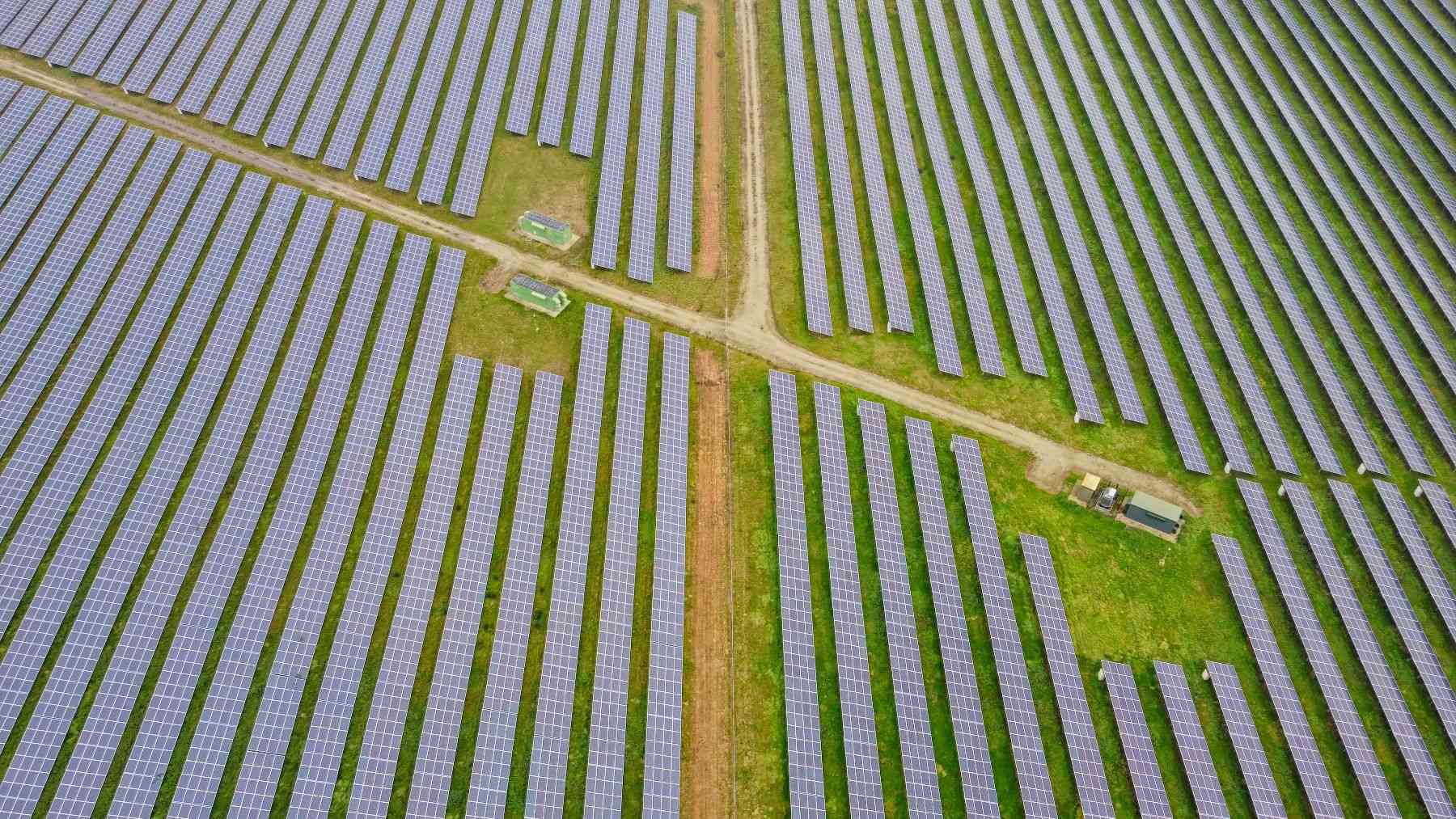
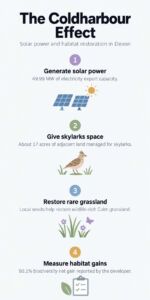
Solar energy projects based in Devon have proposed the development of a 50-megawatt solar energy project using land that has been reserved solely for the nesting of skylarks.
Many large-scale solar power plants experience strong opposition from environmentalists due to their concerns regarding land industrialization.
The use of wildlife conservation lands in areas surrounding the solar park will ensure balance between the generation of solar energy and conservation of the land.
The above system will ensure that there are huge biodiversity gains in agricultural land.
Dedication of acreage for ground-nesting farmland birds
The conventional designs of solar energy facilities emphasize high panel density, providing very little open land for native wildlife.
Seven hectares of dedicated land, located next to the solar facility, as well as habitat support away from the solar farm at Meeth Quarry Nature Reserve, are provided to skylarks.
Skylarks need large patches of open land with no shading to perform vertical mating displays and create concealed nests amongst low grasses.
The dedicated land includes a mixture of wildflowers and seed crops that benefit declining farmland birds in winter.
Separate open plot lands ensure that the solar panel facilities do not interfere with the essential breeding territories of skylarks.
Well-considered site planning demonstrates that utility-scale solar farms can incorporate vulnerable wildlife.
Restoring native grassland ecosystems beneath and around solar panels
Livestock grazing and fertilizers have led to the decline in the areas covered by grasslands as found on British farms.
The ecologists behind this project began the activity of restoring the soil with the intention of growing the species-diverse grasslands on unshaded buffer strips.
Vegetation corridors are formed using the perennial grasses that prevent soil erosion and are known to attract pollinators in summers.
The native hedgerows established along the edges act as connectivity pathways for mammals and amphibians.
Plant diversity creates the conditions needed for the formation of microclimates, which help insects, reptiles, and even birds like the kestrel and barn owls.
The balancing act of generating renewable energy and ensuring environmental protection
Planning obligations need to be met for massive solar farms to be permitted by the authorities for the provision of electricity to the grid.
Environmental studies and habitat protection were among the key elements that went into the planning process in order to fulfill local planning requirements.
Generation of green power goes smoothly.
Zero carbon energy is being generated while certain areas are used for habitat restoration and conservation management.
Incorporation of ecological management into business-oriented energy generation provides a model for future renewable projects.
Reviewing long-term ecological impacts of operational solar parks
It is necessary for conservationists to monitor the 50 megawatt Devon solar farm over several years to confirm population trends among birds living in the area.
Shade from low-profile photovoltaic panels changes local flora growth, according to British Solar Renewables, and affects insect eating habits for birds that nest on the ground.
The initial monitoring results look good, but in order to be successful, vegetation management is needed to stop weeds from dominating.
The developers accept that habitat patches cannot compensate for lost open countryside due to industrial expansion, as reported by British Solar Renewables.
Field study would prove whether solar farms are capable of sustaining animal life in the long run.
Environmental pledges would be proven through post-construction audits to lead to actual ecological outcomes.
Biodiversity solar projects to power the future electricity grid
The developers have started taking a similar path when dealing with the construction of future solar farms that are to be constructed in the UK.
Ecological set-asides help ensure compliance with the terms of planning legislation without compromising the energy generation potential.
Examples of megawatts and habitat restoration illustrate how land use problems could be handled through commitment to conservation measures.
Solar farming is the future of sustainable energy.
Read the whole thing?
Get the week's signal, not the noise
Our sharpest reporting on energy, climate and nature — free, once a week.