
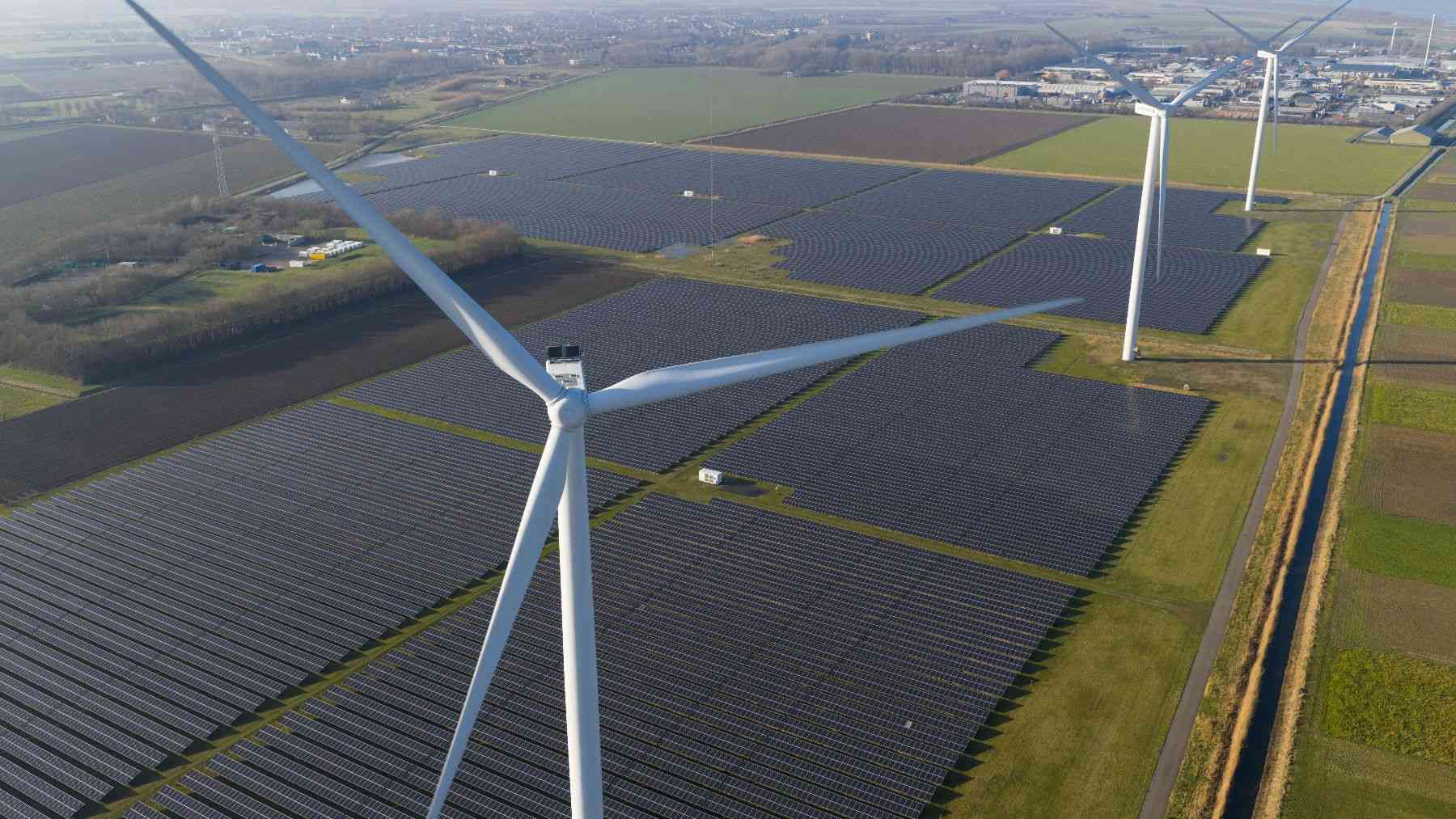
A wind farm usually has one source of supply: the wind.
Its yearly output rises and falls with this wind, and nothing else really changes that.
Yet at Cruz de Hierro, in Spain’s Ávila province, production of one wind farm grew by more than 60% in a single year.
How does this particular site produce so much more power than normal?
Cruz de Hierro, the statistically astonishing wind farm in Spain
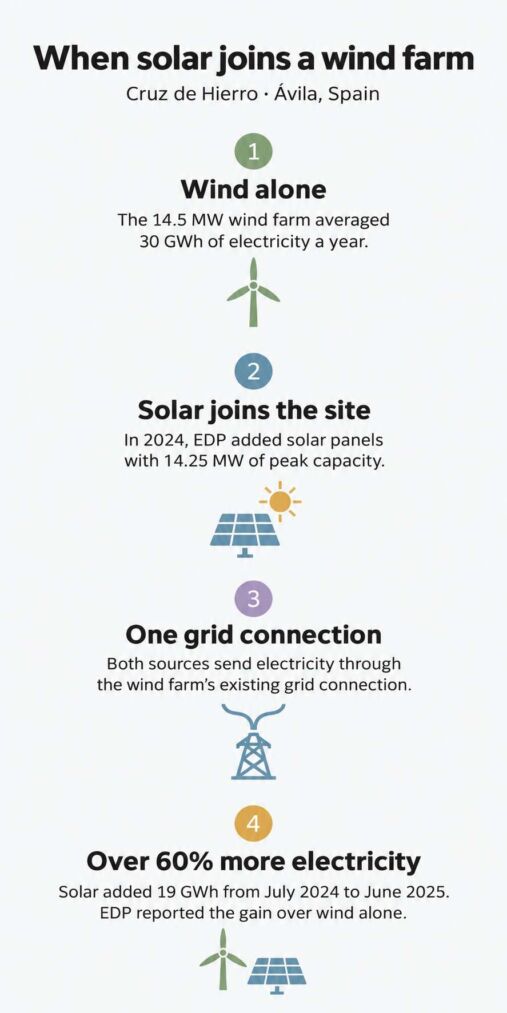
Cruz de Hierro lies in the province of Ávila, in central Spain. It began as a wind farm with a capacity of 14.5 MW, operated by the company EDP.
For many years, wind was its only source, as for most wind farms.
Throughout this time, the wind farm produced an average of 30 GWh per year.
That average was the only yardstick.
Any result after 2024 would have to be measured against it.
Then in 2024, the operators made some serious changes to the site.
And a year later, the wind farm announced astonishing results.
The farm has presented these changes as a model for others to use, and claims it is the new way that these developments should be made.
These changes were tested for a full year before this large claim, from July 2024 to June 2025.
After this, the company released the 60% rise in production figure, which has the potential to improve all wind farms around the country.
A massive improvement for Cruz de Hierro
Just one year after they made changes, EDP reported an increase in production of more than 60%.
For a single wind farm, that is a striking result.
Output usually follows the weather, not the changes that an operator makes.
But wind is not what caused this massive increase.
It is something else entirely.
This 60% figure is not just a snapshot either; it was reported from one full year of operation, from July 2024 to June 2025.
In everyday terms, the park’s annual production now equals the average consumption of 15,000 households.
Furthermore, 6,000 tons of CO₂ emissions are prevented every year because this electricity is fully renewable.
This park is one of the first of its kind in Spain. The results confirm the enormous potential of this kind of energy farm.
But the question remains: what change could produce such an improvement?
The answer lies in another source of energy: the sun.
Additional solar panels added to the Cruz de Hierro wind farm
In 2024, Cruz de Hierro invested in additional solar power developments in its existing wind farm.
And not just a small amount.
They added a 14.25 MWp photovoltaic plant to help improve their energy production.
This meant an extra 19 GWh of power, over half their previous average.
In this instance, the farm’s capacity nearly doubled, reaching 28.75 MW.
The project also optimized the use of existing infrastructure in this development, saving a lot of time and effort.
By adding solar panels to existing wind farms, the company was able to avoid long permit-acquiring processes and used existing grid connections that were already there.
Spain is already using wind farms for animal conservation, but this type of innovation could be another new path for renewable energy.
And EDP is on the way to ensuring it is.
The company operates five similar parks across the country, with a total of 230 MW, in Cuenca, Segovia, Zaragoza, and Ávila.
This 60% production increase shows more than just power.
It shows that a wind farm can grow without starting from zero, and that existing infrastructure can be efficiently optimized. If this project is used as a model for even more developments, existing wind farms could become starting points for so much more. Whether other sites can repeat Cruz de Hierro’s result is the question the coming years will answer.
Other emerging methods for solar power combination include projects like this, where agriculture is merged with solar too.
Read the whole thing?
Get the week's signal, not the noise
Our sharpest reporting on energy, climate and nature — free, once a week.


