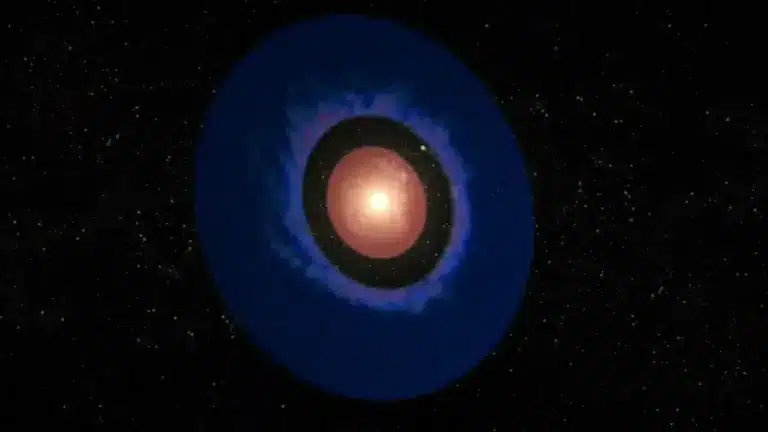
Euclid is often staring off into deep space. Its main focus is mapping galaxies.
A fast-moving object appeared in the images, leaving streaks behind.
The target wasn’t what Euclid was looking for, but it still had to be analyzed.
As it appeared in multiple images, there was enough evidence to suggest there was a real celestial body, leading the dark energy mission to uncover an interesting visitor in the Solar System.
Moving objects left unexpected traces across deep-space images
Thanks to long exposure times, the target would cause streaking.
The body’s movement during the observation allowed software to identify it as a Solar System object.
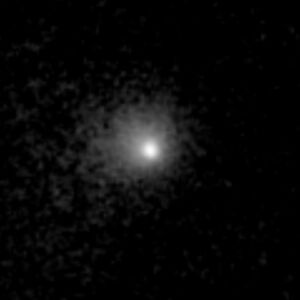
After further images were taken, it became clear the same target was appearing repeatedly.
Repeated appearances made it less likely to be an issue with the image, and it consistently appeared in the expected locations.
A faint halo surrounded the streak, hinting that the object was active. Active comets create blurry halos around them as material leaves their surface, and this visitor displayed that exact behavior.
Deep survey fields captured an unlikely celestial visitor
The target was discovered in Euclid Deep Field North. Euclid generally doesn’t scan in the busy region that contains most Solar System objects.
However, bright dust can cause issues with highly sensitive measurements, making it difficult to randomly discover comets.
The survey was designed for highly precise cosmological measurements.
Therefore, it is quite rare to discover any objects by chance, and this body was found in an area of the sky where few discoveries are expected.
Several sightings pointed to the same object
The object was seen in multiple instances between 16th-24th September 2026.
At the time, it was approximately 1.3 billion km away from Earth, placing it roughly between the orbits of Jupiter and Saturn.
A search of catalogues didn’t turn up any matching comet or asteroid. Ground-based telescopes were then used to help identify the body.
On 8th October, it was confirmed by the Minor Planet Center that the object was a comet, following observations reported by the European Space Agency.
It was given the name C/2026 S1 (Euclid). There isn’t much data available yet, so more tracking needs to be done to get a better understanding of its orbit.
More eyes were needed before confirming it
We need more than just initial detections. Independent measurements were needed to verify what the object was.
Announcing the discovery made many more astronomers aware of it, and with more tracking data, confidence in the identification increased.
Its quick recognition by the software helped validate the discovery.
Some aspects remain uncertain, but a better orbit should emerge as more measurements are made.
Future encounters hinge on unusual orbital paths and timing
Depending on the body’s orbit, they may not even be seen in our surveys.
Its path also takes it much higher than the usual structure of the Solar System when viewed from the sun.
It takes thousands of years for it to go around the sun. Opportunities to study it are limited.
For much of its journey, it remains far from Earth, making short viewing periods very valuable.
The comet wasn’t the only thing tested
The discovery also put coordination processes to the test.
Finding future spacecraft targets isn’t the goal, but early discoveries are still useful if missions want to study untouched comets.
Rapid identification and follow-up observations provided a practical example of how future alerts would be handled.
Whilst the new object isn’t a good target for Comet Interceptor, the process itself is more important.
Coordination between survey missions and follow up observers is crucial, and in the future discoveries may rely on this workflow being just as efficient.
Read the whole thing?
Get the week's signal, not the noise
Our sharpest reporting on energy, climate and nature — free, once a week.