The engine on a small tanker off the Philippine island of Siargao cut out in the early afternoon.
The master did what any mariner would do.
He ordered the anchor dropped and waited for calmer water.
Instead the sea kept pushing.
By dawn the ship sat hard against a shoreline, its chain stretched through the shallows.
Only one measurement mattered by then, the gap between the anchor and the coral just beyond it.
A dead engine left only the anchor as a brake
Once the tanker’s engine failed, the vessel lost the tools a crew normally uses to hold position against a current. A ship under power can nudge itself back on line with small bursts of thrust, but a disabled hull becomes a cork. The anchor was the only thing left to try, and the master ordered it dropped at about 1 p.m., according to the Philippine Coast Guard.
That decision is standard practice. An anchor is meant to bite into the seabed and hold a ship steady while repairs go on below deck.
But strong currents and heavy waves off Burgos, on Siargao Island, proved stronger than the anchor’s grip. So the ship did not stay put, drifting with the anchor still down, pulled toward the Burgos shoreline through the night while the crew could only watch the chain run out.
A 712 ton vessel carried fuel for its own engine
The vessel at the center of this, the MT Cheng Xian Feng 168, is modest by tanker standards. Its gross tonnage is 712, a measure of enclosed volume rather than weight, and a small fraction of what ocean going tankers register. It was Philippine flagged and moving between domestic ports, having left Cagayan de Oro City.
It carried about 925 gallons of diesel in its own tanks, and the Coast Guard was clear that the fuel was meant for the ship’s consumption rather than cargo for sale.
That distinction mattered once the grounding happened, since it meant a small, contained fuel source instead of a loaded hold. Nine Filipino crew members, including the master, rode out the drift. Joint authorities brought them ashore before 5 a.m. for assistance and investigation, and the Coast Guard reported all of them in good physical condition with no injuries.
Crews measured the anchor at 33 feet from coral
By the time assessments began, the pressing question was environmental rather than mechanical. The engine failed on January 10, and the tanker grounded at Barangay Poblacion 1 in Burgos before dawn the following day. The Coast Guard reported no oil spill observed at the site, while technical checks continued on whether the hull had been breached.
The anchor itself was reported to have landed about 33 feet from a coral area. Officials flagged that proximity to coral as a reason for continued monitoring, not as a confirmed loss.
The tanker was expected to remain under Coast Guard custody in nearby Dapa while assessments were completed, with towing arranged through the vessel’s agent. That holding pattern, neither released nor written off, is familiar whenever a grounding stops short of disaster but still leaves a reef close by.
A protected seascape surrounds the drift site
Siargao’s coastline is not ordinary water. The islands sit inside the Siargao Islands Protected Landscape and Seascape, and the protected area superintendent secured the crew’s details and the protected area map to determine whether the vessel had entered a marine protected site.
That question shapes what comes next. A grounding inside a protected zone triggers a separate layer of assessment on top of the usual hull and pollution checks, which is why the distance to coral was recorded as carefully as the fuel figure.
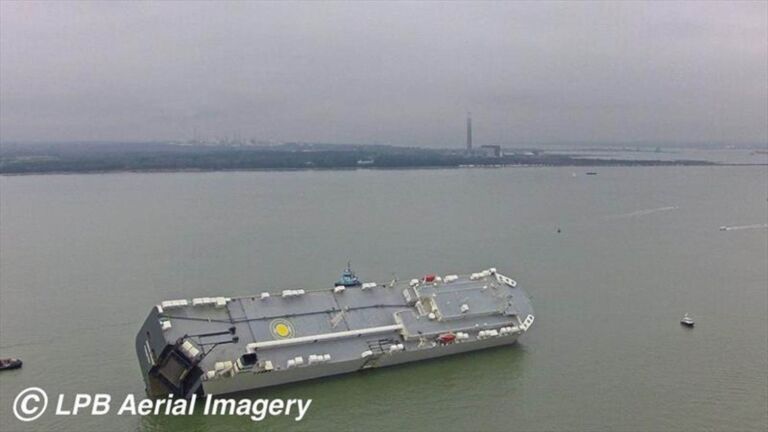
It is the difference between a towing job and a reef case. Other incidents play out in open water, where the worry is mostly the ship itself, as with the car carrier that leaned over while leaving an English port.
A thin margin decided how the night ended
Siargao’s reefs have weathered groundings before, and this one ended with no spill reported off the Burgos coast. The margin was thin, a single length of chain between a contained mishap and damage to a habitat that regrows on a timescale of decades.
Investigators were still working out whether the hull had been breached and what, if anything, the anchor had touched.
Those findings will decide whether the Cheng Xian Feng 168 sails again or joins the slower list of ships retired by a bad night at anchor. For now the official record shows no oil on the water and an anchor that stopped roughly 33 feet short of the coral, nine crew members walking ashore to tell a story about a margin just as narrow as the one in an overturned truckload of crabs.
Read the whole thing?
Get the week's signal, not the noise
Our sharpest reporting on energy, climate and nature — free, once a week.