The mysterious universe keeps getting even more mysterious. Last week, NASA recorded a first-time event with the aid of the almighty James Webb Space Telescope. The powerful instrument made it possible for astronomers to see a planetary self-sacrifice live for the first time.
The theory: The Pac-Man star
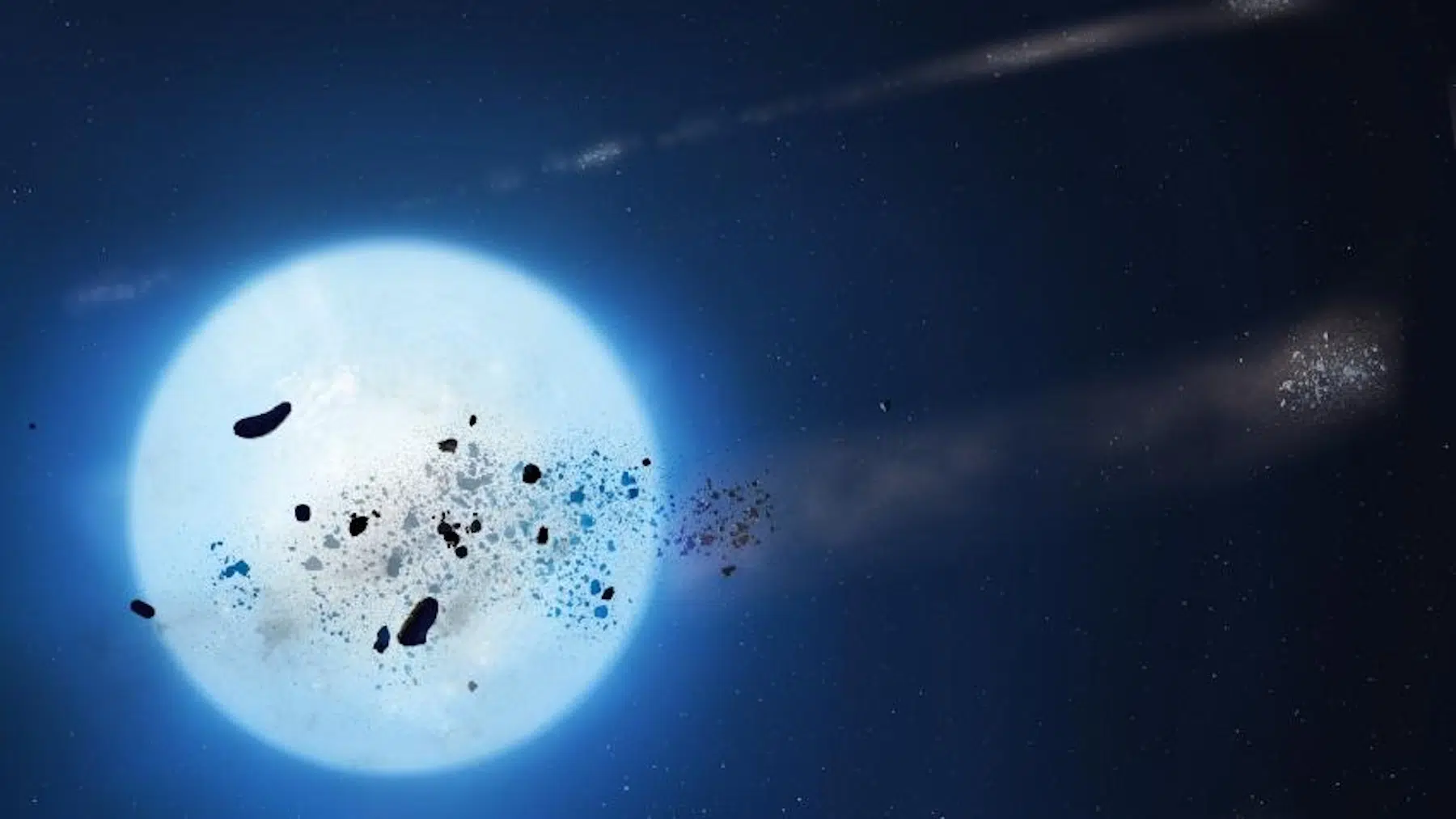
A famished star located in the Milky Way galaxy, about 13,000 light-years from Earth, swallowed a planet in a pretty stunning imitation of the famous game Pac-Man. The star, with the not-so-catchy name ZTF SLRN-2020, is a subluminous red nova.
NASA astronomers had already been intrigued by it in 2023, when the Near-Earth Object Wide-field Infrared Survey Explorer (NEOWISE) spotted higher levels of infrared brightness. They linked the star to our sun, because of the amount of dust around it, and assumed it was on its way to being a massive red star and gobbling up the planet close to it, though with hundreds of thousands of years to go still.
A year after this increase in infrared brightness, the astronomers at Caltech in Pasadena, California, were able to observe a brilliant optical flash, and that is where things got interesting, and the assumptions of the experts were proved incorrect.
The star didn’t feed on the planet
The James Webb Space Telescope had two instruments that were key to getting to the bottom of the unprecedented galactic event. These are the MIRI (Mid-Infrared Instrument) and NIRSpec (Near-Infrared Spectrograph). The data collected by the MIRI showed that the star was not that bright, so it disproved the theory that it was growing and would eventually feed on the planet.
It was the planet’s own fault
The planet is believed to have been similar to Jupiter in size. However, the orbit it travelled around was already very close to the star. A million years went by, the planet kept on getting closer and closer, until it took things too far and got way too close.
“The planet eventually started to graze the star’s atmosphere. Then it was a runaway process of falling in faster from that moment. The planet, as it’s falling in, started to sort of smear around the star,” explained Morgan MacLeod, team member of the Harvard-Smithsonian Center for Astrophysics and the Massachusetts Institute of Technology in Cambridge, Massachusetts.
The aftermath of the planetary sacrifice
The assumptions are that there would have been a gas release with the planetary collision. Then, within a year, that gas would have settled into a cloud of dust. We discussed the great contribution of the MIRI, but the other instrumental participant was the NIRSpec. With its invaluable help, the astronomers were able to see a hot circumstellar disk of molecular gas. Additionally, it spotted carbon monoxide in the disk.
Webb, with its fantastic level of detail, offered concrete proof of the chemical and physical occurrences of this particular incident. The event provides some clues into how planets may come to an end, including those in our solar system.
“This is truly the precipice of studying these events. This is the only one we’ve observed in action, and this is the best detection of the aftermath after things have settled back down. We hope this is just the start of our sample,” said Ryan Lau, astronomer at NSF NOIRLab (National Science Foundation National Optical-Infrared Astronomy Research Laboratory) in Tucson, Arizona.
The extraordinary event and the amazing opportunity of observing it constitute a groundbreaking discovery for NASA. The Webb Telescope showed that the process was slow, took millions of years, and defied the previous assumption that the star would eventually swallow the planet. We will have to wait and see what researchers do with their discovery.
Read the whole thing?
Get the week's signal, not the noise
Our sharpest reporting on energy, climate and nature — free, once a week.