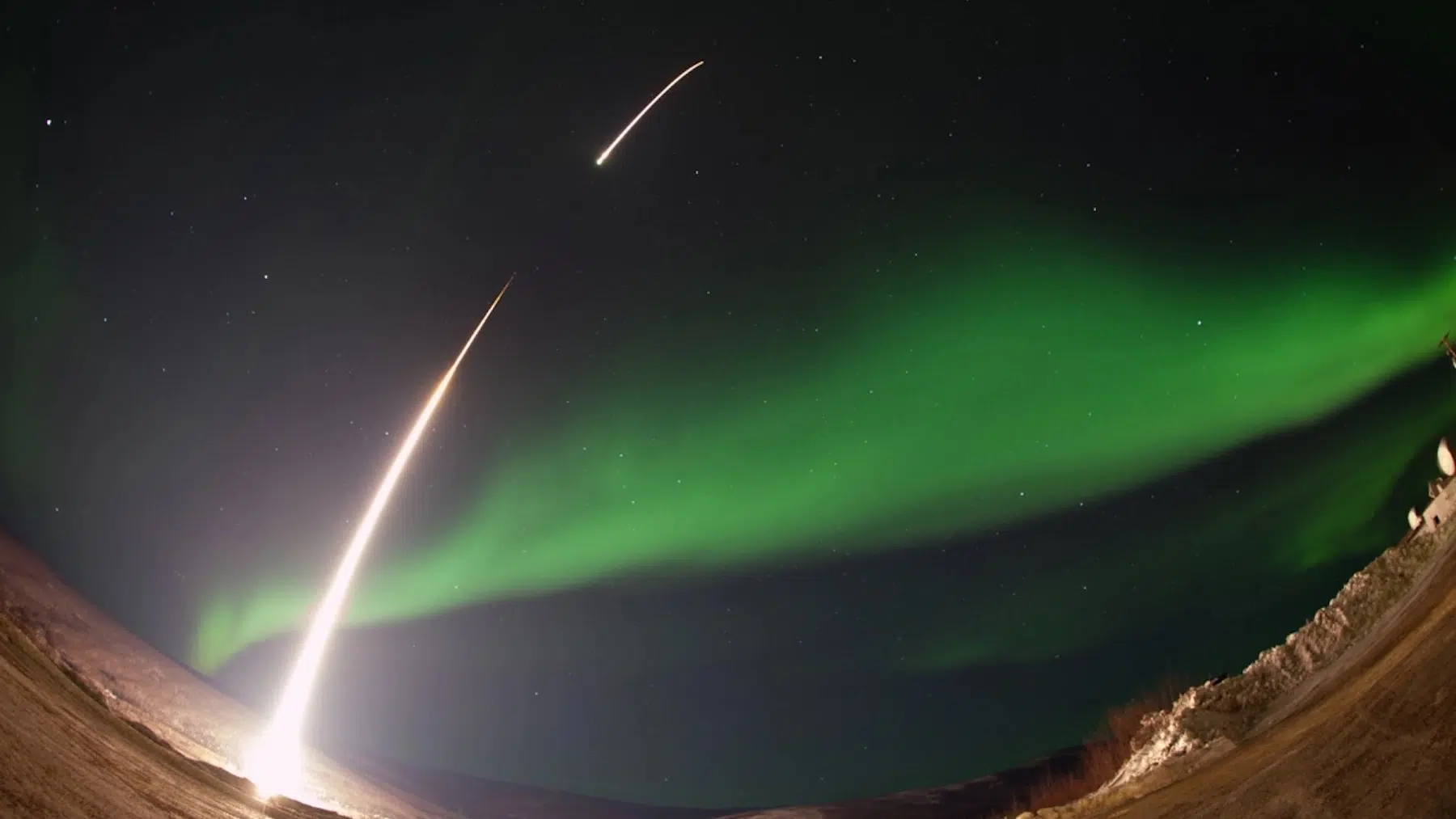
Seeing the Northern Lights is a recurring item on a lot of people’s bucket lists. March 25 and 29 were the days to tick it off the list, because these astounding lights were made even more spectacular by NASA. They launched three rockets in Alaska, which added a fascinating effect to the Northern Lights. Those lucky enough to see it were not disappointed.
AWESOME mission, literally and figuratively
Three NASA rockets were launched in March as part of an experiment called Auroral Waves Excited by Substorm Onset Magnetic Events. The title is a mouthful, so they came up with the much shorter, much cooler acronym of AWESOME.
What was the objective of the 3 rockets?
The objective of the space agency, together with the University of Alaska Fairbanks (UAF), was to study how the auroral substorms affect the behavior and composition of Earth’s far upper atmosphere, specifically the thermosphere. The rockets were launched from Poker Flat Research Range, located about 20 miles north of Fairbanks, Alaska. Two of them on March 25, 2025, and the last one on March 29.
“Our experiment asks the question, when the aurora goes berserk and dumps a bunch of heat in the atmosphere, how much of that heat is spent transporting the air upward in a continuous convective plume and how much of that heat results in not only vertical but also horizontal oscillations in the atmosphere?,” Mark Conde, the mission leader and space physics professor at UAF, explained.
Lights and awesome results: The rockets’ performance
NASA reported that the first two rockets, both 42 feet long, were successfully launched and released their payloads. When this happened, the already beautiful auroras were painted with pink, blue, and white vapor traces from the tracers, adding to the spectacle already on display.
However, the most striking show of lights came with the launch of the third rocket. Sometimes a mistake can lead to something wonderful. In the case of the NASA rocket, an issue with the TMA release created a single persistent upleg trail instead of the planned modulated upleg and downleg trails.
Like the name of the project itself, the result was equally awesome. Those with a view of the auroras were able to look at a truly marvelous spectacle, an upgrade to the wonders of nature made by a human hand. Despite the issue, the vapor trail was still usable and the mission was successful, not only because of the rare light show, but also due to the results.
Weather forecasting: On the way to improvement
The magical lights that painted the sky alongside the auroras were a bonus. But, as we explained before, the aim was to study the interaction between auroral substorms and the atmosphere, to improve space weather forecasting.
The theory is that the way auroral substorms behave has an impact on the composition of the atmosphere, and that change has consequences which need to be analyzed. The data collected by the rockets has been deemed useful, and the results will be important for everyday life, since we are dependent on satellites and GPS devices, and we need to know how they are affected by space weather.
Regarding the practical results of the experiment, Conde explained:
“I believe our experiment will lead to a simpler and more accurate method of space weather prediction.”
During the last few years, we have heard so much about the damaging hand of humankind. However, this time, the Alaskan sky, which is already a beautiful sight, was made even more fascinating by interacting with human-made NASA rockets. If the results of the experiment prove useful, the awesome AWESOME mission would be deemed a resounding success.
Read the whole thing?
Get the week's signal, not the noise
Our sharpest reporting on energy, climate and nature — free, once a week.