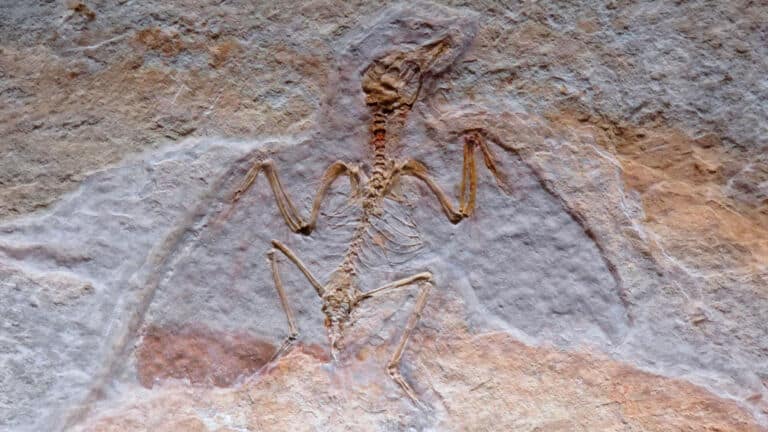
An isolated Alaskan island is hiding a frozen archive. It’s been there for 20,000 years.
Deep inside ancient caves, they found a historical record of the previous state of the planet.
But they also detected hints of potential implications for humanity and Earth. Ones that could reshape the entire region.
Something frozen in the ice is beginning to shift.
And the consequences may extend far beyond this isolated island.
What exactly was found, and how will the region eventually melt?
The Pacific domino effect: What a frozen archive in Alaska’s caves unlocked
On Prince of Wales Island, geologists ventured into the dark, silent chambers of Devil’s Canopy Cave.
Inside, they stumbled upon an out-of-place accumulation of material that sat untouched for 20,000 years.
This hidden archive was sealed away from the elements, preserving a history that usually vanishes.
Standard cave deposits in this rainforest setting are typically goopy mud or sharp, broken rocks. This discovery was different.
The material appeared mechanically weathered, suggesting a journey across vast distances before settling underground.
Even more unusual was the mineral composition. In a region dominated by limestone, researchers found residues that simply did not belong to the local bedrock.
By analyzing how these particles reacted to light, scientists confirmed the archive was established during the height of the last Ice Age. It represents a rare, land-based record of high-energy environmental shifts.
What surprised the geologists most was how well everything was preserved.
It was more than just a cave. It was a perfectly sealed time capsule of a bygone era.
But in that time capsule, a change was already taking place.
The prehistoric alarm: A 20,000-year-old warning from the deep
The Earth has a proclivity for the hidden. Deep inside caves around the world, secrets are waiting.
In this cave in Alaska, researchers started with the sediment. Patterns were emerging.
They tracked temperature shifts and moisture over thousands of years.
The island was constantly shifting between hot and cold. The changes were gradual, but unmissable.
Some things seemed benign; others stood out. Like how sensitive the region had been in the past.

Even tiny climate shifts left their mark.
That sensitivity is now raising concerns for modern-day society.
Climate change and new severe weather systems are a serious concern nowadays.
Parts of the world are warming at an alarming rate. And Alaska is one of them.
The concerns have been raised in the study, “Semi-continuous release of Cordilleran Ice Sheet meltwater between 20,000 and 17,000 years ago,” published in Nature Geoscience.
A global melt may be about to take place; the question is, why?
The planet is warming, and at an alarming rate. Sea ice is melting long before it is supposed to.
The cave on Prince of Wales Island is confirming this new reality, according to the study, “20,000-year-old cave sediments on Alaskan island provide new climate clues,” published by the University of Innsbruck.
The layers of sediment perfectly preserved by nature point to one truth: the level of today’s warming is far more intense than expected.
And that’s where our story hits a little close to home.
As the temperature rises, the permafrost surrounding the island will start to thaw.
Melting exposes darker surfaces that absorb more heat. Which starts a climate loop, if you will.
Scientists have been warning of this reality for years. And its trajectory has already begun.
If the consistent heating continues, the region could lose its frozen stability.
So the cave and island are far more than just a time capsule. They suggest a future where the world has too much water with nowhere to go.
And the melting ice is a global problem, not an isolated issue for Alaska.
Is the Alaskan time capsule a relic of the distant past, or a preview of our own inevitable finish line?
Read the whole thing?
Get the week's signal, not the noise
Our sharpest reporting on energy, climate and nature — free, once a week.