Americans may be in for the strongest auroras in recent memory soon.
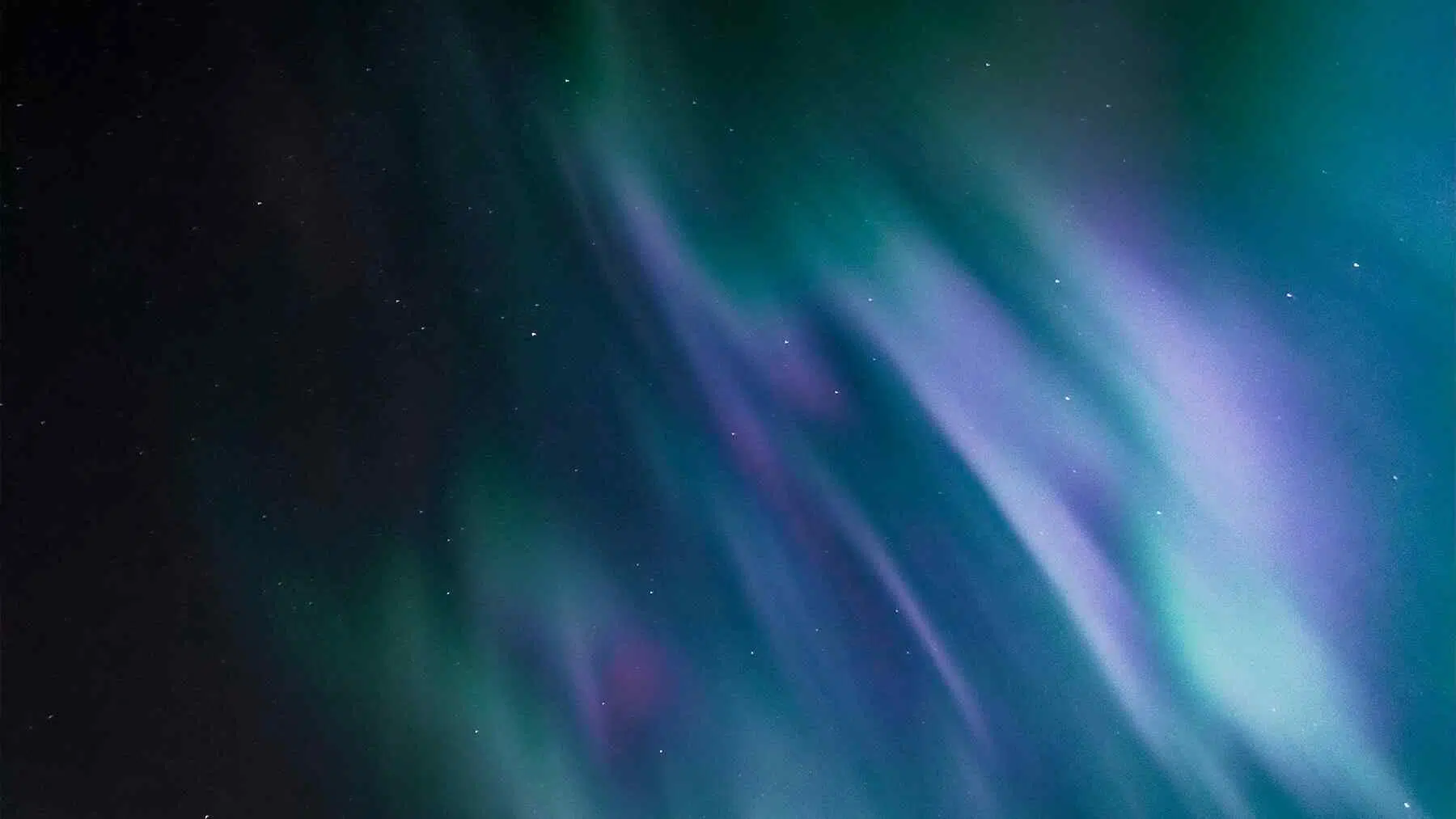
The astonishing light show has dazzled and amazed anyone who gets the chance to see it. Auroras have become a natural event that paints the sky in remarkable shades and colors, and in some regions of the US, you may see them more clearly than ever before.
How can the sun’s most active cycle in a decade influence auroras?
How auroras have dazzled the best minds in history
From the earliest recorded history of our ancestors gazing into the sky, auroras have left even the most historic thinkers in a state of confusion.
Aristotle has the “chasm” theory, which states that auroras were nothing more than glowing clouds or light chasms in the night sky. Even some of the most famous Americans in history developed their own theories to explain the night light show.
Benjamin Franklin theorized that the lights were caused by a massive concentration of electrical charges from the polar regions of Earth.
The first person to get it right was Edmund Halley, who also discovered the Halley comet. He was the first person at the time to theorize that the lights were caused by the Earth’s magnetic field lines.
The Earth and Space: A mystery still being unravelled by science, and us
Our planet remains an unsolved mystery that will take the rest of our lives to unravel, if we’re lucky.
Humans have only scratched the surface of our home. As of 2026, we have only explored around 20% of our oceans. Even deeper down in our planet’s core, secrets are being revealed by science. As we enter a new era of studying our environment, space has become a major focus for the scientific community.
As we study the latest images from the Hubble and James Webb telescopes, the mysteries of space and our planet are becoming a little bit easier to understand.
The reality is that science has made significant progress in developing theories that explain the strangest happenings in space and on our home. NASA has tracked unknown objects in the sky that have been “traveling backwards in time”.
The Northern Lights have become a major tourist attraction for those hoping to gaze at the night sky and be dazzled by the natural light show above our heads.
The Northern Lights will be much stronger in some regions soon
March 2026 will be a great time for stargazing in North America.
Scientists have stated that due to the Sun’s cycle, that is, the 11-year cycle of activity that our star follows, and the Russell-McPherron effect, which explains that geomagnetic storms are twice as likely to occur during equinoxes( March and September), the next aurora is going to be stronger than ever.
The Spring Equinox will provide stargazers this March the chance to get a glimpse of the most astonishing aurora to date, along with the blood red moon event.
The optimal viewing destinations across the nation will be:
- Fairbanks, Alaska: Fairbanks has become the “Aurora Capital” of the US and will be the number one spot for viewing the Northern Lights.
- Northern Minnesota: The Voyageurs National Park near the border with Canada will also be a great location.
- The Upper Peninsula, Michigan: The Headlands International Dark Sky Park near Mackinaw City should be on your list of aurora viewing destinations.
- Maine, Montana, and North Dakota: All three of these states will offer a great viewpoint as well.
According to scientists, the optimal viewing times in these states will be between 10:00 pm and 03:00 am.
As millions prepare for the next stargazing event in North America, the Northern Lights will ring in Spring this year with a dazzling light show.
Read the whole thing?
Get the week's signal, not the noise
Our sharpest reporting on energy, climate and nature — free, once a week.