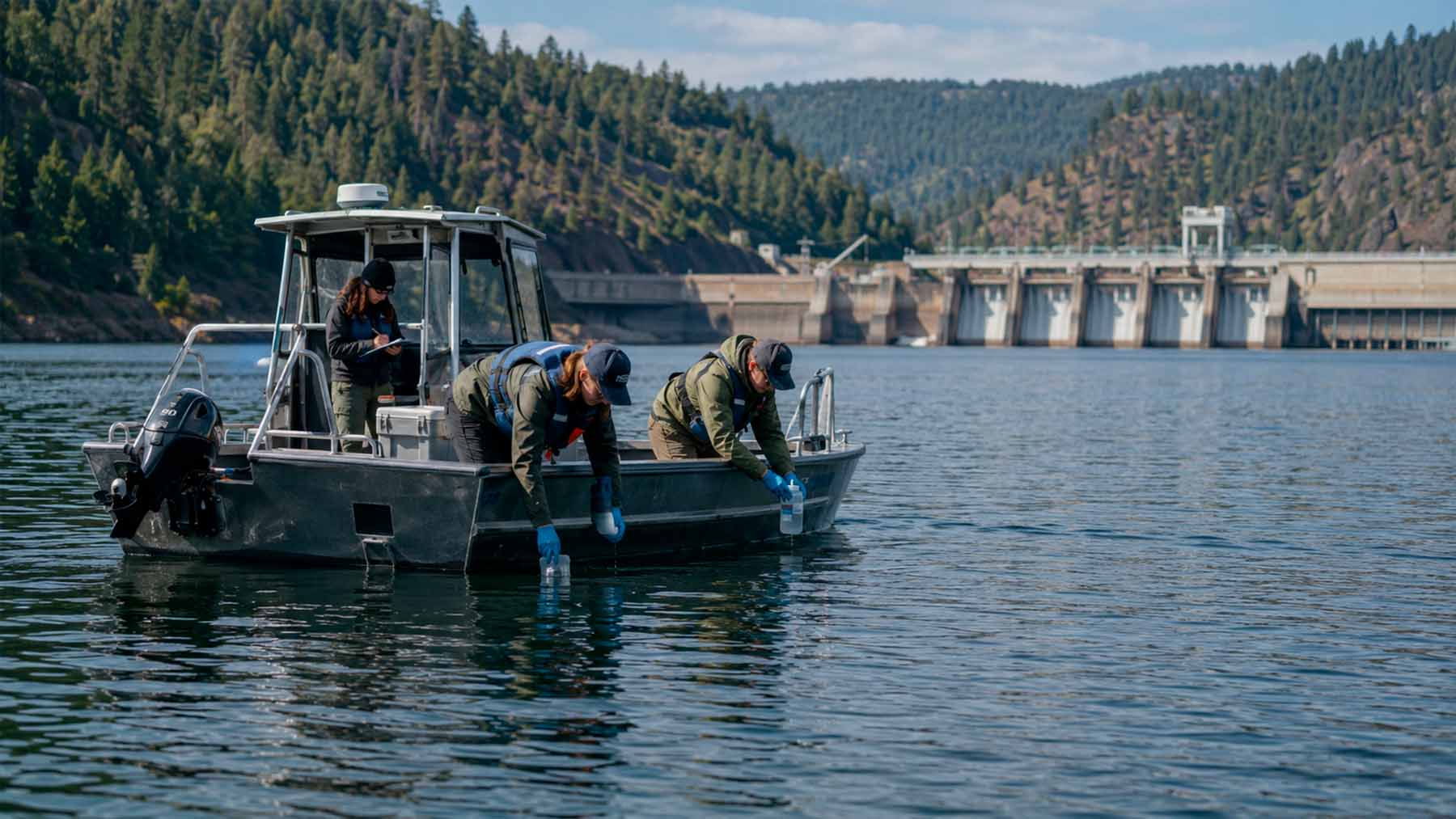
Federally mandated field crews are looking for DNA in the Columbia River. They are sweeping the reservoirs between the many hydropower dams for signs of an aggressive invasive predator.
One fish is threatening to undo decades of conservation, so biologists are filtering water samples for genetic clues to its presence. If this species makes its way past the dams and multiplies downstream, young native migrating fish could be wiped out before ever reaching the Pacific Ocean.
What was this predator that conservationists hope never to find?
How high-risk waters in the Columbia Basin are monitored for DNA
The Columbia River is important to humans and fish, powering regional grids and serving as a main migration corridor to the ocean.
It takes smart engineering to build complex fish passages for fish to bypass the many hydropower dams along the course. Public utilities, government agencies, and regional tribes have been making these concessions for a century.
However, biological hazards can also get through.
As soon as an invasive species gets a stronghold in an upstream tributary, there is a risk that some individuals will drift downstream into reservoir pools. Then, these waters become hunting grounds.
Environmental DNA, called “eDNA,” can be pulled from reservoir surface samples to catch populations of predators before they expand. Fish are constantly shedding genetic matter through their skin and waste products. This makes eDNA relatively easy for technicians to pick up without having to spot them visually or catch them in sampling nets.
Salmon runs need protection from upstream invasions
The recent eDNA surveillance sampling focuses on 13 federally protected salmon and steelhead runs. Species like Chinook, coho, sockeye, and steelhead rely on an open path to the sea to complete their lifecycles.
A freshwater predator in the reservoirs is a serious hazard for the juvenile fish (called “smolts”). Salmon smolts on their migrations downstream already have to deal with rising temperatures and man-made dams in their way, so a predator is highly unwelcome.
Some invasive hunting species are capable of swallowing fish a third of their own size, which means heavy losses for expensive, long-running restoration endeavors. In other regions like Lake Roosevelt, non-native fish have already established themselves and impacted the local food chain.
Utility crews, tribal biologists, and state teams, such as the Grant County Public Utility District, coordinated to run targeted suppression efforts, including selective netting and harvesting incentives for anglers upstream.
Maintaining downstream waters that are totally free of new breeding populations of invasive predators is the main objective.
One pike species was illegally planted and is now the biggest risk
The predator biologists hope to exclude is the northern pike (Esox lucius), a fast-growing game fish with a flat, duckbill snout and sharp teeth. Native to parts of northern North America and Europe, northern pike were illegally planted in the upper Columbia system decades ago.
These solitary ambush predators hide in shallow weeds, preying on native trout, whitefish, and young salmon.
To track downstream movement, Columbia River Inter-Tribal Fish Commission crews and utility managers collect water samples near target river miles where pike might spawn.
So far, the eDNA results are negative
Recent tests on mid-Columbia water samples showed negative eDNA results, indicating that northern pike have not established breeding populations in these specific reservoirs.
However, scientists emphasize the technical limits of genetic screening. Strong river currents, temperature shifts, and heavy seasonal flow can dilute floating DNA bits, so a negative result does not guarantee that zero fish are present.
Additionally, eDNA identifies target genetic fragments rather than the actual number or health of living fish. Combining upstream gillnet removal with downstream eDNA tracking provides a functional early warning buffer for threatened salmon runs.
Catching pioneer invaders early allows managers to deploy nets before northern pike establish permanent, expanding strongholds in lower river sections.
Read the whole thing?
Get the week's signal, not the noise
Our sharpest reporting on energy, climate and nature — free, once a week.