
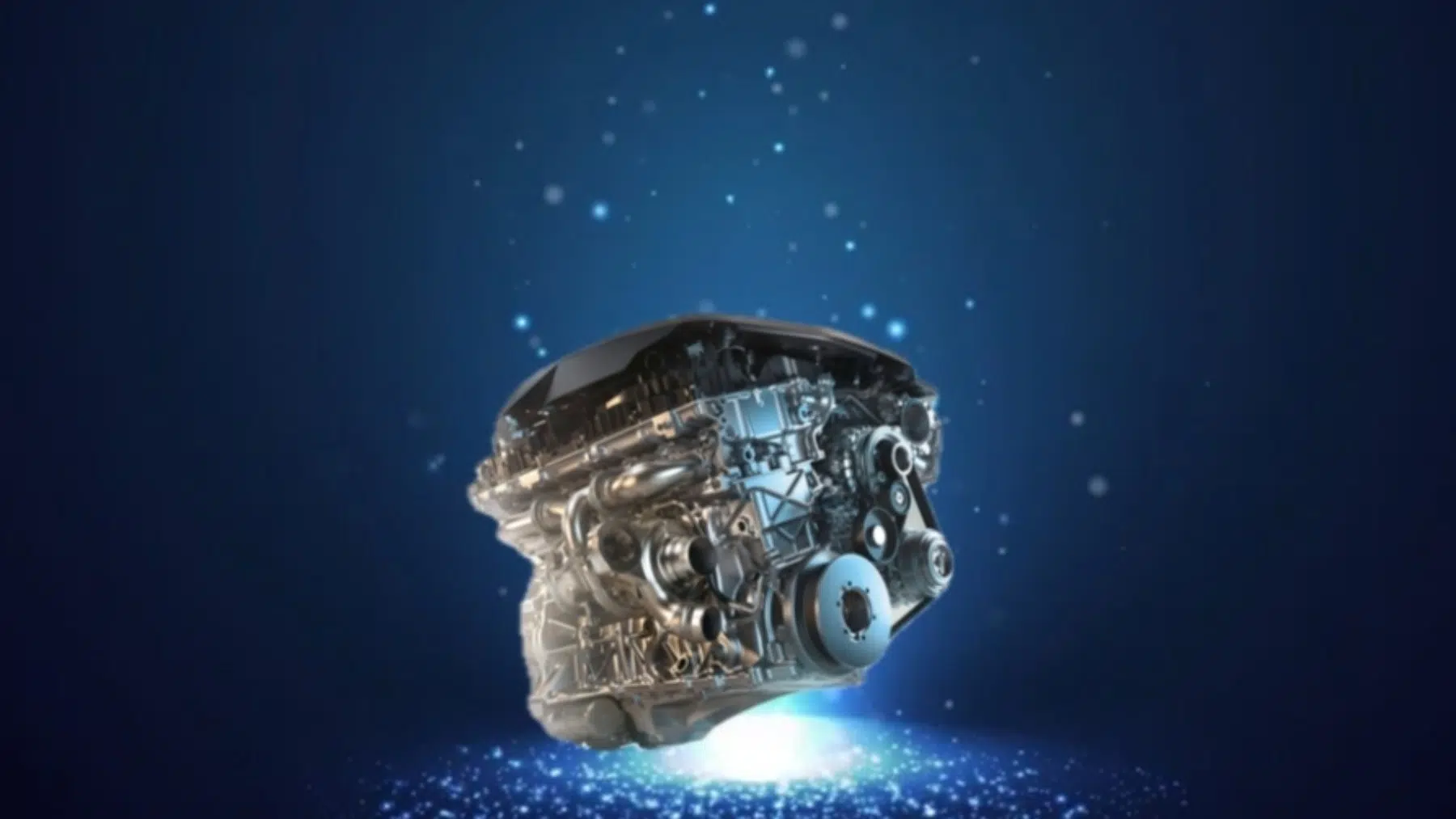
While hydrogen as a fuel for vehicles has been all the rage, automotive companies such as BMW are getting tired. The German automaker unveiled a new engine for its M3 model that will run on a completely different fuel. Mainstream environmentalists might momentarily be disappointed about the automaker’s decision, but others, including some major car enthusiasts, might be jumping with joy once they hear the specs of this new M3 model.
The new engine for the BMW M3
The German automaker, Bayerische Motoren Werke (BMW) has endlessly teased about the 3-Series Neue Klasse for months, but now they decided to spill some of the tea about the next-generation M3. The new M3 is expected to launch within the following two years and will be offered as an electric vehicle (EV) and as an internal combustion engine (ICE)-powered model.
According to Top Gear, BMW’s Mike Reichelt, Head of Neue Klasse, confirmed the following:
“We’re … going to offer it with a new type of six-cylinder engine, because we understand it may be early for some committed M fans to make the switch. However, we’re convinced the fully-electric M3 is going to hit new heights and reach new target groups, because it’ll behave completely differently.”
The breakdown of the new engine
BMW has been developing an all-new inline-six-cylinder petrol engine for its next-generation M3. The company will continue the use of the turbocharged six-cylinder engine for the ICE model, but it won’t be the S58B30 engine that is typical in the current M3 and M4. M CEO Frank van Meel confirmed that the next-generation M3 will retain the inline-six setup:
“We are going to keep the six-cylinder inline engine in the future of the M3. We are sticking to the best combustion-engine car in the segment, the iconic six-cylinder inline.”
Drivers can expect these features in the M3
The BMW boss also confirmed that both the electric and ICE-powered M3 will showcase the “same design and digital features.” What makes them stand out is the fact that their main focus won’t be 0-60 mph (0-96 km/h) times. The company’s focus is on dynamics, which is why its “Heart of Joy” system begins to feature. The control unit is in control of the powertrain, brakes, steering, and recuperation system. While it may not sound exciting, the Heart of Joy system is remarkable due to its capability to process information ten times faster than previous systems.
Thanks to Heart of Joy, the BMW M3 promises to deliver a “whole new level of speed and precision” as well as a more reciprocal interaction between the different components. This reciprocal interaction between the powertrain, brakes, and energy recuperation system will lead to a decreased need for drivers to apply the brakes in a majority of situations, which will increase the model’s efficiency by up to 25%.
These features could be good news to some and bad news to others, but it mainly depends on you and how you would like your driving experience to be. While the company’s decision to launch another ICE-powered model might be frowned upon by some, especially regarding the EU’s goal to go zero-carbon by 2035, it is a small consolation to some who love the adrenaline-pumping roar of a powerful engine running through their beings.
Read the whole thing?
Get the week's signal, not the noise
Our sharpest reporting on energy, climate and nature — free, once a week.


