For years, mysterious markings on an ancient Brazilian rock baffled scientists.
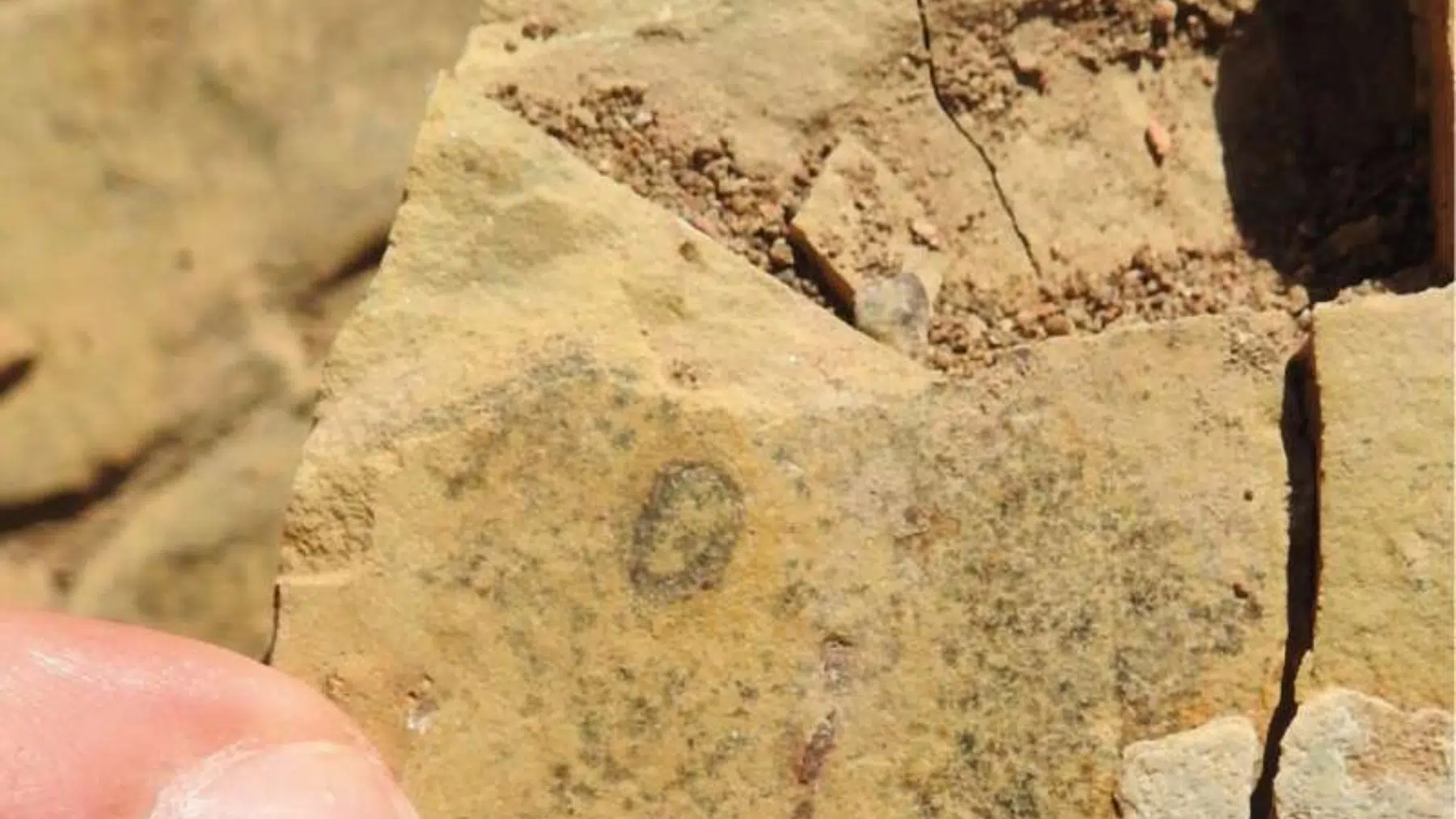
Looping, thin grooves in the stone looked identical to primitive animal footprints.
Researchers suspected tiny creatures crawled here long before complex marine life evolved.
This theory carried massive implications for evolutionary history.
Advanced imaging tools finally allowed scientists to look inside the fossils.
The internal structures pointed to a completely different type of prehistoric life.
What were those footprints then if not from animals?
Why the markings in Brazilian rock looked strangely familiar to the researchers
The fossils sit in Ediacaran Period sedimentary rock from 540 million years ago.
The structures closely resembled mud disturbed by moving organisms.
Some lines curved gently, while others formed repeating loops. These exact patterns typically indicate ancient animal burrows.
Researchers suspected tiny invertebrates could have moved beneath soft seafloor sediment there.
The timing also seemed plausible.
Earth’s oceans were slowly changing during that period. Oxygen levels increased in some marine environments.
This environmental shift allowed multicellular life to experiment with movement for the very first time.
As a result, finding true tracks from this era would mark the absolute dawn of animal mobility.
Scientists believed early animal activity may already have started expanding across shallow seabeds.
The Brazilian markings appeared to fit that story.
Still, certain details never sat comfortably with researchers. The structures lacked clear digging patterns. Some ended abruptly.
Others overlapped strangely without disturbing the surrounding sediment.
Those inconsistencies kept resurfacing during reexaminations.
How the researchers quietly uncovered a completely different structure
Eventually, the researchers returned to the rock with improved imaging equipment. They scanned the fossils using high-resolution microtomography and nanotomography.
Instead of viewing only the rock exterior, researchers could finally examine internal structures.
That changed the investigation almost immediately.
Scans revealed organized cellular shapes hidden beneath the surface.
Some resembled bundled filaments.
Others showed segmented internal walls.
Those features looked biological, but not animal.
Researchers also noticed the fossils appeared in clustered patches rather than isolated trails.
That pattern suggested growth.
Not movement.
Preserved organic compounds confirmed the structures were expanding colonies, not wandering tracks.
That detail became important.
What looked like wandering tracks on the surface now resembled layered colonies expanding across ancient marine sediment.
The fossils were telling a different story entirely.
That story has been detailed by the study, “This 275-million-year-old animal had a twisted jaw like nothing alive today,” published by the Field Museum via Science Daily.
What scientists now think was actually living inside the rock
The patterns were actually fossilized microbial mats.
Researchers now believe they were fossilized microbial colonies.
Some likely formed from sulfur-oxidizing bacteria.
Others may have included algae-like microorganisms growing together across shallow seafloors.
That explains the looping shapes.
Microbial mats often expand outward unevenly as colonies compete for nutrients and light.
Over time, the growth patterns can mimic trails or burrows surprisingly well.
Earlier researchers simply could not see the preserved microscopic structures hidden inside the fossils.
That changed once imaging resolution improved.
The discovery also reshapes part of the timeline surrounding early animal evolution.
The discovery proves these rocks preserve one of Earth’s final purely microbial worlds.
They capture the quiet dusk of an era before macroscopic predators completely reshaped the planet.
Why the discovery matters beyond Brazil
The finding reaches beyond one fossil site.
Scientists now suspect similar “track fossils” elsewhere may need closer inspection too.
Many ancient tracks linked to early animals might just be misidentified microbe communities.
This rewrites our understanding of Earth’s oldest ecosystems. It explains why the Brazilian markings looked so unusual.
What were those “footprints” then if not from animals?
They were the preserved remains of ancient microbial life slowly spreading across an ocean floor.
Read the whole thing?
Get the week's signal, not the noise
Our sharpest reporting on energy, climate and nature — free, once a week.