These four glaciers have endured for thousands of years in changing environments.
They first formed when mammoths still wandered across North America.
Now, scientists warn that the ancient ice could disappear within decades.
Researchers now think some Sierra Nevada ice survived every century since the mammoths disappeared.
Why are glaciers that survived since the Ice Age suddenly collapsing now?
How the Sierra’s oldest ice glaciers survived this long
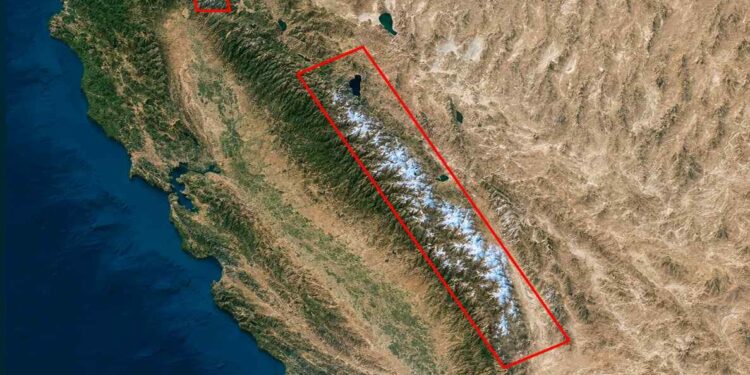
These particular glaciers sit high in California’s Sierra Nevada range.
Most people never notice them from below. But that is now changing.
Researchers say they quietly endured for more than 11,000 years.
That means they likely existed throughout all of human civilization in the region.
Scientists once believed California’s glaciers disappeared repeatedly during warmer periods.
This new study challenges that idea completely.
Researchers analyzed rock beneath retreating ice near Yosemite National Park.
Newly exposed rock showed signs it had remained buried beneath ice for over 11,000 years.
It had remained covered for thousands of continuous years.
Suggesting the glaciers never fully vanished during the Holocene period.
In other words, modern society may have never seen these mountains ice-free before.
That realization changed the entire timeline.
Researchers are watching Ice Age glaciers fragment in real time
The glaciers already look nothing like they did a century ago. Some of this ice likely formed before humans settled California.
Ancient cultures and environments altered how the Earth looked.
Old photographs reveal how much ice has vanished since the late 1800s.
Summer melting now removes more ice each year than winter snowfall can replace.
Summers across the American West have gradually become hotter over time.
High-altitude glaciers react fast when those conditions shift.
Even the most modest warming can slowly eat away at ancient ice.
Over five years, researchers returned repeatedly to several glacier sites.
Each expedition revealed more exposed rock and shrinking ice coverage.
Some glaciers fragmented into smaller, isolated patches.
Others lost large sections entirely.
Researchers have warned that many glaciers may disappear before 2100.
California’s surviving ice appears especially vulnerable.
The changes extend beyond appearance alone.
Glaciers normally assist in regulating mountain ecosystems and seasonal water flow.
Their disappearance could alter alpine habitats completely.
Scientists also describe glaciers as climate indicators.
When ancient ice disappears rapidly, it signals broader environmental change.
Scientists believe the Sierra Nevada is approaching its first glacier-free period in over 11,000 years.
What is happening in the American West has been detailed by the study, “Glaciers in California’s Sierra Nevada are likely disappearing for the first time in the Holocene,” published in Science.
And backed by a report published by SF Gate.
The four glaciers are now facing an uncertain future in the American West
The four glaciers drawing the most attention are East Lyell, West Lyell, Maclure, and Palisade Glacier.
All sit within California’s Sierra Nevada mountains.
Researchers say these glaciers likely survived since the age of mammoths.
That makes their current retreat historically unprecedented. And the issue has been spreading outside of the US.
Why this glacier disappearance could become historically significant
Scientists now believe human-driven climate warming is overwhelming systems that were stable for millennia.
The glaciers are shrinking faster than natural cycles have been doing.
Some newly exposed rock had not seen sunlight since before recorded history.
That one detail alone stunned researchers studying the Sierra Nevada.
The concern is not only about losing ice.
Researchers say California may soon enter an entirely new environmental state.
A glacier-free Sierra Nevada has likely not existed during the entire Holocene epoch.
That covers roughly the past 11,700 years.
Scientists stress the process is still unfolding.
Some glaciers may survive longer than expected in isolated shaded regions.
But current warming trends continue pushing the ice uphill each year.
And for the first time in human history, California’s ancient glaciers may disappear completely in the future.
Read the whole thing?
Get the week's signal, not the noise
Our sharpest reporting on energy, climate and nature — free, once a week.