Picture a steel cable thicker than a human thigh being hauled up through cold North Sea water onto a Norfolk beach.
That is exactly what happened on March 26, 2026, and the scale of what it represents is almost impossible to hold in your head.
But buried inside that headline event is a second story, one about a small white-winged seabird that most people have never seen, and the extraordinary thing a giant energy company built just to keep it alive.
A farm unlike anything else on Earth
The North Sea off the Yorkshire coast is a cold, rough, largely invisible place to most people on land.
About 100 miles out into that grey water, an enormous construction project has been taking shape since 2018.
The world’s largest offshore wind farm made a major step toward delivering clean power to more than 3.3 million UK households after successfully connecting its first export cable, developed by Ørsted, a Danish energy company.
The project is called Hornsea 3, and its 2.9-gigawatt capacity will generate enough electricity to light up a population larger than Greater Manchester, Liverpool and Leeds combined.
Hornsea 3 is the firm’s third gigawatt-scale project in the Hornsea zone, following the 1.2-GW Hornsea 1 and the 1.3-GW Hornsea 2.
Those two earlier farms together never matched what the third one will do alone.
A cable that crossed an ocean before it crossed a beach
The cable that came ashore in Norfolk is not a single wire.
It bundles two HVDC cables together with a fiber optic cable that transmits data back to the wind farm operations center.
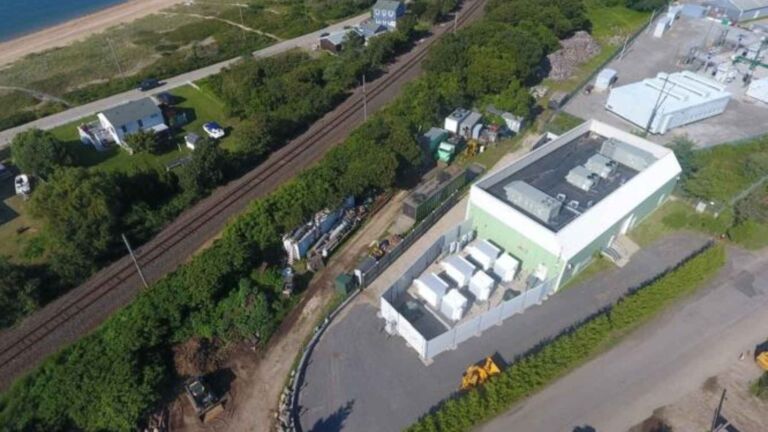
Once electricity leaves the turbines far offshore, it travels more than 31 miles underground to the converter station at Swardeston, Norfolk.
Jan De Nul will transport and install 422 miles of export cables before the end of 2026.
One of the key converter components made an even wilder journey: the top section of one converter station traveled over 13,000 nautical miles from Thailand to Norway before installation.
The sheer distance that single component traveled before a single home received power from it tells you everything about the ambition behind this project.
What the North Sea floor does when no one is trawling
Here is where the story takes a turn most energy articles never make.
The moment a wind farm’s foundations hit the seabed, something begins to happen that has nothing to do with electricity.
Offshore turbine foundations host more seafloor animals per square meter than the open North Sea floor itself, with the steel drawing in entire communities of marine life.
Researchers testing seawater samples found DNA from sharks and rays in the waters surrounding several offshore wind farms in the Netherlands.
Since trawling and other disruptive fishing methods are banned inside these zones, the seabed begins to recover, creating better habitat for vulnerable species like sharks and rays.
The turbine steel itself becomes a living reef, one that nobody planned and nobody expected.
The bird that forced a wind farm to build it a home
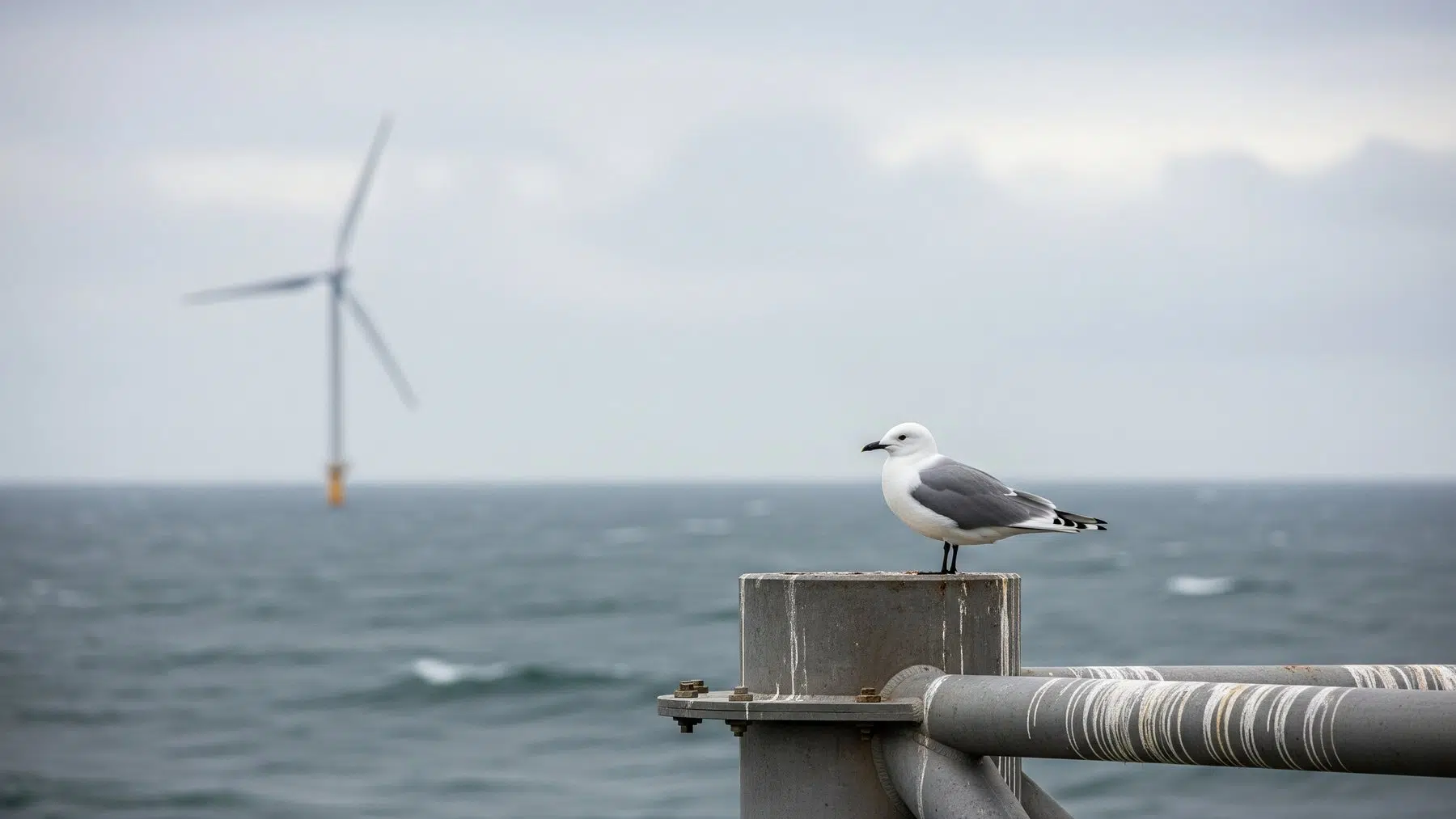
Hornsea 3 sits in the flight path of the black-legged kittiwake, a small gull whose global population has been falling sharply for decades.
Before a single turbine could spin, Ørsted had to answer for every kittiwake that might collide with a blade.
The solution involved building three artificial nesting structures close to the shore off the East Suffolk coastline, each capable of hosting up to 500 pairs of birds, thanks to alternating rows of fully partitioned, open and semi-partitioned ledges.
The first breeding pair and chick arrived in summer 2024.
Four pairs were reported nesting on the structures in 2025.
A power plant designed for 3.3 million homes had become a nursery for one of Britain’s most at-risk seabirds, and it happened because engineers were required to make it so.
What comes next, above the water and below it
The full 2.9-gigawatt installation is expected to be completed around the end of 2027.
By that point the turbine foundations will have been standing long enough to accumulate years of marine growth, reefs of mussel and barnacle feeding offshore species that were never part of any engineering plan.
New research suggests that seabirds may be less at risk from colliding with wind turbines than historically believed.
Studies have recorded seabirds changing their flight paths around turbine blades, though researchers caution that findings vary by species and location.
The kittiwake structures are still in early stages of colonization, and researchers note that larger monitoring programs are needed before anyone can claim the compensation is fully working.
But the picture forming above and below the North Sea waterline is genuinely surprising.
A structure built to harvest the wind is also, cell by cell, creature by creature, rebuilding a corner of the ocean it stands in.
The cable is ashore, the seabirds have found the ledges, and the fish are already circling the steel.
Read the whole thing?
Get the week's signal, not the noise
Our sharpest reporting on energy, climate and nature — free, once a week.