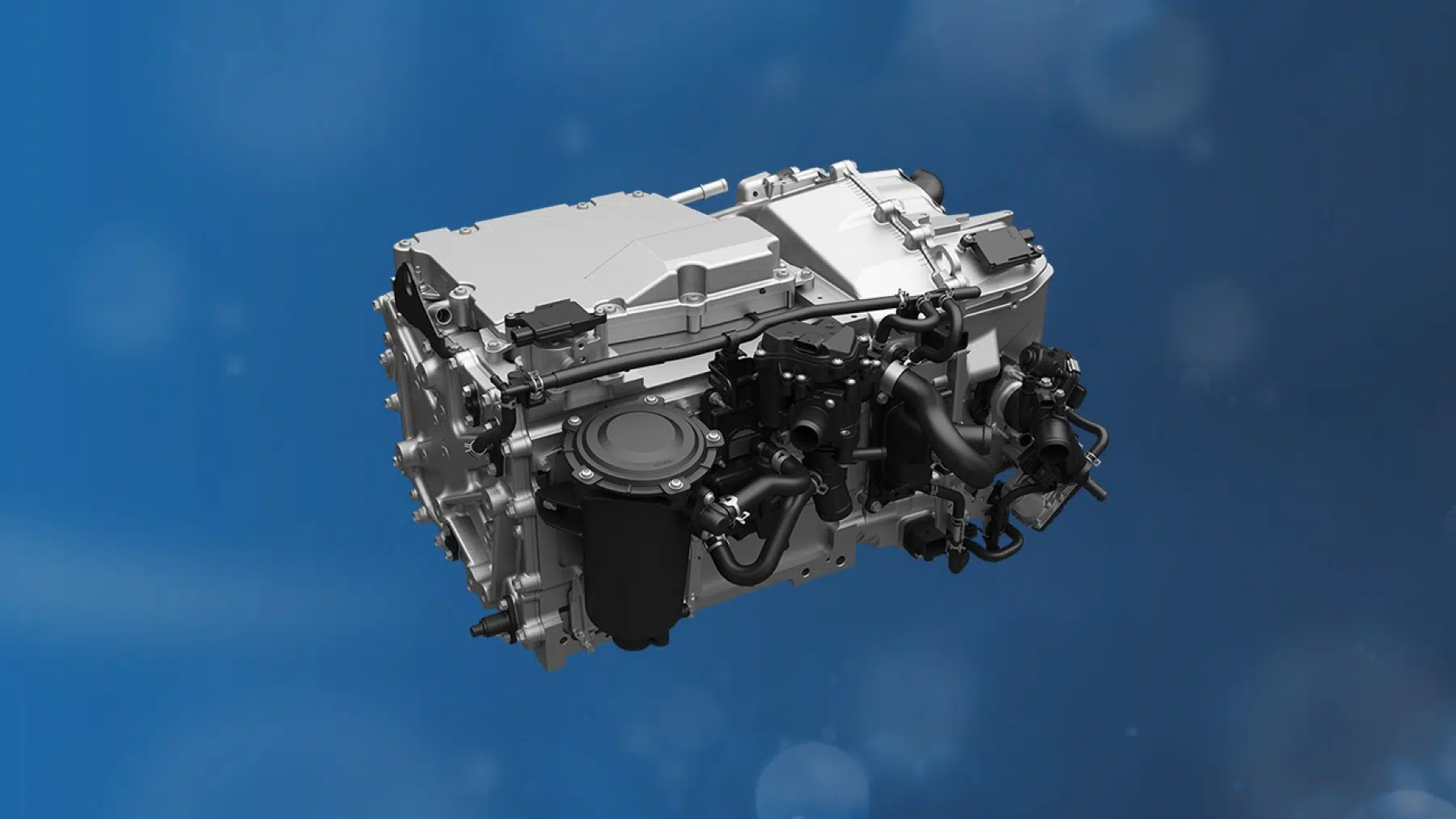
There aren’t many spots to refuel a hydrogen tank in the U.S., but Honda is not looking into that. The company unveiled the new engine for the future of the car industry. Asian automakers have always been known to develop state-of-art technology to implement in their cars. Now, as hydrogen is making its way into the industry with multiple projects featuring technology to help everyday cars to run on “water”, but the infrastructure is still an issue, but the fuel cells to power the future are not.
Honda is pushing for a “greener future”
As the world looks into new, renewable sources of fuel, the hydrogen is one of the elements that can power the future, but it comes with a price: the lack of infrastructure. There aren’t many places to refuel the air sealed tank, with hydrogen being launched at a high pressure into the vehicle, but Honda is launching a trend in the market.
The automaker is taking this so seriously that it retired from Formula 1 for two years to have all engineers focus on the goal. By 2030, they want to have carbon-free emissions. Now, they unveiled a new, hydrogen engine.
Honda just unveiled the 2025 Honda CR-V e:FCEV — a hydrogen fuel cell vehicle that will soon be available for lease in California. Launching a hydrogen-powered car in a country with almost no infrastructure might sound odd, but they are not backing off.
Hydrogen fuel cells can be used in multiple ways
The company sees four ways to apply its second-generation fuel cell technology: in passenger and commercial vehicles, stationary power units, and heavy-duty construction machines. The latter two require long-duration power, which, in theory, could help drive demand and improve infrastructure over time.
“We are doing this to advance the hydrogen economy, because somebody has to,” said Jay Joseph, VP of Sustainability and Business Development at Honda.
The 2025 CR-V e:FCEV is one piece of a broader hydrogen strategy. The company is also experimenting with a 576 kW hydrogen-powered backup generator at its Torrance, California headquarters, and it’s building a Class 8 fuel cell semi-truck as a proof of concept in the U.S.
Honda has been planning the future since 2003
Honda isn’t new to the hydrogen game. Its first fuel cell model, the fleet-only FCX, arrived in 2002. That was followed by the FCX Clarity, and later, the Clarity Fuel Cell in 2016. Now, nearly a decade later, they are bringing hydrogen tech into its popular CR-V — with a twist. This CR-V doesn’t just run on hydrogen. It also includes a 17.7 kWh battery that offers 29 miles of electric-only range. That means it’s a plug-in hybrid, but instead of an internal combustion engine, it uses a hydrogen fuel cell.
As TechCrunch’s Emme Hall points out, the company understands the current issues with hydrogen. California’s largest public supplier, True Zero, recently raised prices by 20%. Shell has shut down its hydrogen stations, and many of the remaining 50 or so suffer from outages or simply lack fuel.
According to Hall, it’s a practical backup — and a more efficient option for the short, frequent drives that many fuel cell owners make. The company learned that most Clarity Fuel Cell drivers only traveled 5–10 miles at a time, which isn’t ideal for hydrogen.
Extra power while driving
The 2025 CR-V e:FCEV is powered by an electric motor that delivers 174 horsepower and 229 pound-feet of torque — slightly less than the output of the standard hybrid model. It can operate in EV-only mode or as a hybrid, with the hydrogen fuel cell providing additional power when extra torque is needed. Drivers also have the option to save battery charge for later or recharge the battery while driving.
Read the whole thing?
Get the week's signal, not the noise
Our sharpest reporting on energy, climate and nature — free, once a week.