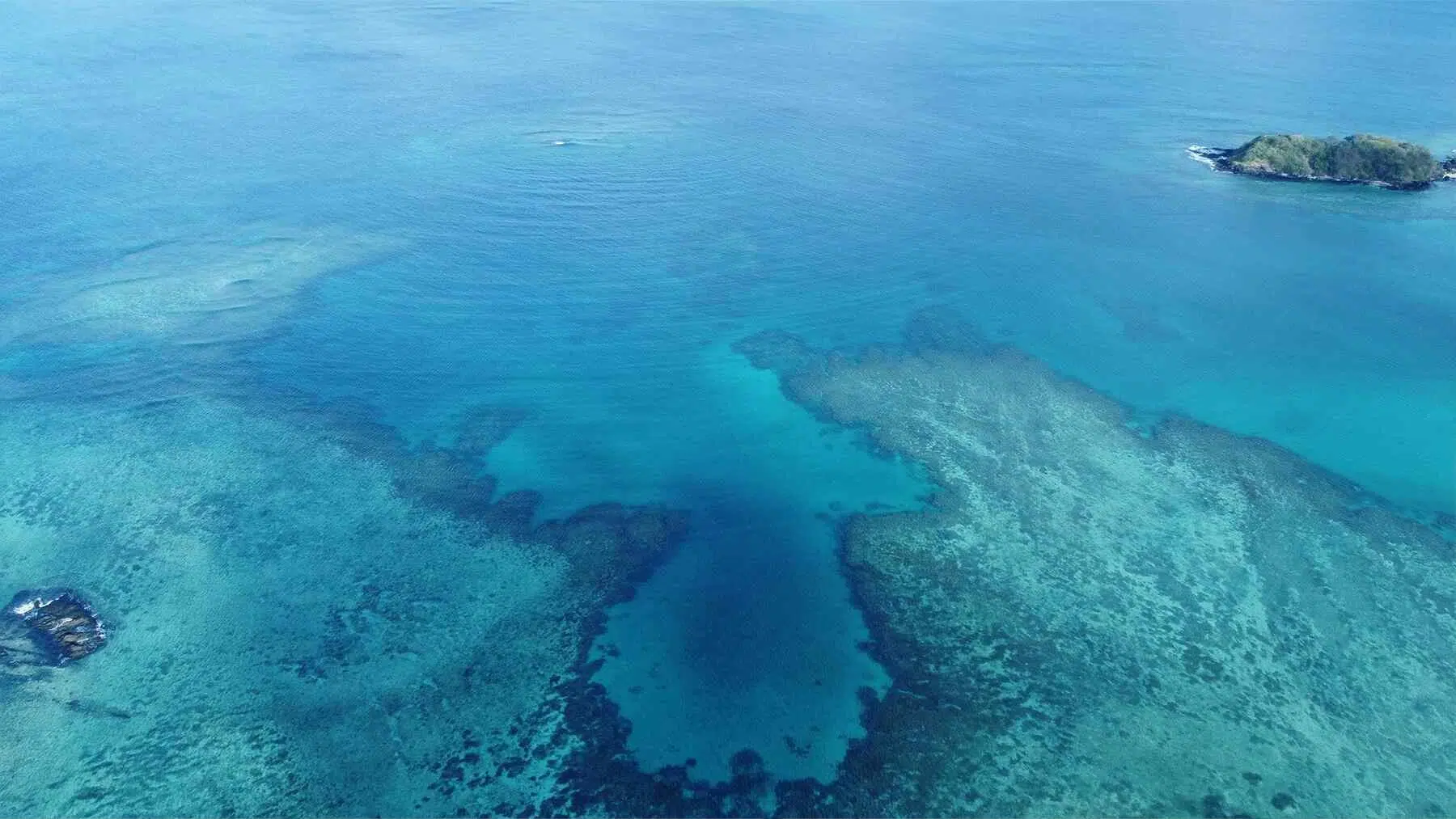
Archaeologists have found an island made entirely of shells near Fiji.
At first glance, it looked like just another natural shell deposit left by the ocean. But the more attention they paid to it, they found it shouldn’t exist. This tiny island appears to have been built over centuries. But by what, or more specifically, by whom?
Who constructed this tiny island near Fiji?
What built this small but significant island near Fiji
This island sits near Culasawani on Vanua Levu. Which is Figi’s second-largest island.
It covers thousands of square miles and looks like just another island. But almost all of it is made of shells. Most of this came from edible shellfish once collected by man for food. Researchers also found several fragments of pottery mixed into the shells.
What did the fragments of pottery point to?
Radiocarbon dating placed the oldest layers on the island to 760 CE. Meaning that this island began forming around 1,000 years ago. But what was the reason for this tiny island to form all those years ago?
How can shells create an island in the sea? Something about this island did not follow nature’s rules.
Was this island made by nature, or perhaps by us humans
Initially, the researchers thought perhaps nature was the explanation for this odd island.
They suggested a tsunami or a powerful wave washed the shells together. Large storms in the sea can rip up shells from the seafloor. And they can dump thousands of these shells on nearby land.
The Earth has dozens of hidden features trapped underground.
But these were formed by nature over millions of years. What about this island? Did nature play a role in its formation? Researchers aimed to test this theory. They spent an extensive amount of time studying the shells on the island.
The evidence pointed in one specific direction. And that is when the mystery deepened even more.

Nature was not the origin of this tiny island. But then what was the origin? The research found that every shell belonged to an edible species. That would be rather unusual for a wave or tsunami.
Underwater events can reshape the planet.
However, the researchers found that this island likely formed in another way. The study, “Shell-Dense Island Off Culasawani, Vanua Levu Island, Fiji: Midden or Muddle?” published in Geoarchaeology, has backed up this theory. Storms could not have forged this one island.
We built an island in the sea without calling it an island
Humans can play a role in changing the planet, but nobody aimed to build an island like this.
The island built from shells was not the most surprising fact of this discovery. Instead, it has been revealed that over centuries, food became geography. Archaeologists have classified the island as a ‘midden island”.
A midden island is a specific place where waste accumulates over time.
Think of the huge “plastic island” in the sea, and you’re halfway there. In this case, the waste was an accumulation of discarded shellfish. Which, layer by layer, reshaped the coastline of the island.
While people were intentionally building pyramids around the world, this island was accidental at best.
An island that was unintentionally constructed over thousands of years
The island was slowly formed as humans discarded the shells of the animals they ate. Proving that an island can become an archive of human meals and movements.
It proves that humanity has reshaped the world around us for generations, albeit accidentally.
Let’s be honest, we know that we impact wildlife, but the actual Earth? That is something we never thought possible. It turns out that sometimes history is written in stone. Other times, it is accidentally written in shells left over after dinner.
Will we find more islands like this around the world?
Read the whole thing?
Get the week's signal, not the noise
Our sharpest reporting on energy, climate and nature — free, once a week.