The Earth has many living fossils that boggle the mind.
For generations, we have been studying the world of life that populates our one and only home in the cosmos. But how can a living fossil that remained mostly unchanged for years emerge from the depths of the ocean to baffle the best minds in science?
What is this ancient animal, and how is it still alive?
The Earth is a complex and mysterious place that we are starting to unravel
Our planet is certainly an unusual place for life to exist, and it has been constantly evolving and changing over millions of years.
Scientists have recently discovered evidence of Greater Adria, a massive continent the size of Greenland that broke away from Africa and was submerged under the European continent roughly 100 million years ago.
And the evolution of our planet is far from over.
We have recently found evidence in the Afar Triangle of Africa that the continent is essentially unzipping itself. Tectonic plates are moving apart to create a new ocean basin that will one day split the African continent in two.
Long-feared animal species are making a comeback thanks to conservation
Conservation of our wildlife is of the utmost importance to maintaining a healthy ecosystem for the Earth.
Over the past few decades, we have made great strides in saving some species from the never-ending peril of extinction. A long-feared extinct crocodile in Asia is making a triumphant comeback, thanks in no small part to the local populace.
Our impact on the environment has been profound as we make new industrial progress.
Life is delicate and requires a safe place to thrive and evolve, but our collective progression as a society has led us down a very dark road indeed. Some people have grown weary of society altogether, and one man has lived a solitary life for almost three decades.
But removing oneself from the world will not address our future or the longevity of life on the planet.
Most animal life is far different from the ancient lifeforms they once were millions of years ago, with a few exceptions, of course. Some shark and crocodile species are basically the same as they were when life began on the Earth.
However, a recent study, “Comparative habits and habitat in extant and extinct nautiloid cephalopods from acoustic telemetry and stable oxygen isotope analyses,” published in Nature, has revealed one species that has remained unchanged for 500 million years.
An ancient lifeform has emerged from the depths of the ocean
Science has taught us that many animal species follow many similar patterns to those that we humans do, including specific migration traits.
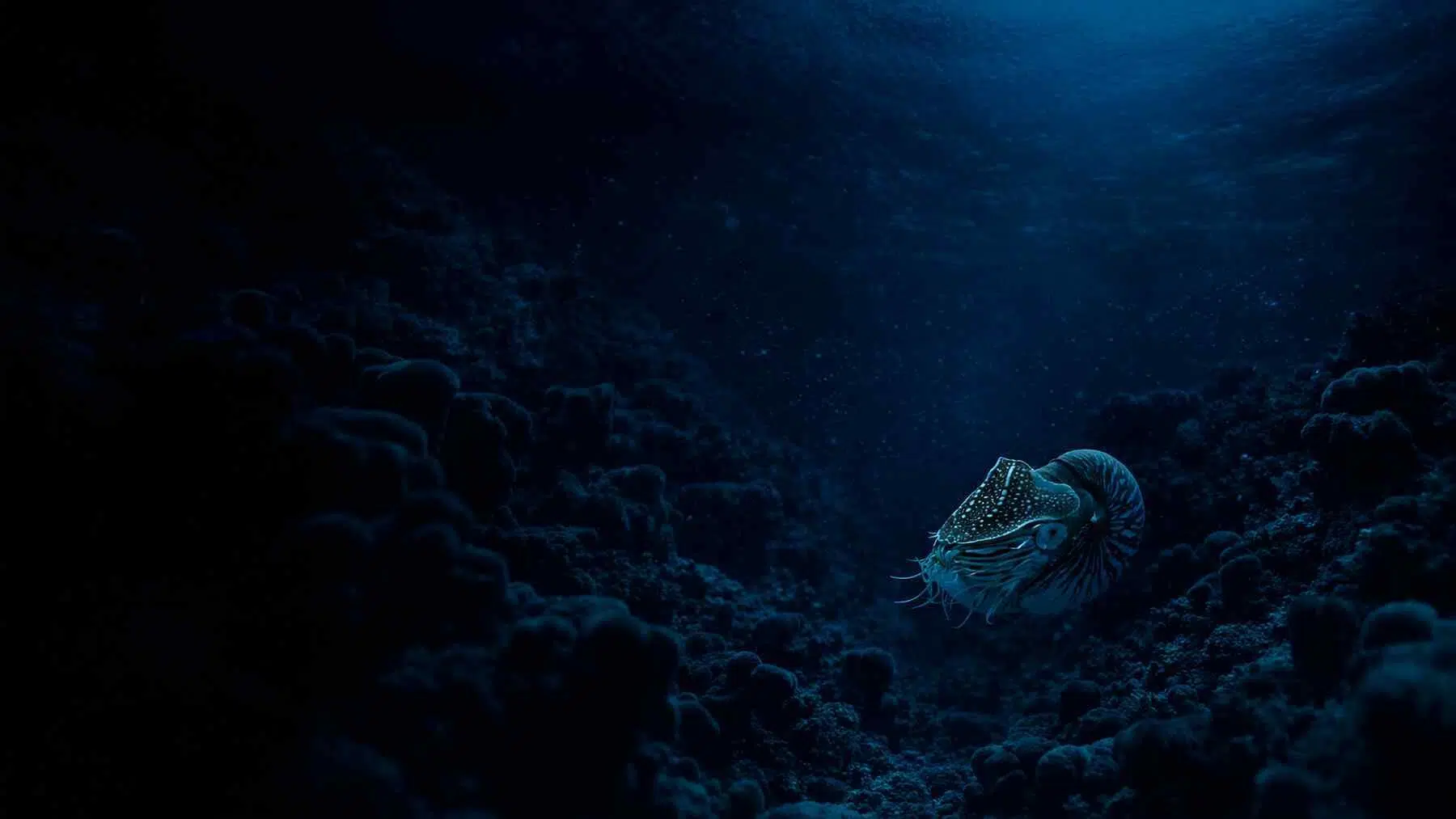
The study found evidence that a living fossil, that is, the nautilus, a cephalopod that has remained mostly unchanged for 500 million years, has been living in far different habitats than those of its ancestors.
The ocean is almost like another world that holds many, many secrets that we are unable to unravel.
The ocean is filled with mysteries that we simply can not understand
One man opted to live under the ocean for 93 days, and the results were that he now looks 10 years younger. But this living fossil has taken that a step further and lives in far colder, deep-water habitats than science ever knew.
The relevance comes from the study proving that the nautilus can survive in much colder, deeper, and harsher environments than its ancestors.
This reveals that certain species display unexpected and unexplained migration patterns that we know very little about. We know more about space than we do our own oceans, and the mysteries are only getting stranger.
Read the whole thing?
Get the week's signal, not the noise
Our sharpest reporting on energy, climate and nature — free, once a week.