For many people, solar panels feel like a summer miracle. Long days, strong sun, smooth power. Everything works, nobody worries. Then winter arrives, production drops, and frustration kicks in. Suddenly, people say their panels “don’t work anymore,” even though nothing actually broke. This happens so often it has become a familiar winter frustration.
Here’s the uncomfortable truth. In most cases, the panels are doing exactly what they were designed to do. The problem isn’t failure or bad equipment. The problem is that winter doesn’t forgive summer thinking, and that mistake shows up fast.
The rule everyone repeats without thinking
There’s one sentence almost every solar owner has heard. If you want good results, point your panels south. Installers say it, guides repeat it, and forums treat it like a law of nature. Over time, it became the standard solar rule that nobody questioned.
And to be fair, it works well most of the year. In spring and summer, the sun sits high in the sky. South-facing panels catch plenty of light, batteries charge easily, and confidence stays high.
But winter plays by different rules.
When winter changes everything
Winter doesn’t bring just one problem. It brings several at once. Short days. Thick clouds. Snow that refuses to melt. Together, they create a tough winter mix that makes solar feel unreliable.
The panels themselves are usually not the issue. The real change happens above us. In winter, the sun stays low on the horizon. Light comes in shallow angles, slipping past panels that were set up for summer sunshine.
In northern states, this effect is even stronger. Panels that worked perfectly in July can suddenly struggle in January, even on clear days.
The moment the pattern becomes obvious
For off-grid homeowners, winter problems show up immediately. There’s no backup grid to hide weak days. When power drops, questions follow fast. Over time, a pattern hard to ignore begins to form.
One of those homeowners is Nate Petroski from Pennsylvania. Living off-grid means winter isn’t a small inconvenience, it’s a real test. And after enough cold months, he noticed something important.
The panels weren’t failing. They were simply looking the wrong way.
The simple change nobody talks about
Instead of treating winter like a weaker summer, Petroski tried a different idea. He stopped pointing panels for warm months and adjusted them for the low winter sun instead.
The change was simple. He tilted the panels much more steeply, almost upright. Suddenly, winter sunlight hit them directly, and power output improved even on short days.
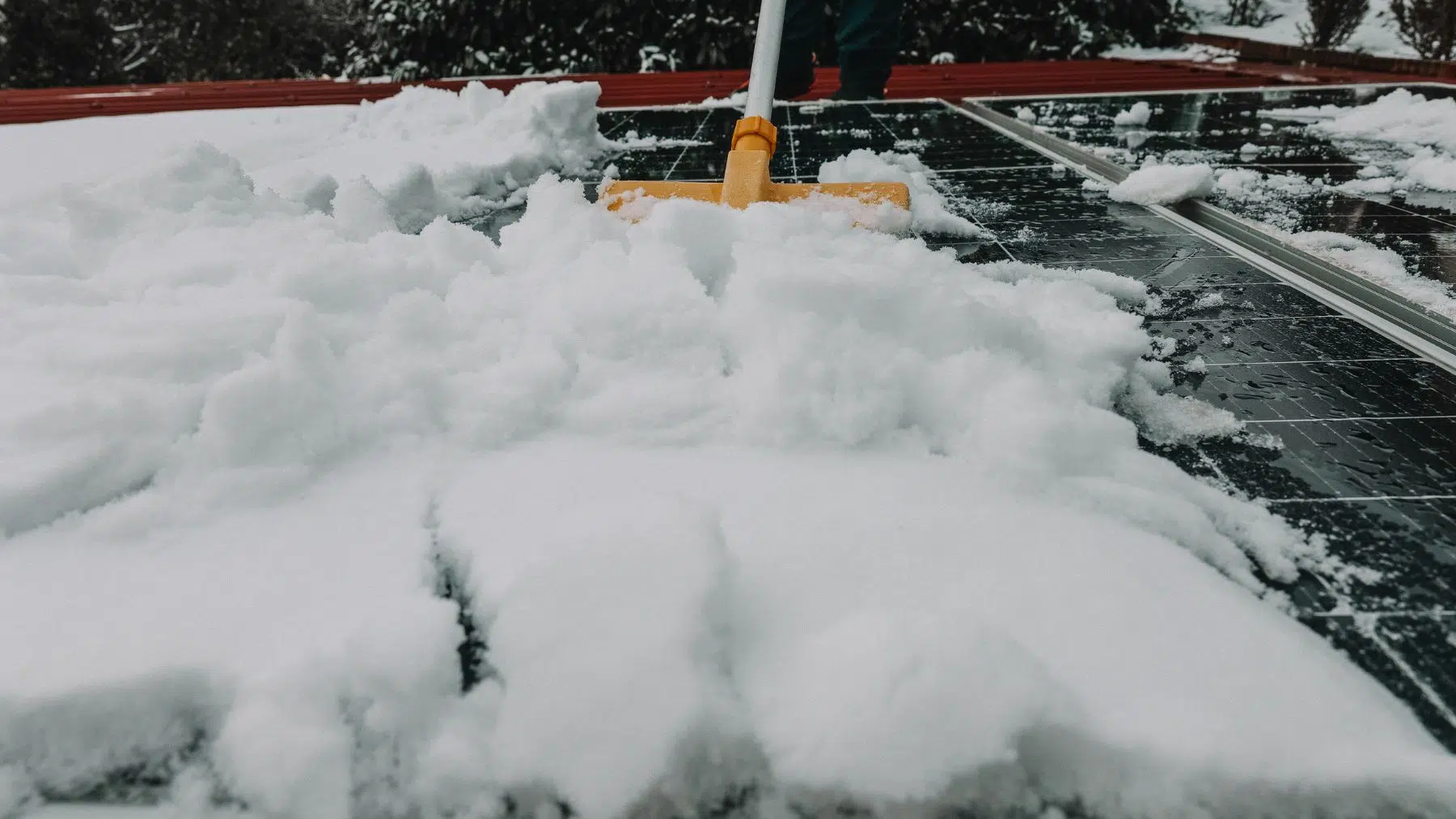
There was another bonus. Snow stopped building up. On steep panels, it slides off or melts quickly, bringing production back without climbing up to clear them.
Why winter should guide the setup
Most solar systems are designed using yearly averages. It sounds smart, but reality doesn’t follow averages. Designing for summer hides problems that only appear in winter, creating a planning blind spot.
Off-grid systems need reliability when conditions are worst, not best. When you design for winter, summer becomes easy. When you design for summer, winter becomes a constant struggle.
Petroski didn’t learn this from theory. He learned it by watching batteries struggle in cold weather.
The lesson almost anyone can use
The takeaway is simple. If your system is built for summer, winter will always feel broken. If it’s built for winter, the whole year works better.
You don’t need new panels. You don’t need new batteries. Sometimes, the fix is simply changing the angle.
Before assuming your solar setup doesn’t work, it may be worth looking at how it faces the sun. Small changes can make a surprisingly big difference.
Read the whole thing?
Get the week's signal, not the noise
Our sharpest reporting on energy, climate and nature — free, once a week.