A map from the 1300s holds a secret.
Historians ignored the strange markings for centuries.
Now, satellite imagery reveals something impossible: a jagged coastline has emerged from the mist.
This lost terrain defies modern geography.
Why did an entire world vanish in the 14th century?
The truth is buried beneath shifting tides and ancient lies.
Is it a natural wonder or a deliberate cover-up? What would you risk to explore a land that officially doesn’t exist?
Chilling words: Why this glacier just said “ice to meet you”
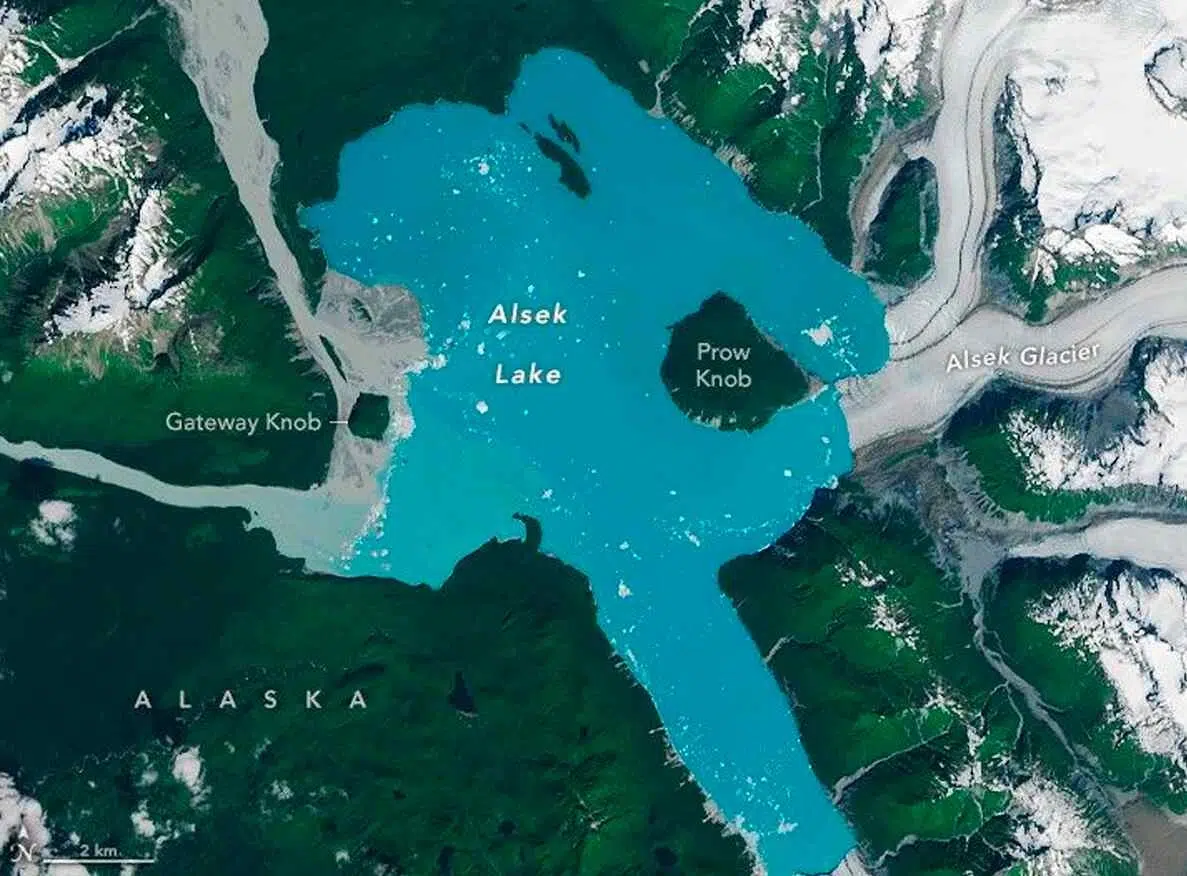
The transformation took place near Alaska’s massive Alsek Glacier.
For decades, NASA tracked the ice retreating across the coastal plain.
In the 1980s, a frozen grip still held a mysterious rocky landmass tight.
But by 2025, that ancient connection finally snapped.
The world watched as large meltwater lakes swallowed the surrounding terrain.
What once looked like a stable mountain was being isolated by rising tides.
Channels widened as the ice thinned at a rate of three meters per year. Shorelines expanded into a “new lake district” previously frozen solid.
Satellite imaging soon revealed a reality no modern map had recorded.
A two-square-mile island had emerged, now known as Prow Knob. It sits over 1,000 feet high, completely cut off from the mainland.
Was this land really new, or just a ghost reappearing from the 14th century?
Evidence suggests this landscape was last seen before the Little Ice Age.
What other secrets have been locked away since the Middle Ages?
The great Alaskan reveal: A century-old secret thaws out
As some glaciers retreat, they can reveal hidden landmasses underwater.
But this one caught the attention of researchers due to its scale.
The region around the glacier was transforming as the ice melted away.
Researchers noted that lakes nearby expanded in a dramatic fashion.
The glacier itself also becomes more and more unstable.
Once ice loses its key anchor points, retreat can rapidly accelerate. Which is why this island was so special.

This process could become widespread across Alaska.
Entire frozen ecosystems are reshaping themselves in real time.
Even local weather conditions could change as reflective ice vanishes.
But one mystery remained that the researchers needed to solve. What exactly was this newly isolated island?
And perhaps more importantly, how long was it hidden by the glacier?
NASA aimed to get answers. They conducted a similar study on a hidden lake in Antarctica.
What they found by comparing the two may surprise you.
The answer to what this “new island” was dates far back to one of the coldest periods in human history.
So what did NASA eventually understand about this odd landmass?
A landmass that came back for an Ice Age redemption
The newly revealed island in Alaska was named Prow Knob.
Discovering new islands is actually quite common as we explore more of the Earth.
But a lingering question remained. Was Prow Knob a new island?
Or was it merely an ancient landmass making an Ice Age comeback?
It became a singular landmass when the glacier retreated enough for it to be surrounded by water.
Scientists confirmed this using NASA satellite imagery.
Prow Knob itself wasn’t just another new island.
The Alsek Glacier expanded over time to cover valleys and terrain. Which is why Prow Knob was hidden for centuries.
It was simply making a long-awaited comeback.
A process that went in one direction has now reversed course
The Alsek Glacier has finally blinked.
A landscape hidden since the 1300s is breathing again. We are the first generation in seven centuries to see this earth.
But as the ice continues to pull back, it raises a chilling question.
What else is the planet hiding beneath the frost?
Nature is reclaiming its old boundaries while erasing our current maps.
The 14th century is calling out to the 21st.
If the ice continues to speak, are we prepared for the history it might rewrite?
Read the whole thing?
Get the week's signal, not the noise
Our sharpest reporting on energy, climate and nature — free, once a week.