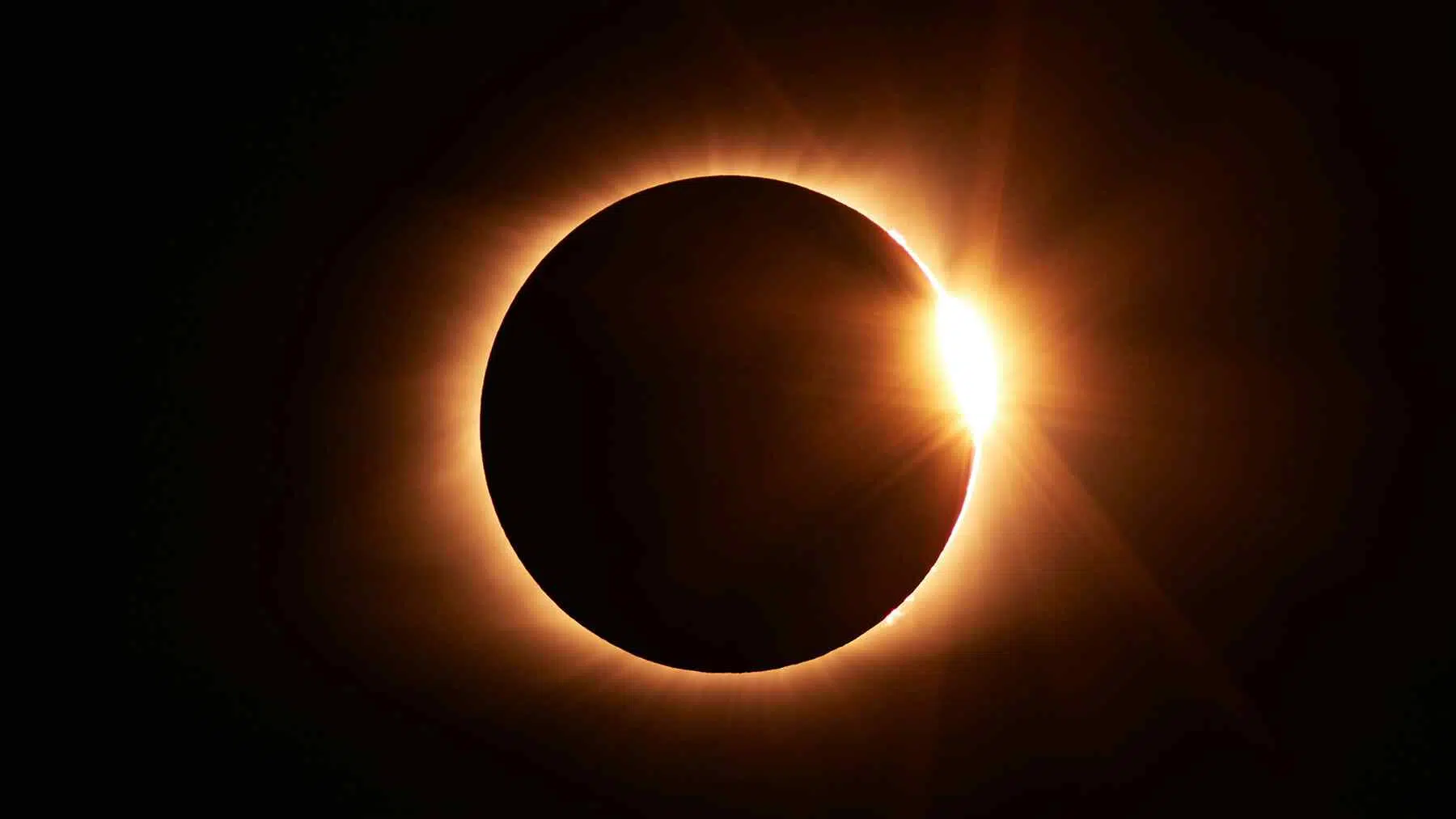
Lunar eclipses have dazzled and amazed millions around the world for generations.
The mysteries of space and our moon have become far simpler to understand in recent years. But as NASA and others develop our collective understanding of the cosmos, many of us are preparing for the next major lunar eclipse set to take place in the near future.
How are you preparing after the recent blood moon phenomenon?
How our understanding of the moon has changed over the past few decades
Over the past few decades, our understanding of the moon has shifted from a dry and arid space rock into a complex ancient world with a dynamic history.
The recent Lunar Reconnaissance Orbiter mission revealed that the moon once had frozen water in the permanently shadowed craters that dominate the moon’s surface.
NASA found that these “pits” had water that hovered around the 63°F mark, far more hospitable than what science had previously thought.
For the best part of the last half-century, we thought that the moon was essentially geologically dead. But new findings by China suggest that magma was flowing very recently on the moon, roughly 120 million years ago, in fact.
The Earth is far more connected to the moon than we previously thought
Modern data sets have revealed the truth about our moon.
The Giant Impact Hypothesis suggested that the moon was formed when a Mars-sized celestial object smashed into Earth, sending huge amounts of debris into space that eventually coalesced into the Moon we have now.
Home telescopes have become the latest must-have for any ambitious amateur astronomer, revealing some astonishing facts about the moon and the cosmos.
But as science progresses, we are learning new things about our moon and the universe.
Technology has revealed that rare galactic events may be a lot more common than we ever knew or thought. And a new study by NASA has taken what we have learnt about our moon and flipped it on its head, so to speak.
The recent blood moon in March stunned millions around the world as it turned the moon an iconic shade of red.
But another event that is due to take place in the near future will take that level of amazement even further. Developing data from the multitude of telescopes in the sky takes time, but NASA and others are on the job.
Two significant lunar eclipses are set to take place in the near future
The first lunar eclipse took place in March, and images have been gathered all around the world, from Asia to the Americas.
The most notable eclipse is set to take place on August 27 and 28, 2026, and can be viewed across the country. This partial eclipse will cover only a portion of the moon and will be visible for millions of Americans in several parts of the U.S.
NASA has revealed that the next lunar eclipse will enable us to stare into the vastness of space and get a slightly better understanding of how our orbit affects the closest celestial body.
A celestial event that will darken the skies over the United States of America and Europe
NASA has noted that the lunar eclipse in August will be followed by a full solar eclipse in Europe. This will be the first major solar eclipse to pass over Europe in decades, but it won’t be visible in the United States.
Lunar eclipses have become regular events that astound the brightest minds and enable us to study the cosmos to deepen our understanding of how the universe behaves.
The March blood moon was just the start in a calendar of space events that will take place over the coming months, so get your telescopes ready at home.
Read the whole thing?
Get the week's signal, not the noise
Our sharpest reporting on energy, climate and nature — free, once a week.