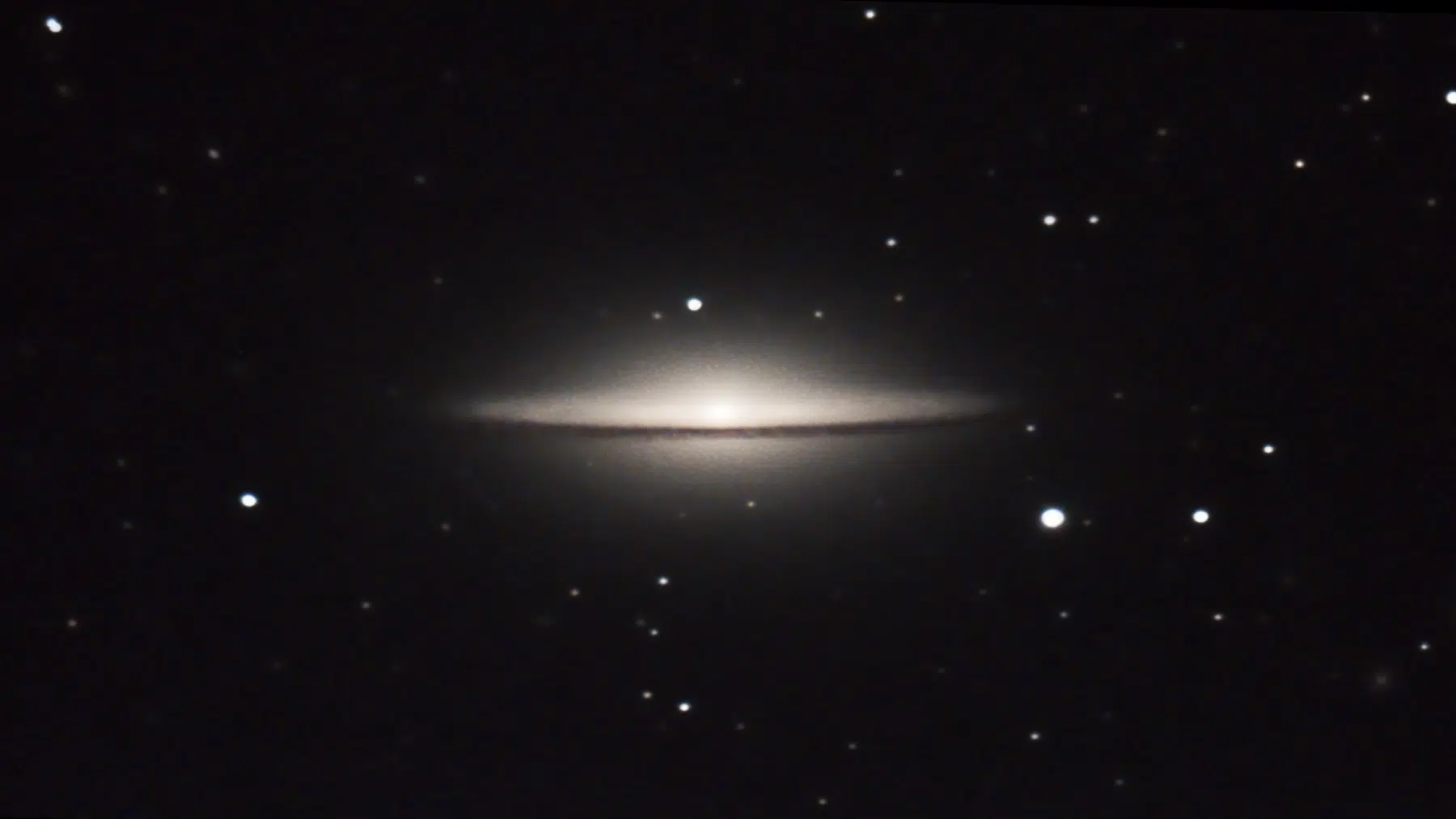
NASA has been looking for clues about other galaxies that might have influence the creation of the Milky Way. While these giant agglomerate of planets, stars, black holes, asteroids and comets are often being study, one thing didn’t seem right when the space agency looked into a “new galaxy” – it had the shape of a UFO. While most known galaxies have spiral form, this one was looked like it came out of a science fiction movie, but it wasn’t, and the reason why changed the way we look into the Coma Cluster galaxies.
The galaxy spiral shape could change in specific situations
Only by looking into the observable universe, scientists can look into a couple of galaxies. Meanwhile, by doing calculus, the space agency estimates there are 2 trillion. NASA’s Hubble Space Telescope is the responsible for bringing this estimate number of galaxies to us, as the tool of analysis of deeper images of a much larger population of these agglomerates of cosmic bodies that shaped the spiral structure we know.
One of the reasons why in the representations it shows like they are spinning is due to an effect call the conversation of angular momentum. Some irregularities and subtle movements in the early cosmos, where clouds of gas were contracted under gravity to form galaxies, gave this effect of galaxies rotating faster. Now, as the standard image of a galaxy is spiral, a new format came up during an observation of Dragonfly 44.
NASA studying new galaxy: Theoretical force might be present inside
NASA first noticed Dragonfly 44, a dim galaxy in the Coma Cluster, when early measurements suggested it was almost pure dark matter – 99.99%, with just a thin scattering of stars holding it together. That kind of number raised eyebrows. But in 2020, a fresh analysis revisited the data, focusing on the globular clusters used to estimate its mass.
The updated count painted a different picture: instead of 10,000 times more dark matter than stars, the ratio dropped to about 300-to-1. The shift says a lot about the challenge of studying faint, diffuse galaxies. They might reveal something extraordinary, or they might simply trick us when the data is thin. In astrophysics, the line between a breakthrough and a misread can be razor-thin.
The reason why NASA saw Dragonfly standing out: There’s “nothing” inside
Dragonfly 44 stood out because of its star count. While the Milky Way carries around 100 billion stars, Dragonfly 44 seemed to host only 100 million – making it an outlier from the start. That scarcity led to the first claim of an extreme dark matter dominance, but later observations told another story (like this study, not from NASA, also about its existence).
When astronomers re-examined its globular clusters – the tight star groups that trace a galaxy’s mass – they found only 20, not the 80 first reported. So instead of the radical 10,000-to-1 ratio, the galaxy seems closer to 300-to-1, in line with other ultra-diffuse galaxies.
Could dark matter really be present inside Dragonfly 44?
One theory suggest that the balance comes down to the gas supply during formation Because neither dark matter nor dark energy has ever been seen directly, doubt has followed them from the start. A study, posted on arXiv, asks whether these invisible ingredients exist at all. History reminds us how once-solid ideas — the ether, the planet Vulcan between Mercury and the Sun, the crystal spheres – eventually fell away when the evidence never came.
Instead of turning to hidden forces, some studies look back to gravity itself. Before NASA, Einstein showed us that mass bends space-time, giving rise to gravity. A recent paper argued that, instead of dark matter, what’s really holding galaxies together is simpler than we imagine – and it’s present on Earth.
Read the whole thing?
Get the week's signal, not the noise
Our sharpest reporting on energy, climate and nature — free, once a week.