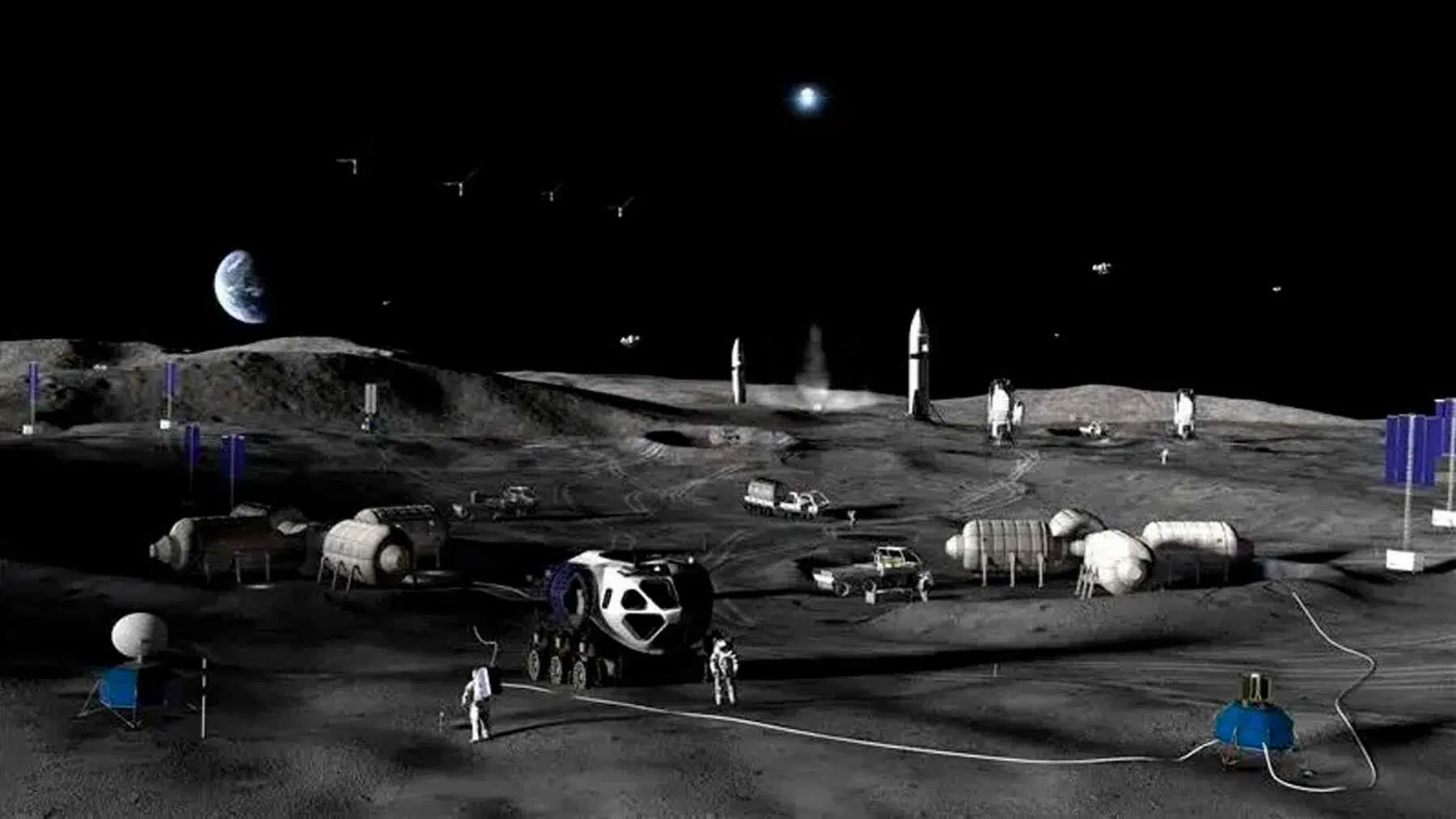
Can NASA actually succeed with its ambitious, multi-billion-dollar plan to colonize the Moon?
The agency has proposed a complex schedule for returning to the lunar surface. This program includes wide-ranging plans for a permanent base and dozens of landings.
However, official agency documentation outlines many technical areas where major advancements are required.
The aggressive current plan involves sending astronauts to the surface by this decade’s end.
It remains unclear if NASA can achieve this.
A landscape that promotes failure
At first glance, the Moon’s South Pole appears to be a harsh environment. Perpetual shadows exist because many craters have extremely high, steep crater walls.
This creates conditions that make it impossible for direct sunlight to enter them.
These craters contain huge amounts of frozen water, waiting for future extraction efforts.
They are located in some of the coldest places within our solar system. In addition to the extreme cold, there is limited access to solar energy.
The sun remains relatively close to the horizon for very extended time periods.

As a result, generating electricity using traditional solar panels remains an incredibly difficult challenge.
NASA has developed a detailed plan to accomplish the following three primary objectives.
Phase One: Develop automated robots.
They will test surface operations necessary for future missions.
In Phase Two, scale up development of early, ruggedized habitat construction and life support.
In Phase Three, develop sufficient resources to support a semi-permanent human presence there.
Most of what NASA proposes today remains aspirational and not yet fully operational.
Systems such as precision landing and mitigating lunar dust remain purely developmental. Without these critical systems, achieving the goal of many manned missions seems impossible.
The gap in capabilities between current technology and required hardware remains incredibly enormous.
If NASA does not resolve these core issues, they jeopardize their ambitious program.
Challenges to establishing sustainable power
Extreme temperatures during lunar nights are life-threatening to our astronauts on the Moon. Total lunar darkness will rapidly cause these to plummet into the deadly deep freezes.
A solar base that can continuously operate for extended periods during the long lunar night is not feasible.
To address the reliability of power at their moon bases, NASA is exploring the use of large-scale, high-powered nuclear fission reactors. These will serve as a reliable source of base power.
NASA needs radioisotope heaters to keep all the necessary equipment from freezing completely when they are unable to maintain heat.
Building out these new and innovative systems requires significant amounts of resources and time, with an emphasis on industrial development.
Another major logistical challenge facing the development of lunar-based infrastructure is getting enough materials to support operations.
Thousands of kilograms per year of cargo are required to supply their needs.
Robots will be used to create the initial and most fundamental aspects of lunar-based infrastructure. Before humans can step foot on the moon, it is the robots’ job to create the foundation for future human activity.
Any small delays due to lack of technology will slow every single aspect of the overall lunar plan. You can find comprehensive requirements in the Moon Base User’s Guide.
The critical gap in lunar infrastructure
The engineers need to design thermal management systems that can handle these extremely long, cold and dark periods.
Additionally, NASA has to develop an automated docking system so large amounts of supplies and other materials may be transferred via cargo delivery.
This common interface will ultimately enable different commercially operated landers to act together.
An integrated resource infrastructure is the essential foundation for all long-term lunar activity.
Why the plan still can’t come together
Without a universal resource base, current landing plans begin to lack cohesion. Therefore, they appear to form a series of fragmented and unreliable missions.
Ultimately, resolving these issues of integration will define whether humans will remain on the Moon.
Read the whole thing?
Get the week's signal, not the noise
Our sharpest reporting on energy, climate and nature — free, once a week.