Astronomers have spent decades trying to understand what happens inside giant gas and dust clouds across the Milky Way.
Their structure is constantly shifting over time. They collide and swirl with large amounts of material and receive intense radiation.
Despite their turmoil, these areas still contain the raw materials needed to create brand-new planets.
Finally, a new generation of telescopes now lets astronomers explore these regions in ways not possible before. One of the biggest breakthroughs came when they began studying them with a different kind of instrument.
What did they discover?
Regions where new stars are being born continuously
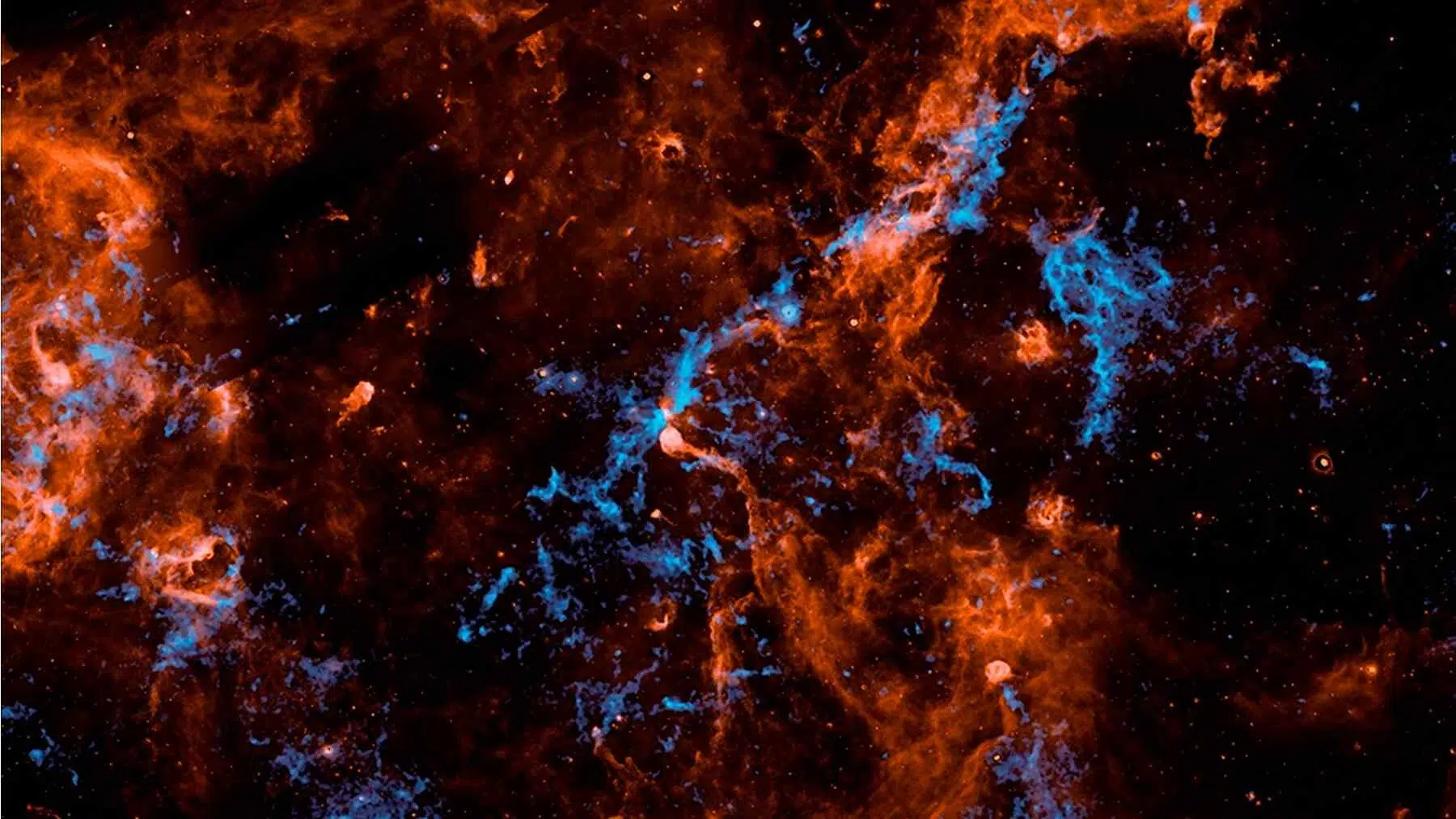
One of the most active areas where new stars are continuously being born is an area called Cygnus-X.
This region is located deep within a series of massive dust clouds. They provide the gravitational force needed to bring material together into new stars.
The environment is highly charged.
Newly born stars produce high levels of energy through radiation.
Material near these stars is also subject to the constant pull of gravity. It will collapse under stress.
When viewed through normal telescopic means, it’s difficult to tell much about what lies behind a particular cloud.
They appear relatively “empty” and “dark.” This is misleading, as the density of dust in these clouds is so great that no visible light passes through.
Most prior studies have used these stars to illuminate localized portions of the surrounding space.
Telescope that sees in ways others do not
Unlike most prior astronomical instruments, the SPHEREx telescope has been designed to study large swaths of the sky.

It operates in infrared wavelengths.
Rather than focusing primarily upon single objects within those fields-of-view, the instrument surveys large expanses of space. It identifies chemical signatures embedded in molecular forms.
Since it can detect these signatures within these materials, it provides a unique window into conditions within the region.
These forms are invisible in shorter-wavelength observations.
For the first time, scientists were able to see how material extends throughout these large-scale star-forming regions.
As it observed the Cygnus X region, it became clear that the formerly black voids in visible wavelengths were far more complex.
More background is available from NASA Science. The broader SPHEREx mission continues studying regions like these across the sky.
Hidden landscape inside the chaos
Initially, researchers were not sure what they were seeing in the SPHEREx data.
Then it dawned on them that what appeared as nothing in visible light took on new meaning. What appeared in the observation was not what they had expected to find.
What the hidden landscape of ice reveals
Researchers identified vast networks of ice that span large cloud regions.
Unlike individual or small-scale patches, these networks cover hundreds of light years and can be referred to as ‘glaciers.’
Ice grains consist of dust particles coated in ice, with an average diameter of 0.01 millimeters.
Clusters of these particles exist inside clouds. Collectively, they represent large reserve of frozen material.
In total, they account for a significant proportion of the frozen materials.
Concentrated amounts of ice tend to occur along dark lanes within the clouds due to the increased amount of dust within them.
These icy grains carry key organic molecules, including water and CO₂.
If these grains enter developing planetary systems during star formation, they might help provide H₂O to nascent planets.
A vast, hidden network of ice existed beneath a layer of previously undetected shadowy emptiness.
If such underlying networks exist in one region, how many more lie waiting to be mapped across the galaxy?
Read the whole thing?
Get the week's signal, not the noise
Our sharpest reporting on energy, climate and nature — free, once a week.