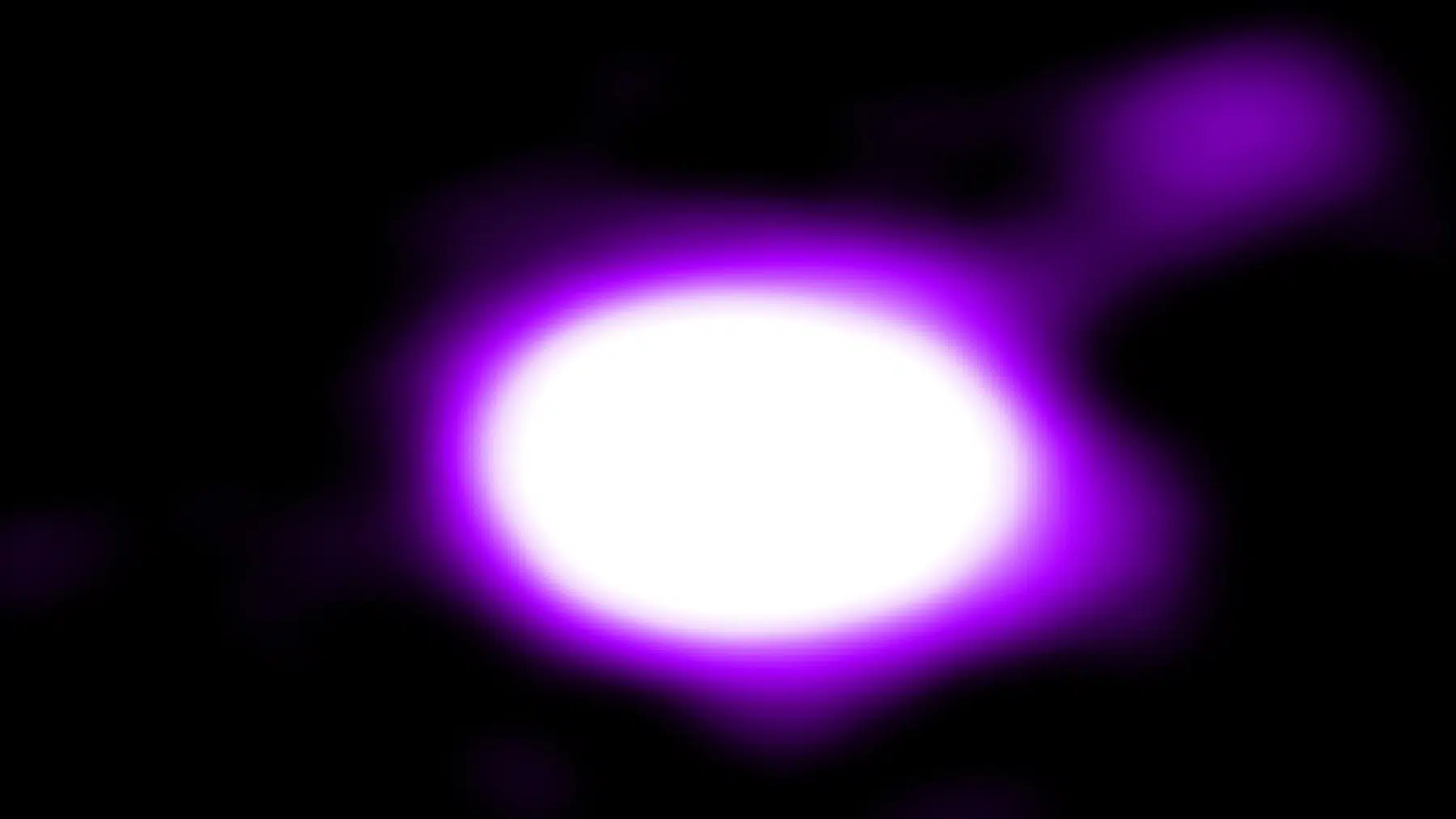
The observable universe is providing more clues about its nature. From the moment NASA technology evolves and telescopes can “read images” in X-rays, a new horizon has opened before our eyes. One of the main features in the most recent discoveries, such as black holes shooting jets, sudden light bursts in a distant galaxy, or the aftermath of a supernova explosion, has once again given us clues about the universe from a very long distance.
NASA’s powerful telescopes help with the discovery
All new NASA observatories are part of a major project to help discover what’s beyond our solar system, galaxy, without even leaving Earth. The Hubble, Spitzer, and Chandra are the most powerful tools currently available to understand the cosmic environment, and a couple of them help other observatories make new discoveries. On the other side, sometimes discoveries cannot happen due to a new image, but also by looking back at old ones to compare them to the most recent readings of a particular area.
Some can scan a larger region than others. At times, two or more can be pointing in the same direction, even by accident. The Chandra is the most powerful X-ray telescope ever created, and it is specifically designed to study black holes and how they work, being responsible for discovering a black hole 11.6 billion light-years from Earth.
NASA discovers black hole shooting jets
Astronomers found out that a black hole blasted a powerful jet while using Chandra and the Karl G. Jansky Very Large Array (VLA). While studying these cosmic destroyers, NASA spotted jets that were fired when the universe was about three billion years old, and we were only able to see them because the leftover glow from the Big Bang lit up the jets in the cosmos. During this specific time, galaxies and supermassive black holes were growing at a faster pace than the rest of history.
Despite the billions of light-years of distance, the team was able to detect these jets when they presented themselves to this part of our galaxy because of Chandra’s x-ray vision, and the cosmic microwave background (the leftover glow from the Big Bang) still presented a relative density.
Scientists confirmed the existence of two black holes shooting out jets that stretch over 300,000 light-years. The particles in one of the jets (from J1405+0415) are moving at up to 99% the speed of light, and the other one (J1610+1811) is not far behind. That second jet is especially powerful – it’s putting out about half the energy of the super-bright light from the hot gas swirling around the black hole.
The jets shoot near the speed of light
According to NASA, the jets are produced by quasars — the intensely luminous galactic nuclei powered by supermassive black holes — and when they are approaching the speed of light, it creates a brightening effect. Black holes shoot because of the powerful magnetic field around their spinning disk, and instead of swirling matter, they shoot these at high speed instead of letting it all fall in.
Jets that are aimed straight at Earth tend to look much brighter than those shooting off in other directions. That can be tricky, because two jets can look equally bright even if one is very fast but angled away, and the other is slower but pointed right at us.
To sort this out, the researchers came up with a new statistical method to separate how speed and angle affect what we see. They also factored in a key bias: scientists from NASA are more likely to spot jets that are pointed toward us, just because they naturally appear brighter.
Read the whole thing?
Get the week's signal, not the noise
Our sharpest reporting on energy, climate and nature — free, once a week.