The pipe comes off a geothermal well hot enough to scald, carrying water thick with dissolved rock.
Within weeks a crust starts to form on the inside.
It narrows pipework, coats heat exchangers and chokes the wells the spent water is pumped back down.
Operators have fought it for decades with acid, lime and careful temperature control.
None of it made the problem go away.
What finally worked was not a stronger chemical but a stranger one.
Calcium intercepts the silica within milliseconds
Deep underground, geothermal water dissolves silica straight out of the surrounding rock, and at depth it stays in solution. The trouble starts at the surface, where part of the water flashes to steam. That step can cut the liquid volume sharply, leaving the brine behind holding more dissolved silica than it can keep.
That silica does not drift away. It links up with itself and plates out as hard amorphous scale on anything it touches. A team led by chemist Jim Johnston at Victoria University of Wellington went at it from the other side, dosing the brine with calcium ions at a controlled ratio so the dissolved silica is intercepted and converted, within milliseconds, into a nano structured calcium silicate hydrate.
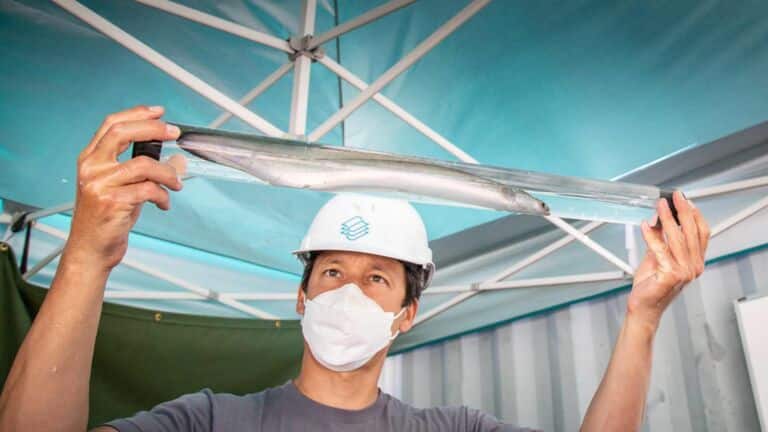
The resulting particles stay suspended in the brine rather than binding to metal surfaces, which is the whole trick. They can be settled out as a product instead of chipped off a wall. Johnston has described the material under the electron microscope as looking a bit like “an open rose structure, or perhaps a head of broccoli”, depending on how the chemistry is run.
Plants hold brine above 266 degrees to dodge the problem
The conventional defense against silica is heat. Separated brine is generally held above about 266 degrees Fahrenheit, because below that the dissolved silica starts dropping out as scale, and every degree a plant leaves on the table is energy it never converts.
At Wairakei, the binary unit pushes fluid down to roughly 194 degrees, well under that line, and squeezes an extra 15 megawatts out of water that would otherwise be waste. Strip the silica out first and those limits move.
The Wellington group argues that removing it allows lower steam and water separation temperatures and lower exit temperatures in binary heat exchangers, so more heat energy can be pulled from the same resource, with fewer blocked reinjection casings as a side benefit.
A week long test pulled 99 percent of the silica out
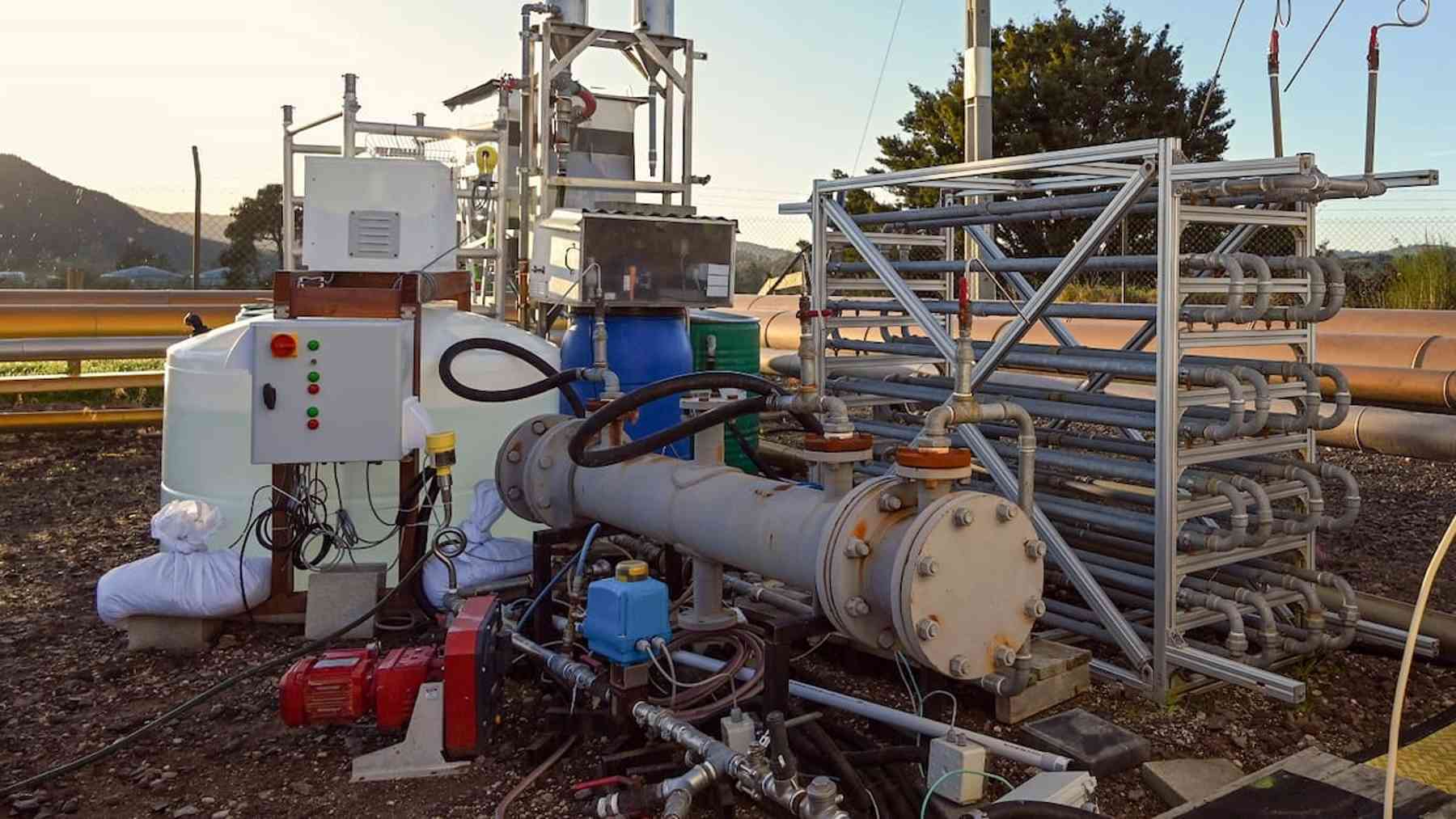
This was not a beaker experiment left on a shelf. The researchers designed and built a pilot scale test rig in the university’s own workshop, installed it on a site at Taupo and ran it on spent brine piped from the Wairakei power plant, connected through gate and non return valves and three quarter inch pipe.
It did not run constantly. Commissioned in August and September, it was operated in short repeatable bursts of about eight hours a day for roughly a week each month, long enough to compare conditions cycle by cycle.
The numbers that came out were better than the original pitch. Removal efficiencies for the various dissolved species ran between 95 and 99 percent, slightly below what the same chemistry achieved in the laboratory, because the Wairakei brine turned out to be comparatively low in silica. Low as it was, the run showed the approach works on real brine rather than a made up solution.
Each field’s water changes the recipe
The honest caveat sits in that same result. The brine the rig drew on was variable, low in silica and high in carbonate, which held efficiencies under laboratory values and pushed the composition of the recovered solid around from batch to batch.
A recipe tuned for one resource therefore does not transfer by itself. The chemistry has since been put through further trials at a different geothermal field under very different conditions, at a separate trust owned field, and with a national utility, which is the only way to learn what a hotter or saltier water does to the same dose of calcium.
A few thousand tons a year could be sold, not scraped
What began as a way to stop pipes clogging now has a second life as a material. The startup co founded by Johnston says the process would generate several thousand tons of calcium silicate a year from a single geothermal station. The same approach to turning an industrial byproduct into a usable material echoes projects like the scrap recovery seen at retired wind farms, where materials once destined for disposal find a buyer instead.
The same family of material has been studied as a high performance filler for specialty papers, as a sorbent for metal ions in mine waters, and as a composite for plastics and remediation work. None of that changes the plain mechanical win underneath it. Less scale means fewer shutdowns, less scraping and wells that stay open longer.
The work is still moving from test rig toward full plant scale, and the field’s own literature still calls silica scaling the largest unsolved problem in getting full use out of a geothermal resource. Its developers put the claim more carefully than a headline would, saying the technology has the potential to address silica deposition from separated brine worldwide. But there is something fitting about a nuisance that cost operators decades of maintenance bills turning out, under the right nudge of calcium, to look like a flower.
Read the whole thing?
Get the week's signal, not the noise
Our sharpest reporting on energy, climate and nature — free, once a week.