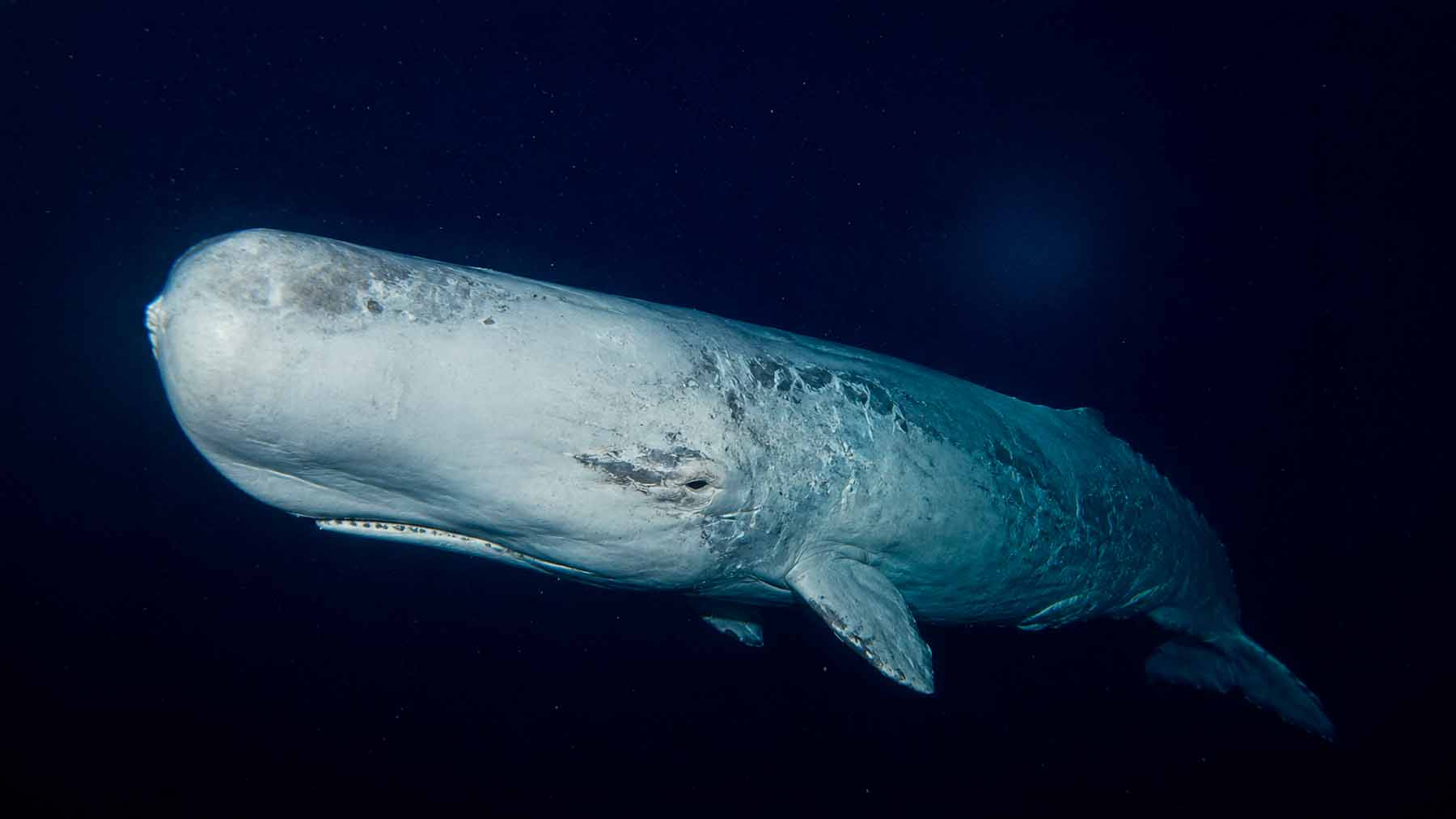
When a pygmy sperm whale washes ashore, it’s often the closest anyone gets to seeing one. These deep-diving animals spend their lives far offshore, rarely surfacing, rarely spotted — more ghost than creature to most marine researchers.
Now, scientists combing through two decades of preserved stomach tissue from stranded whales along Florida’s coast have found something coiled inside: spiral-shaped bacteria belonging to three genotypes no one had ever catalogued before. What they uncovered wasn’t just new to these whales — parts of it were new to science entirely.
A whale almost no one sees
Pygmy sperm whales rank among the least-studied large mammals on Earth. They travel in small groups, dive deep to hunt squid and fish, and almost never linger at the surface. Spotting one in the wild is rare enough to be remarkable. For most researchers, these animals exist mainly as data points — entries in strandings logs rather than subjects of direct observation.
Florida’s coastline, for that reason, carries unusual scientific weight. Pygmy sperm whales strand along the southeastern United States more frequently than almost any other large marine mammal species. Each beaching is a rare window into a life otherwise hidden beneath thousands of feet of water.
FAU Harbor Branch Oceanographic Institute has been opening those windows for more than two decades. Between 1999 and 2020, the team responded to 59 pygmy sperm whale strandings and completed post-mortem examinations on 80% of those animals. That steady accumulation of preserved tissue, carefully catalogued over years, is what made the recent discovery possible.
Spiral-shaped bacteria hidden in stomach tissue
The find didn’t come from fresh specimens. Researchers went back through archived samples, reexamining preserved stomach tissue using histopathology, molecular testing, and DNA sequencing — techniques that surface what the naked eye misses entirely.
In four of the whales, they found spiral-shaped bacteria, technically described as “spirilliform,” embedded within stomach tissue. The shape alone pointed toward Helicobacter, a genus of bacteria long associated with gastrointestinal disease in humans and other animals. DNA sequencing told a more specific story, according to the Florida Atlantic University.
The analysis identified three distinct genotypes — none previously documented anywhere. The research team named them Kogia Helicobacter 1, 2, and 3. The study, published in the Journal of Wildlife Diseases, marks the first confirmed identification of these bacterial genotypes in pygmy sperm whales, and potentially in any species.
Two familiar, one entirely new
Not all three genotypes were equally surprising. Kogia Helicobacter 1 and 2 are genetically similar to known Helicobacter strains previously detected in other cetaceans — dolphins and porpoises — as well as in humans. They fit, however loosely, into an existing map of bacterial diversity.
Kogia Helicobacter 3 is a different matter entirely. It belongs to a more divergent lineage, with no close known relatives in the scientific record, suggesting the ocean may harbor far more undiscovered microbial life than researchers currently account for. In one whale, both Kogia Helicobacter 1 and 3 appeared simultaneously in the forestomach tissue — a co-infection that adds another layer of complexity to what’s already an understudied problem.
Ulcers, scarring, and signs of chronic illness
The bacteria didn’t appear in healthy tissue. Every one of the four Helicobacter-positive whales showed visible, significant gastrointestinal damage — gastritis, gastric ulcers, fibrosis, and nematode infestations across the group.
One whale also showed signs of colitis, inflammation extending beyond the stomach into the intestines. That detail matters because it suggests the infection may not stay confined to a single organ.
Helicobacter wasn’t listed as the direct cause of death in any of the four cases. Even so, the researchers are careful not to let that fact minimize the pattern. The consistent presence of inflammation, ulceration, and scarring across all infected animals raises serious questions about the bacteria’s role in long-term illness. Symptoms observed in these whales — low energy, appetite loss, ulceration — closely mirror what clinicians see in Helicobacter-infected humans, and that parallel is hard to dismiss.
Helicobacter was first reported in marine mammals in 2000. Related strains have since turned up in cetacean species around the world, and the pygmy sperm whale findings add a new chapter to that growing record.
What this means for vulnerable whale populations
Individual cases matter. But the researchers are also thinking at a larger scale — if chronic Helicobacter infections are degrading the health of pygmy sperm whales over time, the consequences could extend well beyond the four animals examined here.
“If chronic Helicobacter infections are causing health issues in these animals, it could have implications not only for individual whale health, but for entire populations — especially for species that are already vulnerable,” said Wendy Marks, the study’s corresponding author.
Those implications remain uncertain for now. Pygmy sperm whales are so difficult to observe at sea that researchers don’t yet know how widespread these newly identified bacteria actually are. The four infected animals could represent a small fraction of a much larger problem, or an isolated cluster. Without more data, there’s simply no way to know.
That’s where the long-term value of stranding programs becomes clear. Without 21 years of preserved tissue from FAU Harbor Branch, these genotypes would still be unknown. Future work will need to determine whether these infections contribute to strandings, chronic decline, or population-level health trends — and the answers, when they come, will almost certainly arrive the same way this discovery did: through patient, unglamorous archival science, one stranded animal at a time.
Read the whole thing?
Get the week's signal, not the noise
Our sharpest reporting on energy, climate and nature — free, once a week.